


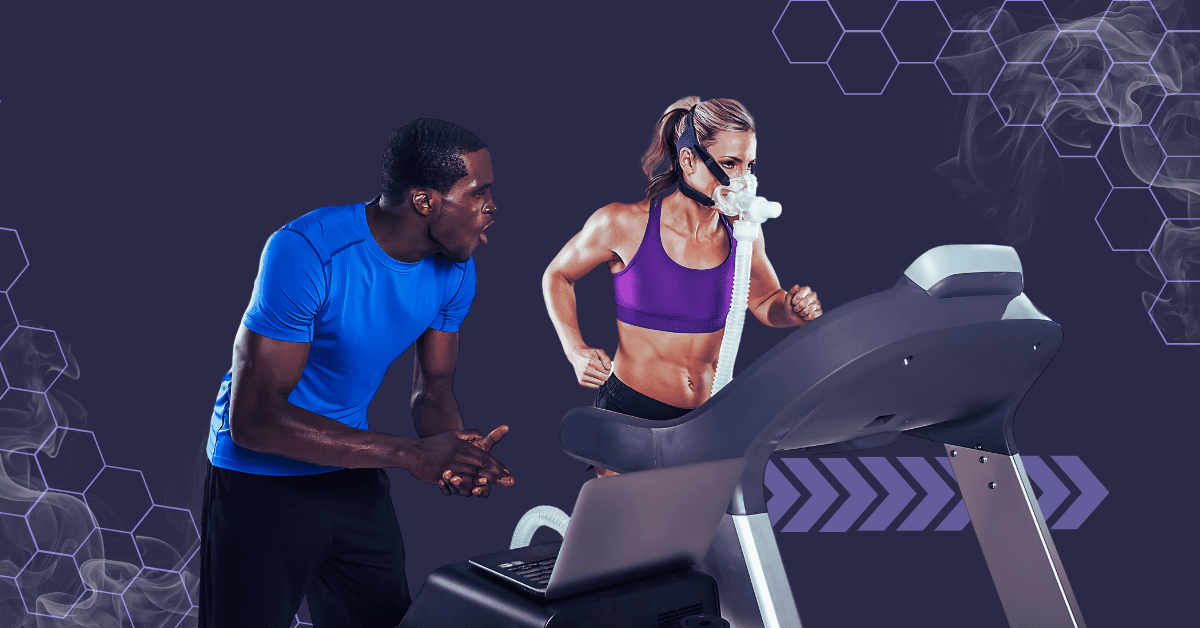
In 1923, a British physiologist named A.V. Hill conducted pioneering experiments that led to the identification of VO2 max. What he didn’t know at the time was that his groundbreaking research would revolutionize how millions of people approach fitness and endurance training nearly a century later.
Today, when you step onto a treadmill for a VO2 Max test, you’re participating in a tradition that spans over 100 years of human performance research. But how did we get from those early laboratory experiments to the sophisticated, accessible testing systems that can now determine your precise Zone 2 heart rate and fat-burning efficiency? The journey of VO2 Max testing is a story of scientific discovery, technological innovation, and the relentless human quest to understand the limits of physical performance.
A.V. Hill and the Birth of Exercise Science (1920s-1940s)
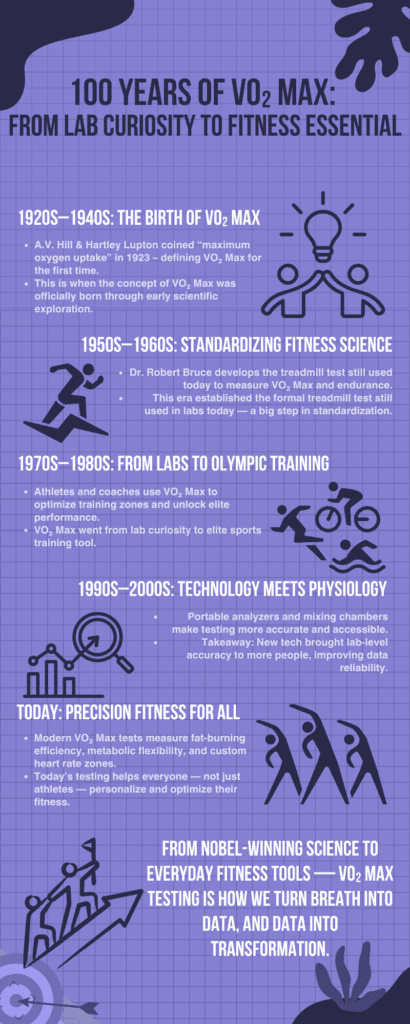
The story of VO2 Max begins with Archibald Vivian (A.V.) Hill, a British physiologist whose curiosity about muscle function and oxygen consumption would earn him the Nobel Prize in Physiology or Medicine in 1922. Hill’s work at Cambridge University laid the foundation for what we now know as exercise physiology, but his path to this discovery was anything but straightforward.
Hill initially studied muscle contraction and heat production in isolated frog muscles, but his curiosity led him to question how these principles applied to whole-body human performance. Working with his colleague Hartley Lupton, Hill began conducting experiments that would change our understanding of human aerobic capacity.
In their 1923 study, Hill and Lupton introduced the concept of “maximum oxygen uptake” – the maximum rate at which the body can consume oxygen during intense exercise. They discovered that regardless of how hard a person exercised beyond a certain point, oxygen consumption would plateau. This plateau showed the body’s maximum aerobic capacity, a measurement that would later become known as VO2 Max.
Their early experiments were revolutionary but rudimentary by today’s standards. Test subjects ran on grass tracks while breathing into large, cumbersome masks connected to gas collection bags. The analysis required manual calculations and took hours to complete. Despite these limitations, Hill and Lupton’s work established the principle that VO2 Max represented the upper limit of the cardiovascular system’s ability to deliver oxygen to working muscles.
Hill’s research also introduced the concept of “oxygen debt” – now known as excess post-exercise oxygen consumption (EPOC) – and began to explore the relationship between oxygen consumption and exercise intensity. These early discoveries laid the groundwork for understanding different training zones and the metabolic processes that occur during various exercise intensities.
The significance of Hill’s work extended beyond the laboratory. His research provided the first scientific framework for understanding human endurance capacity, establishing VO2 Max as a measurable, quantifiable indicator of cardiovascular fitness. This foundation would prove crucial as exercise science evolved throughout the 20th century.
Building the Scientific Foundation (1950s-1960s)
The post-World War II era brought renewed interest in human performance research, driven partly by military applications and partly by growing awareness of cardiovascular disease. This period saw the development of standardized testing protocols and the establishment of VO2 Max as the standard for measuring aerobic fitness.
Dr. Robert Bruce, a cardiologist at the University of Washington, made one of the biggest contributions to VO2 Max testing during this era. In 1963, Bruce developed what became known as the Bruce Protocol – a standardized treadmill test that gradually increased speed and incline in three-minute stages. This protocol became the most widely used method for VO2 Max testing and remained the standard for decades.
The Bruce Protocol was revolutionary because it provided a consistent, reproducible method for testing that could be used across different laboratories and populations. The protocol started at a comfortable walking pace and progressively increased in difficulty, allowing researchers to observe how oxygen consumption changed with exercise intensity and to identify the point of VO2 Max.
During this period, researchers also began to establish normative data for VO2 Max across different age groups and populations. The Cooper Institute for Aerobics Research, founded by Dr. Kenneth Cooper in Dallas, Texas, became a leading center for this work. Cooper’s research expanded our understanding of VO2 Max and began to connect aerobic fitness to broader health outcomes.
The 1960s also saw the development of more sophisticated gas analysis equipment. While still large and expensive, these systems provided more accurate measurements of oxygen consumption and carbon dioxide production. This advancement allowed researchers to explore the relationship between VO2 Max and different physiological markers, including lactate threshold and ventilatory threshold.
Research during this era established several principles that remain relevant today:
- VO2 Max varies between individuals due to genetic factors, training status, age, and body composition
- Regular aerobic training can improve VO2 Max by 15-20% in previously sedentary individuals
- VO2 Max peaks in the mid-twenties and declines with age
- The measurement strongly correlates with endurance performance capacity
Scientists also began to understand that VO2 Max was more than just lung capacity – it reflected the integrated function of the cardiovascular system, including heart output, blood oxygen-carrying capacity, and muscle oxygen utilization efficiency.
The Sports Performance Revolution (1970s-1980s)
The 1970s and 1980s marked a turning point when VO2 Max testing moved from purely academic research into practical sports performance applications. This period coincided with the running boom in America and increased global interest in endurance sports, creating demand for scientific approaches to training optimization.
Elite athletes and their coaches began to recognize that VO2 Max could provide valuable insights into training effectiveness and performance potential. Sports scientists started using VO2 Max testing not just to measure maximum capacity, but to identify training zones and optimize workout intensity.
During this era, exercise physiologists discovered that different training intensities produced different adaptations. They identified that training at various percentages of VO2 Max could target different energy systems and produce specific physiological improvements. This research laid the groundwork for what we now understand about Zone 2 training and its importance for developing aerobic base fitness.
The concept of lactate threshold (the exercise intensity at which blood lactate begins to accumulate rapidly) became closely associated with VO2 Max testing during this period. Researchers found that lactate threshold, often occurring at 70-85% of VO2 Max, was a strong predictor of endurance performance and could be improved through specific training.
Professional sports teams and Olympic training centers began investing in VO2 Max testing equipment and expertise. The U.S. Olympic Training Center in Colorado Springs became a hub for sports science research, using VO2 Max testing to evaluate athletes across sports and to develop sport-specific training programs.
This period also saw the emergence of exercise physiology as an academic discipline. Universities began offering programs in exercise science, and the American College of Sports Medicine (ACSM) established guidelines for VO2 Max testing procedures and interpretation.
The 1980s brought increased understanding of the factors that influence VO2 Max improvements. Research showed that genetics accounted for approximately 50% of VO2 Max potential, while training could improve the remaining 50%. This finding helped athletes and coaches set realistic expectations and develop individualized training approaches.
Sports scientists also began to explore the relationship between VO2 Max and performance in different types of activities. While VO2 Max was important for endurance sports like distance running and cycling, researchers found that it also played a role in team sports and activities requiring sustained effort.
Technology Advancement (1990s-2000s)
The 1990s and 2000s brought technological advancements that made VO2 Max testing more accurate and accessible. This period saw the transition from room-sized equipment to portable systems that could be used in settings beyond traditional laboratories.
One development was the improvement in gas analysis technology. New systems could provide real-time, breath-by-breath analysis of oxygen consumption and carbon dioxide production, allowing researchers and practitioners to observe immediate responses to exercise intensity changes. However, this technology also highlighted the limitations of breath-by-breath systems, like their susceptibility to environmental factors and the “noisy” data they produced.
The mixing chamber technology that emerged during this period represented an advancement in accuracy and reliability. Unlike breath-by-breath systems that analyzed individual breaths, mixing chamber technology collected and analyzed mixed expired air samples, providing more accurate measurements. This technology became the standard for VO2 Max testing, offering superior accuracy at high and low flow rates.
Computer technology also revolutionized VO2 Max testing during this era. Advanced software could automatically calibrate equipment, control testing protocols, and provide detailed analysis of results. These systems reduced human error and made testing consistent across operators and facilities.
The development of portable VO2 Max systems opened new possibilities for testing in field conditions and non-laboratory settings. While maintaining accuracy, these systems made VO2 Max testing accessible to a broader range of practitioners, including personal trainers, sports coaches, and healthcare providers.
Research during this period expanded beyond elite athletes to include broader populations. Studies began to explore the relationship between VO2 Max and health outcomes in the general population, leading to important discoveries about the connection between aerobic fitness and longevity.
For example, it was found that VO2 Max was a stronger predictor of mortality than traditional risk factors like blood pressure, cholesterol, and smoking. Individuals with higher VO2 Max values had lower risks of cardiovascular disease and all-cause mortality, regardless of their body weight.
The period also saw advances in understanding the metabolic information that could be derived from VO2 Max testing. By measuring both oxygen consumption and carbon dioxide production, researchers could calculate the respiratory exchange ratio (RER), which indicates the proportion of carbohydrates versus fats being burned at different exercise intensities. This information became crucial for developing targeted training programs and optimizing fat-burning efficiency.
The Modern Era: Zone 2 Training and Precision Fitness (2010s-Present)
The current era of VO2 Max testing highlights a shift in focus from measuring maximum capacity to understanding and optimizing the whole spectrum of exercise intensities. This period has been characterized by the rise of Zone 2 training and the recognition that precise, individualized training zones are essential for fitness development.
Zone 2 training, characterized by exercise at an intensity where fat is the primary fuel source, has become increasingly recognized as the foundation of effective endurance training. This training zone, typically occurring at 60-70% of VO2 Max, is the highest intensity at which the body can still burn fat while maintaining aerobic metabolism.
The importance of Zone 2 training goes beyond fat burning. Zone 2 training improves mitochondrial function, enhances cardiac output, increases capillary density, and develops the aerobic base that supports performance in all other training zones. Athletes and fitness enthusiasts have discovered that a strong Zone 2 foundation improves their ability to perform and recover from higher-intensity Zone 3, 4, and 5 training sessions.
The challenge with Zone 2 training is that it’s highly individual. Generic heart rate formulas like “220 minus age” or percentage-based calculations miss the mark significantly. The only way to accurately determine an individual’s true Zone 2 heart rate is through VO2 Max testing that measures oxygen consumption and carbon dioxide production.
Modern VO2 Max testing systems have evolved to provide this precision. Today’s equipment can identify not just VO2 Max, but also critical metabolic markers like aerobic threshold (the upper limit of Zone 2) and anaerobic threshold (the point where lactate begins to accumulate). These measurements create a metabolic profile that allows personalized training prescription.
The technology has also become user-friendly. Modern systems can auto-calibrate in 90 seconds, eliminating the need for gas tanks, syringes, and complex calibration procedures that plagued earlier equipment. This advancement has made VO2 Max testing accessible to a broader range of practitioners and facilities.
Current VO2 Max testing provides several pieces of information that were difficult or impossible to obtain with earlier technology:
Precise Training Zones: Rather than relying on generic formulas, modern testing identifies individual heart rate zones based on actual metabolic responses. This precision allows for peak training prescription and prevents the mistake of training too hard in easy sessions or too easy in hard sessions.
Fat Burning Efficiency: By measuring respiratory exchange ratio throughout the test, modern systems can identify the exact heart rate ranges where fat burning is maximized. This information is crucial for weight management and metabolic health improvement.
Metabolic Flexibility: Testing reveals how efficiently an individual can switch between fat and carbohydrate burning at different intensities, providing insights into metabolic health and training adaptations.
Progress Tracking: Repeat testing can show how training adaptations affect not just VO2 Max, but also fat burning efficiency, aerobic threshold, and metabolic function.
The integration of VO2 Max testing with wearable technology has also created new possibilities for training optimization. Athletes can now train with precise heart rate zones derived from their VO2 Max test, using real-time feedback to make sure they’re training in the intended zone.
Mixing Chamber vs. Breath-by-Breath
The current landscape of VO2 Max testing is defined by two primary technologies: mixing chamber systems and breath-by-breath systems. Understanding the differences between these approaches is important for practitioners and consumers seeking accurate metabolic testing.
Mixing chamber technology is the gold standard for VO2 Max testing. This approach collects expired air in a mixing chamber where it’s thoroughly blended before analysis. This method provides several advantages:
- Superior Accuracy: Mixing chamber systems are more accurate at high and low flow rates, providing reliable measurements across the whole range of exercise intensities.
- Stable Data: The mixed air sample eliminates the “noise” that can affect breath-by-breath systems, particularly in environments with air movement or temperature fluctuations.
- Consistent Results: The averaging effect of the mixing chamber produces more stable and reproducible results.
- Environmental Resistance: Less susceptible to environmental factors that can affect breath-by-breath systems.
Breath-by-breath systems, while innovative, have limitations that can affect accuracy and reliability. These systems analyze individual breaths, which can result in data that requires extensive algorithmic processing to interpret. Environmental factors like air currents, temperature changes, or even movement can impact results.
The practical implications of these technological differences are significant. Healthcare providers, fitness professionals, and athletes relying on VO2 Max testing for precise training prescription need accuracy and reliability that only mixing chamber technology can provide.
The Future of VO2 Max Testing
As we look to the future, VO2 Max testing is evolving with advancing technology and expanding applications. Current trends suggest several developments on the horizon:
Increased Accessibility: Continued miniaturization and cost reduction are making VO2 Max testing available to more practitioners and facilities. This democratization of testing will likely lead to broader adoption of precision fitness approaches.
Integration with Health Monitoring: The connection between VO2 Max and health outcomes is driving interest in regular metabolic testing as part of preventive healthcare. Future systems may integrate with electronic health records and wellness programs.
Personalized Medicine: As our understanding of genetic factors affecting VO2 Max improves, testing may become part of personalized medicine approaches that consider individual genetic profiles alongside metabolic testing results.
Continuous Monitoring: While current technology requires discrete testing sessions, future developments may enable continuous or frequent monitoring of metabolic parameters, providing real-time feedback on training adaptations.
Artificial Intelligence: AI applications may enhance the interpretation of VO2 Max testing results, providing better analysis and training recommendations based on individual patterns and responses.
From Laboratory Curiosity to Essential Tool
The journey of VO2 Max testing from A.V. Hill’s laboratory experiments to today’s accessible systems is one of the most successful translations of scientific research into practical applications. What began as academic curiosity about human performance limits has evolved into an essential tool for athletes and fitness enthusiasts seeking to optimize human potential.
Today’s VO2 Max testing provides insights into individual metabolic function, enabling personalized approaches to fitness and health improvement. The ability to precisely determine Zone 2 heart rates, identify fat-burning efficiency, and track metabolic adaptations has revolutionized how we approach exercise prescription and performance optimization.
As research continues to reveal the profound connections between VO2 Max, metabolic health, and longevity, the importance of accurate metabolic testing will only continue to grow. The evolution from crude gas collection bags to mixing chamber systems shows a shift toward precision fitness and personalized health optimization.
Whether you’re an elite athlete seeking performance advantages, a fitness enthusiast wanting to optimize your training, or someone interested in improving long-term health outcomes, VO2 Max testing provides the foundation for making informed decisions about your fitness journey. The history of this field demonstrates that the best is yet to come as technology continues to advance and our understanding of human performance deepens.
Ready to discover your own metabolic profile and unlock your training potential? Contact us today to schedule your VO2 Max test and join the millions who have transformed their fitness through precision metabolic testing.