


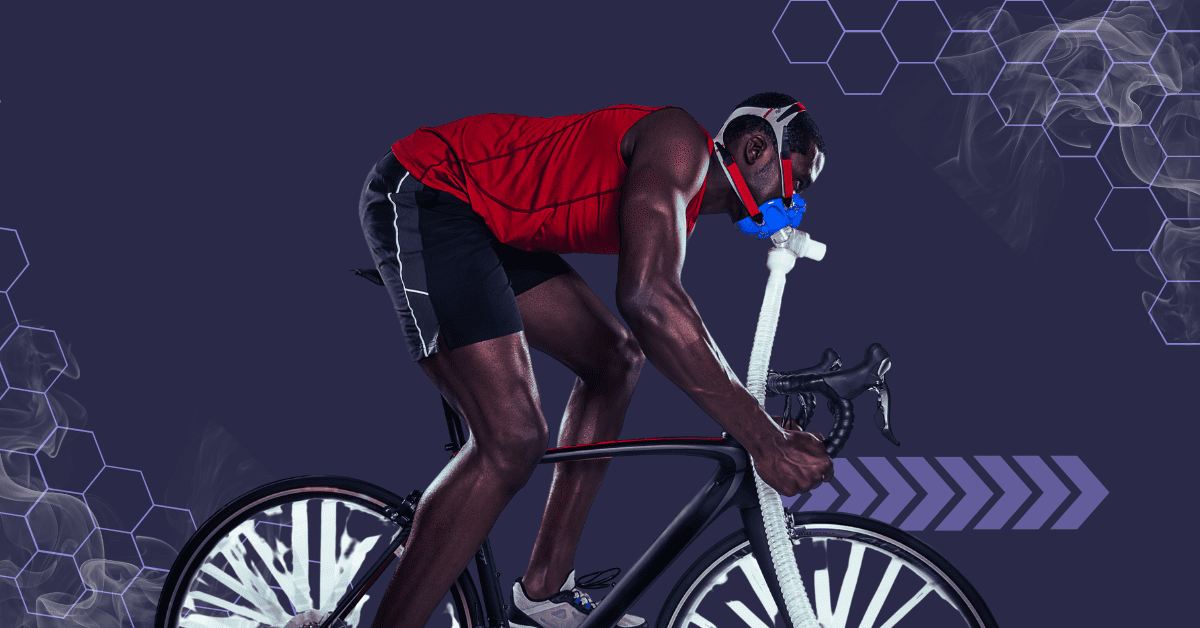
Metabolic testing is undergoing a remarkable transformation. What was once reserved for elite athletes and research laboratories has evolved into an essential tool for forward-thinking personal trainers and fitness professionals. Today’s metabolic testing technology offers unprecedented insights that allow you to deliver personalized training programs backed by objective data rather than generalized formulas.
Gone are the days of relying on traditional estimations and age-based calculations to determine training zones and metabolic efficiency. These outdated approaches—often based on simple heart rate formulas like “220 minus age”—have been steadily replaced by direct measurement technologies that capture a client’s actual physiological responses during exercise. The difference is striking: while conventional methods might place two seemingly similar clients in identical training zones, precise metabolic testing reveals their unique physiological fingerprints, showing why one thrives with high-intensity intervals while another achieves the best results through targeted Zone 2 training.
The horizon of metabolic testing promises even more exciting developments that will revolutionize how you design and implement client programs. Emerging technologies are integrating real-time data analysis, allowing for immediate adjustments to training protocols. Advanced algorithms are beginning to predict how clients will respond to specific training stimuli, allowing you to fine-tune programs before your client even breaks a sweat. Meanwhile, the convergence of mixing chamber technology with intuitive user interfaces is making professional-grade testing more accessible than ever before. As a trainer, these innovations will empower you to demonstrate measurable results, justify your programming decisions with scientific precision, and ultimately deliver superior outcomes that keep clients committed to their fitness journey.
The Evolution of Metabolic Testing
Metabolic testing has come a long way since its humble beginnings. In the early 20th century, scientists began exploring human metabolism by measuring oxygen consumption using basic spirometry techniques and Douglas bags—essentially glorified collection sacks for expired air. These rudimentary methods required meticulous manual calculations and offered limited practical application for everyday training.
The 1970s and 80s marked a turning point as exercise physiology gained prominence, introducing computer-assisted metabolic carts in university laboratories and elite sports training facilities. These early automated systems represented a massive leap forward but remained bulky, expensive, and research-oriented. Most trainers and coaches still relied on subjective measures like perceived exertion or simplified heart rate formulas to estimate training zones.
The real breakthrough for fitness professionals came in the late 1990s and early 2000s when more compact, commercially viable systems began to emerge. These innovations gradually brought laboratory-grade testing capabilities to health clubs, training studios, and even mobile fitness operations. What was once exclusively available to Olympic athletes became accessible to dedicated fitness professionals seeking to elevate their practice through measurements.
The Mixing Chamber Revolution
Among the advancements in metabolic testing has been the development and refinement of mixing chamber technology. Unlike earlier methods that analyzed breath-by-breath data (often resulting in noisy, difficult-to-interpret readings), mixing chamber technology captures expired air in a chamber where it’s thoroughly mixed before being analyzed.
This difference might seem subtle, but its impact on accuracy and reliability is profound. The mixing chamber approach eliminates the substantial variability found in individual breaths, especially during exercise when breathing patterns naturally fluctuate. Instead, it provides a more representative sample of your client’s true metabolic activity by averaging multiple breaths. This results in smoother, more consistent data that better identifies key markers like Aerobic Threshold (AeT), Anaerobic Threshold (AT), and peak oxygen consumption.
For trainers, this technological advantage translates to confidence in the data. When you define a client’s Zone 2 training range using mixing chamber technology, you’re providing guidance based on measurement rather than approximation. This precision allows you to identify the exact heart rate where fat metabolism is optimized or where lactate begins to accumulate—critical information for designing effective training programs.
Beyond Outdated Approaches
Traditional approaches to determining training zones and metabolic efficiency continue to hamper client progress in many training environments. These outdated methods carry limitations that can undermine even the most well-intentioned training programs:
Generic Formulas and Age-Based Calculations: The familiar “220 minus age” formula for estimating maximum heart rate can be off by as much as 15-20 beats per minute for individual clients [Nes 2012]. This means training zones derived from these calculations may be dramatically misaligned with your client’s true physiological response.
Subjective Rating Systems: Relying on perceived exertion alone leaves too much room for interpretation and often results in inconsistent training intensity. What feels like moderate effort to one client might represent near-maximal exertion for another, making standardized programming exceptionally difficult.
Indirect Assessment Methods: Sub-maximal fitness tests that estimate VO2 max based on performance metrics provide only approximations, often with large margins of error. These tests can’t precisely identify training zones or determine where fat metabolism is most efficient.
One-Size-Fits-All Training Zones: Most limiting is the assumption that training zones represent the same percentage of maximum heart rate for all individuals. In reality, physiological markers like anaerobic threshold can occur anywhere from 65% to 90+% of maximum heart rate depending on the individual.
The practical implications of these limitations are substantial. Clients might train too intensely, missing the metabolic benefits of proper Zone 2 training. Others might never push hard enough to stimulate adaptations. Without accurate data, program design becomes guesswork rather than science. Modern metabolic testing eliminates these limitations by directly measuring—rather than estimating—how each client’s body responds to exercise.
Current State of Precision Metabolic Testing
Today’s metabolic testing features several advanced technologies, but mixing chamber-based systems have emerged as the undisputed gold standard for precision and reliability. KORR’s approach to mixing chamber technology stands at the forefront of this field, setting new benchmarks for accuracy while making professional-grade testing more accessible than ever before.
What separates leading systems from the pack is their ability to deliver consistent results without cumbersome calibration procedures. The most advanced technology on the market today features auto-calibration capabilities that eliminate human error and reduce setup time to mere minutes—a stark contrast to older systems requiring manual syringe calibrations and complex gas tank setups. KORR’s auto-calibrating technology exemplifies this evolution, allowing trainers to move from powering on the device to running a complete test in under three minutes.
Modern systems also incorporate sensors capable of measuring oxygen consumption and carbon dioxide production at once. This dual-gas analysis is important for determining overall calorie expenditure and substrate utilization—the mix of carbohydrates and fats being metabolized at different exercise intensities. When your clients ask, “Am I burning fat right now?” you can provide a definitive answer rather than an educated guess.
Today’s leading testing technology transforms complex data into clear insights. The raw data from a VO2 Max test contains thousands of data points that would be overwhelming to interpret manually. Advanced systems process this information automatically, identifying key physiological markers and translating them into training recommendations that trainers and clients can easily understand and implement.
The Zone 2 Revolution: Why Precision Matters
The fitness industry has witnessed a profound shift toward Zone 2 training in recent years, with good reason. This low-intensity training zone—where the body efficiently metabolizes fat while maintaining aerobic energy production—offers a powerful combination of benefits including improved endurance, enhanced mitochondrial function, and fat utilization.
The effectiveness of Zone 2 training hinges entirely on accurately identifying each individual’s unique Zone 2 heart rate range. This presents a challenge: despite its seeming simplicity, Zone 2 cannot be accurately determined through formulas, perceived exertion, or even talk tests. True Zone 2can occur anywhere from 60% to 85% of maximum heart rate depending on the individual, and so accurate data is crucial.
This variability makes precise testing essential. A KORR VO2 Max assessment identifies exactly where a client transitions from primarily fat metabolism to increasing carbohydrate utilization, mapping their personal Zone 2 boundaries with precision. This level of accuracy eliminates the guesswork that plagues conventional training and guarantees that clients are training where they need to be to achieve specific adaptations.
What’s valuable about Zone 2 training is how it improves performance across all intensity zones. By expanding mitochondrial capacity and enhancing fat utilization, effective Zone 2 training creates a more efficient metabolic engine that benefits everything from daily activities to high-intensity performance.These benefits are only realized when the training is conducted at the right intensity—making accurate metabolic testing an indispensable tool for data-driven results.
From Data to Results
The true power of modern metabolic testing lies in how it transforms complex data into practical training applications. Today’s systems don’t just generate numbers—they provide recommendations that directly impact program design and client outcomes.
Leading technology, exemplified by KORR’s intuitive reporting systems, delivers customized training zones based on each client’s unique physiological markers. These aren’t arbitrary percentages but calculated ranges designed to target specific training adaptations. For trainers, this translates to confidence in programming decisions. You’ll know exactly which heart rate ranges will optimize fat burning, improve endurance, build lactate tolerance, or develop peak power—all based on direct measurement rather than estimation.
Modern metabolic testing also provides insights into training efficiency. By measuring caloric expenditure and substrate utilization at different intensities, you can help clients maximize results relative to time invested. This approach is valuable for busy clients seeking the most effective training methods for their limited available time.
Beyond initial assessment, today’s advanced systems allow precise progress tracking over time. By comparing sequential tests, trainers can quantify improvements in VO2 Max, anaerobic threshold, and metabolic efficiency—providing objective evidence of program effectiveness. This capability transforms vague assurances of progress into concrete demonstrations of results, reinforcing client confidence and commitment.
Emerging Trends and Technologies
The metabolic testing landscape is evolving quickly, with several emerging trends poised to revolutionize how trainers utilize metabolic data. These innovations promise to expand the reach and impact of metabolic testing while making the insights even more accessible.
AI and Machine Learning
Artificial intelligence and machine learning algorithms are transforming how metabolic data is interpreted and applied. These powerful technologies go beyond simple data reporting: the ability to identify patterns and make predictions creates new possibilities that are impossible with conventional analysis.
Key developments in AI and machine learning for metabolic testing include:
- Predictive Performance Modeling: Advanced algorithms can analyze a client’s metabolic profile alongside training history to predict how they’ll respond to specific training protocols. This allows for program optimization before implementation rather than through trial and error.
- Automated Pattern Recognition: Machine learning systems can identify subtle metabolic inefficiencies that might be missed in standard analysis. For example, detecting unusual substrate utilization patterns that could indicate nutritional deficiencies or recovery issues.
- Personalized Training Prescription: AI systems are beginning to generate customized training recommendations based on metabolic testing results, client goals, and constraints. These systems refine their recommendations as new data becomes available.
- Early Warning Systems: Algorithms can detect minor changes in metabolic efficiency that might signal overtraining, illness, or other issues before they become problematic. This allows for proactive program adjustments to prevent setbacks.
- Comparative Analysis: Machine learning enables comparison of a client’s metabolic profile against vast databases of similar individuals, providing context and benchmarks that help set realistic expectations and goals.
The power of AI in metabolic testing lies in its ability to transform complex data into insights without requiring trainers to become experts. This democratization of advanced analysis makes metabolic optimization accessible to a broader range of professionals.
Wearable Integration
The integration of metabolic testing with wearable technology represents perhaps the most transformative trend on the horizon. This merger promises to bridge the gap between periodic metabolic assessments and daily training execution.
The evolution of wearable integration includes:
- Real-Time Zone Verification: Emerging technologies will verify whether clients are training in their prescribed metabolic zones during actual workouts, providing immediate feedback when intensity drifts outside optimal ranges.
- Adaptive Training Guidance: Advanced wearables will adjust workout recommendations based on daily readiness metrics, making sure training intensity aligns with current recovery status while still targeting appropriate metabolic zones.
- Longitudinal Data Collection: Monitoring through wearables will provide a picture of how metabolic efficiency changes over time, under different conditions, and in response to various training stimuli.
- Environmental Adaptation: Integrated systems will be able to account for environmental factors like heat, humidity, and altitude that affect metabolic response, automatically adjusting training parameters to maintain the intended physiological stimulus.
- Recovery Optimization: By monitoring heart rate variability, sleep quality, and other recovery metrics alongside metabolic data, integrated systems will identify peak training/recovery ratios for each individual.
This integration creates a feedback loop between lab-quality metabolic assessment and daily training execution. Rather than operating from outdated information, trainers can access near real-time data on how clients’ metabolic responses are evolving, allowing for program adjustments to optimize results.
Hyper-Personalization
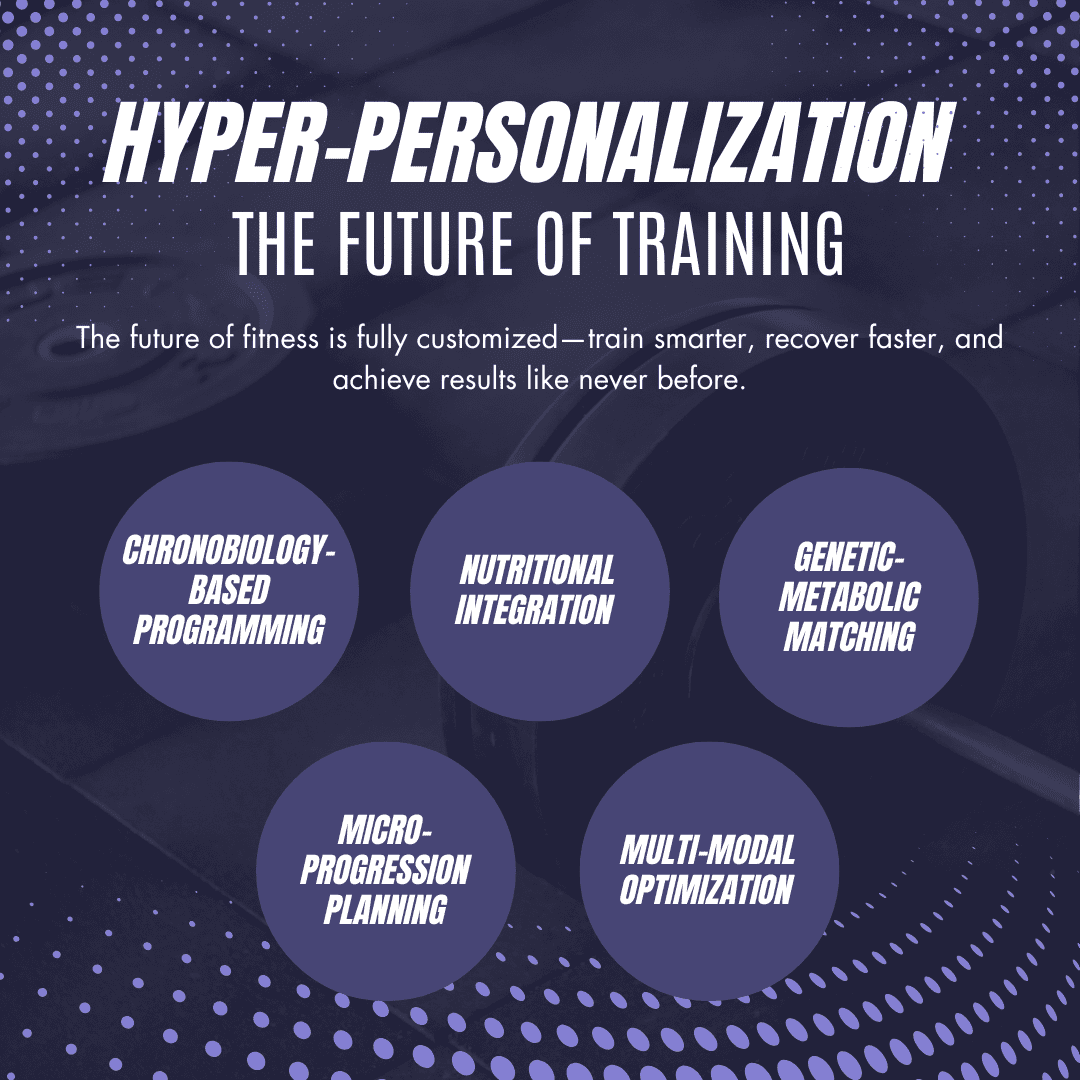
The combination of precise metabolic testing, AI analysis, and continuous monitoring is beginning to enable a level of training personalization previously unimaginable. This hyper-personalized approach recognizes that metabolic response is influenced by countless individual factors and adapts accordingly.
The personalization includes:
- Chronobiology-Based Programming: Emerging systems will identify when each client experiences metabolic efficiency throughout the day, enabling precision timing of different training stimuli for maximum adaptation.
- Nutritional Integration: Advanced platforms will correlate metabolic testing data with nutritional intake to optimize fueling strategies for specific training goals, whether that’s enhanced fat utilization or maximized high-intensity performance.
- Genetic-Metabolic Matching: Cutting-edge approaches are beginning to integrate genetic information with metabolic testing data to identify training modalities based on genetic predispositions toward different energy systems.
- Micro-Progression Planning: AI-driven systems can design progressive overload strategies calibrated to each client’s unique rate of adaptation as revealed through sequential metabolic testing and daily monitoring data.
- Multi-Modal Optimization: Rather than focusing solely on cardiovascular training, systems will provide integrated recommendations across strength, flexibility, and recovery modalities—all informed by metabolic efficiency data.
This trend toward extreme personalization represents a shift from generalized training methodologies to truly individualized approaches. By leveraging precise data, trainers can develop programs that align with each client’s unique makeup, resulting in better progress and fewer plateaus.
The Client Experience of Tomorrow
The evolution of metabolic testing isn’t just about technological advancement—it’s equally focused on transforming the client experience. As the technology matures, the emphasis is shifting toward making the entire process more approachable, intuitive, and immediately valuable to fitness professionals and their clients. This client-centered innovation is removing barriers that once limited metabolic testing to specialized environments and technical experts.
Reimagining the Testing Experience
The metabolic testing experience has undergone a remarkable transformation from its clinical origins to today’s streamlined, client-friendly approach. Modern systems have eliminated pain points that once made testing seem intimidating or cumbersome.
Today’s leading metabolic testing systems have revolutionized the client experience in several key ways:
- Simplified Mask Systems: Gone are the days of claustrophobic, uncomfortable masks. Modern designs feature lightweight, ergonomic masks with soft-touch materials that create a comfortable seal without the sense of confinement many clients previously feared.
- Reduced Test Duration: While early protocols often required 20+ minutes of difficult exertion, contemporary systems can deliver metabolic profiles with protocols as short as 8-12 minutes.
- Wireless Monitoring: The elimination of cumbersome cables has transformed the testing experience. Clients can move naturally on treadmills or bikes without feeling tethered to equipment, creating a more comfortable assessment environment.
- Intuitive Visual Guidance: Real-time visual feedback helps clients understand exactly what’s happening throughout the test. Modern interfaces show current intensity, progress toward completion, and even motivational cues that make the experience more engaging and less clinical.
- Personalized Protocols: Rather than one-size-fits-all approaches, advanced systems now offer protocol options tailored to different fitness levels, from deconditioned beginners to elite athletes, ensuring appropriate challenges without unnecessary discomfort.
This transformation makes metabolic testing accessible to populations who might have been intimidated by the process. Older adults, fitness beginners, and those with previous negative testing experiences can now benefit from metabolic insights without the anxiety that once accompanied these assessments.
From Data to Clarity
Another improvement in the client experience has been the revolution in how test results are presented and explained. What was once a complex array of numbers and graphs requiring extensive interpretation has evolved into clear insights that resonate with clients.
This transformation in results delivery includes:
- Visual-First Reporting: Modern systems prioritize visual representation of key metrics, using intuitive color-coding and graphical elements to make complex physiological concepts understandable..
- Personalized Training Zones: Rather than generic percentages, today’s reports show individualized heart rate zones based on metabolic markers. This eliminates confusion and provides clients with exact numbers they can target during their workouts.
- Plain-Language Explanations: Technical terminology has been replaced with accessible language that connects physiological concepts to clients’ goals and experiences. Instead of discussing “substrate utilization ratios,” reports might highlight “the exact heart rate where you maximize fat burning.”
- Comparative Context: Advanced reporting systems provide context by comparing results to appropriate reference populations. This helps clients understand where they stand relative to peers and what improvements might be realistic.
- Goal-Specific Insights: Contemporary reports emphasize the metrics most relevant to each client’s specific goals, whether that’s fat loss, endurance improvement, or overall health—making the information immediately applicable to their personal fitness journey.
This shift toward intuitive, accessible reporting transforms how clients engage with their data. Rather than recipients of complex information, they become active participants in applying these insights to their training approach.
Beyond the Test
The metabolic testing experience extends beyond the initial assessment, creating an ongoing connected journey that reinforces the value of the insights and tracks progress over time.
This extended experience is enabled by:
- Mobile Companion Apps: Leading systems now offer mobile applications that put clients’ metabolic zones at their fingertips. These apps typically integrate with heart rate monitors, providing real-time guidance during workouts to ensure clients stay in their target zones.
- Wearable Integration: Advanced platforms seamlessly connect with popular fitness wearables, automatically identifying when workouts occur within specific metabolic zones and tracking this data over time. This eliminates the need for manual logging and provides accurate adherence metrics.
- Progress Visualization: Digital platforms compile training data alongside periodic re-testing results, creating visual representations of improvement that motivate clients. Seeing their anaerobic threshold increase or their fat utilization efficiency improve reinforces program adherence.
- Adaptive Recommendations: The sophisticated systems provide evolving recommendations based on training data, adjusting zone targets and workout suggestions as clients adapt and improve. This creates a dynamic experience rather than static guidance.
- Community Connections: Some platforms incorporate community elements, allowing clients to share achievements, participate in metabolic zone-based challenges, and connect with others targeting similar goals—adding a social dimension to the metabolic training experience.
Seamless Professional Integration
For fitness professionals, a valuable evolution has been how easily modern metabolic testing integrates into existing business models and client relationships. What once required specialized expertise and dedicated equipment has become a natural extension of professional services.
Today’s professional-friendly systems feature:
- Simplified Administration: Auto-calibration and intuitive interfaces allow trainers to conduct tests without extensive technical training. Systems like KORR’s can go from powered off to fully calibrated in under 3 minutes, eliminating cumbersome setup procedures.
- Flexible Deployment Options: Compact, portable systems enable testing in varied environments—from dedicated studios to client homes to corporate wellness events—expanding business opportunities beyond fixed locations.
- Client Education Resources: Modern platforms typically include client-facing educational materials that simplify the trainer’s job of explaining metabolic concepts and their practical applications to training.
- Business Integration Tools: Advanced systems offer scheduling, client management, and re-testing reminder features that streamline the operational aspects of incorporating metabolic testing into a fitness business.
The combination of these client-centered innovations is transforming metabolic testing from an occasional specialized assessment into an ongoing element of the fitness experience. As this evolution continues, we can expect even more seamless, intuitive interactions that make sophisticated metabolic insights accessible and actionable for all fitness participants, regardless of their knowledge or athletic background.
Metabolic Testing
As we’ve explored throughout this article, metabolic testing is undergoing a transformation—evolving from a tool for elite athletes into an accessible, user-friendly technology that’s revolutionizing how we approach fitness across all populations. The convergence of precision measurement and intuitive interfaces has created a perfect storm of innovation that benefits fitness professionals and clients alike.
The most exciting aspect of this evolution is how it’s democratizing access to personalized fitness guidance. When a corporate executive understands where her fat-burning zone lies, when a recovering cardiac patient can confidently train at precisely the right intensity, when a weekend warrior can optimize his limited training time—that’s when metabolic testing fulfills its potential.
For fitness professionals, this transformation represents both an opportunity and a responsibility. Those who embrace these advancements position themselves at the forefront of a more personalized approach to fitness. They distinguish their services through data and results rather than generic programming or trial-and-error approaches.
The future of metabolic testing isn’t just about more advanced technology—it’s about making physiological insights accessible and actionable for everyone. It’s about bridging the gap between scientific understanding and practical application. It’s about empowering trainers and clients with the precise information they need to achieve the best results.
Take Your Training to the Next Level
Ready to transform how you design programs and deliver results? Metabolic testing provides the objective data you need to create truly personalized training experiences for every client—from elite athletes to fitness beginners.
KORR’s metabolic testing systems offer the perfect combination of gold-standard accuracy and user-friendly operation. With auto-calibration technology, intuitive interfaces, and comprehensive reporting, you can integrate sophisticated metabolic assessment into your practice without requiring specialized technical expertise.
The fitness industry is shifting toward more personalized, data-driven approaches. Position yourself at the forefront of this evolution by incorporating metabolic testing into your professional toolkit. Your clients will benefit from precisely targeted training, and your business will stand out in an increasingly competitive market.
Contact us today to learn how KORR’s metabolic testing technology can elevate your practice and transform your clients’ results. Because when it comes to effective fitness programming, precision isn’t just preferable—it’s essential.
The future of fitness is personalized. The future is metabolic. And the future is now.