


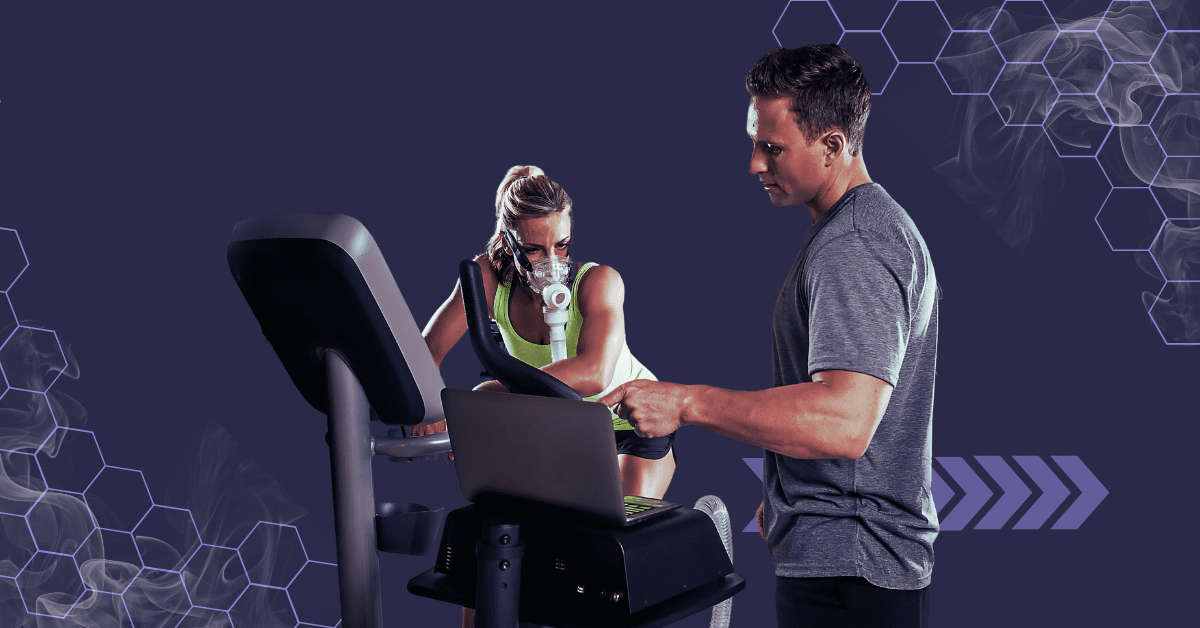
When you watch elite athletes perform, you’re witnessing the result of countless hours of data-driven training. Behind those breakthrough performances lies a secret weapon that separates championship programs from the rest: VO2 max testing. VO2 max testing is the cornerstone of modern athletic conditioning, transforming how coaches design workouts and develop athletes.
At the highest levels of sport, guesswork has no place. Coaches need data to make decisions that can determine whether an athlete reaches their potential or falls short when it matters most. VO2 max testing provides actionable insights that turn training from an art into a science.
Why VO2 Max Testing Has Revolutionized Athletic Training
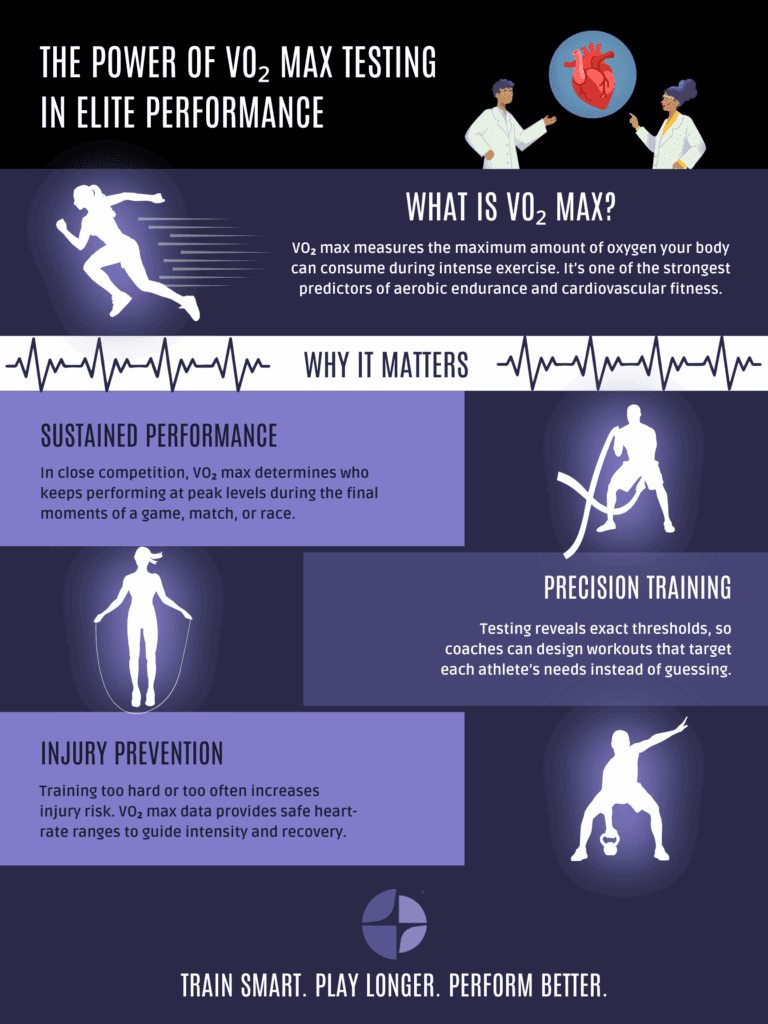
VO2 max measures the maximum rate of oxygen consumption during progressively intense exercise, serving as one of the strongest predictors of cardiovascular fitness and aerobic endurance. For sports that demand sustained high-intensity effort like soccer, tennis, track, cycling, and basketball, this metric becomes the difference between dominating in the final minutes or fading when the competition ramps up.
When two equally skilled athletes face off, what separates the winner from the runner-up? Often, it’s who can maintain peak performance longer. The athlete with superior aerobic capacity doesn’t just run faster or jump higher—they do it consistently, play after play, set after set, lap after lap.
Professional and Division I programs have recognized this truth. VO2 max testing has become their competitive edge, providing coaches with the data needed to optimize every aspect of training. It’s no longer enough to train hard. You need to train smart, and that requires understanding each athlete’s physiological profile.
How Champions Use VO2 Max Data
At Rutgers University, assistant strength and conditioning coach Ruben Cisneros, MS, CSCS, has made VO2 max testing integral to his soccer program. With experience spanning youth to professional levels, including internships with DePaul and the Chicago Fire Football Club, Cisneros understands what separates good programs from great ones.
VO2 max is a reliable and valid method of testing aerobic capacity, allowing coaches to measure progress and compare results to current research on similar populations. This approach demonstrates how elite programs think differently. They don’t just train athletes, they engineer performance improvements based on data.
Cisneros incorporates VO2 max testing multiple times throughout the year, treating it as an essential diagnostic tool. Just as a mechanic uses specialized equipment to improve an engine’s performance, coaches use VO2 max testing to fine-tune their athletes’ cardiovascular systems for peak output.
This approach highlights a shift in athletic training. The most successful programs have moved beyond traditional conditioning methods, embracing technology that provides insight into athlete development. They understand that in today’s competitive landscape, marginal gains determine championships.
The Coach’s Toolkit: What VO2 Max Testing Unlocks
When you implement VO2 max testing in your program, you’re gaining a performance optimization system. The data transforms how you approach every aspect of training design and development.
Precision Training Design Instead of applying generic training loads, you can tailor workouts to each athlete’s aerobic capacity. If testing reveals that a player’s aerobic threshold needs improvement, you can structure sessions that target endurance building while maintaining sport-specific skills. This precision prevents the mistake of overtraining some athletes while undertrained others on the same team.
Injury Prevention Through Smart Loading Training at the right heart rates prevents burnout and overuse injuries. This becomes critical during competition schedules when recovery time is limited. By knowing exactly how hard each athlete can work without crossing into dangerous territory, you protect your roster while maximizing development.
Performance Tracking That Matters You can compare each athlete’s results against sport-specific norms, peer averages, and their own historical data. This creates a roadmap for improvement and helps identify when training adaptations have plateaued. Instead of wondering whether your conditioning program is working, you have proof of progress or early warning signs that adjustments are needed.
Breaking Through Plateaus When VO2 max numbers stop improving, you receive immediate feedback that your training program needs modification. Whether that means changing intensity, adjusting recovery periods, or incorporating new conditioning elements, you can respond quickly rather than wasting weeks or months on ineffective approaches.
Zone 2 Training Optimization One of the most valuable applications of VO2 max testing involves identifying each athlete’s Zone 2 heart rate. Zone 2 training enhances endurance and gives athletes the foundation needed for peak performance in distance-based activities, while supporting recovery between higher-intensity intervals. When you know an athlete’s Zone 2 range, you can ensure their base-building work is effective, which improves their ability to perform in Zones 3, 4, and 5.
The Science Behind Superior Performance
VO2 max testing reveals the maximum volume of oxygen your athletes can utilize during intense exercise. This measurement reflects aerobic fitness and serves as one of the most accurate indicators of cardiovascular health and endurance potential. But the real value lies in what you do with this information.
The testing process identifies precise target heart rates for each athlete, eliminating the guesswork that plagues many conditioning programs. Individuals who are new to training can increase their VO2 max by up to 15-20% within the first few months of training. For trained athletes, the percentage gains may be smaller, but they can be the difference between making the starting lineup and riding the bench.
Modern VO2 max testing goes beyond oxygen consumption measurements. Advanced systems reveal the point where your athletes transition into their anaerobic threshold. This data is gold for coaches because it shows when an athlete will begin accumulating fatigue that can’t be quickly cleared. Armed with this knowledge, you can design training that pushes right up to this threshold without crossing into counterproductive territory.
The testing also provides information about caloric expenditure at different exercise intensities. This becomes invaluable for sports nutritionists and dietitians who need to fuel athletes appropriately. A soccer midfielder covering high distances during matches may require more calories than generic calculations suggest—VO2 max testing provides the proof needed for precise nutrition planning.
Technology That Makes a Difference
Not all VO2 max testing systems are created equal. While some competitors rely on breath-by-breath technology that can be noisy and inconsistent, KORR’s mixing chamber technology is the standard for accuracy and reliability. This distinction matters more than you might think.
Breath-by-breath systems suffer from data noise that requires extensive algorithms to clean up results. Environmental factors like air movement can impact readings, making interpretation difficult and potentially misleading. In contrast, mixing chamber technology provides clean data that coaches can trust when making training decisions.
KORR’s CardioCoach system features rapid auto-calibration that takes just 90 seconds—no syringes, no gas tanks, no complicated setup procedures that eat into valuable training time. You can go from device completely off to running a test in under three minutes. This efficiency matters when you’re working with large rosters and tight schedules.
The system’s one-way valve design prevents air from flowing back into the mask, addressing hygiene concerns while maintaining measurement accuracy. During testing, once an athlete exhales, that air never returns to the breathing circuit—a feature that provides peace of mind for both athletes and coaches.
Breaking Performance Plateaus
For athletes already in excellent condition, VO2 max testing becomes a plateau-busting tool that reveals opportunities for gains that traditional assessments miss. By improving the anaerobic threshold, athletes can sustain higher intensities for longer periods without accumulating debilitating fatigue.
This improvement translates directly to competitive advantages. The basketball player who can maintain defensive intensity in the fourth quarter. The soccer midfielder who makes the same quality runs in minute 90 as in minute 5. The tennis player who maintains serve velocity and accuracy in the third set. These are the athletes who win when it matters most.
The data from VO2 max testing also helps identify the most efficient fat-burning zones for each athlete. This information becomes crucial for athletes who need to maintain power while managing body composition, or for endurance athletes who want to maximize fat utilization during longer training sessions and competitions.
Making VO2 Max Testing Work for Your Program
Successful implementation of VO2 max testing demands a systematic approach to data collection, analysis, and application. The most effective programs test athletes at key points throughout the training year: preseason baseline, mid-season progress checks, and post-season evaluation.
This periodic testing schedule allows coaches to track long-term adaptations while making real-time adjustments to training programs. If mid-season testing reveals that certain athletes haven’t improved as expected, coaches can modify their approach before valuable training time is lost.
The beauty of modern VO2 max testing equipment lies in its durability and versatility. Once you invest in a quality system, it serves your program for years across multiple sports and athlete populations. The same equipment that tests your soccer players in fall can assess your track athletes in spring and your basketball players in winter.
The Competitive Reality: Why You Can’t Afford to Wait
Cardiorespiratory fitness serves as a strong predictor of cardiovascular health and performance outcomes, making VO2 max testing essential for any serious athletic program. Your competitors are already using this technology to gain advantages in athlete development, injury prevention, and performance optimization.
Small improvements in aerobic capacity, properly targeted training loads, and optimized recovery protocols compound over time into big performance gains. The athletes benefiting from VO2 max-guided training will consistently outperform those stuck with generic conditioning approaches.
Bringing Championship-Level Training to Your Athletes
The question isn’t whether VO2 max testing works—elite programs have already proven its value. The question is whether you’re ready to give your athletes the same advantages that championship programs use to develop peak performers.
Modern VO2 max testing systems are more accessible than ever, with compact designs that fit into existing training facilities and user-friendly interfaces that don’t require specialized technicians. The investment pays dividends season after season as you develop athletes more efficiently, prevent injuries more effectively, and achieve results that speak for themselves.
Your athletes deserve training based on their individual physiology, not generic formulas. They deserve coaches who can make data-driven decisions about their development. Most importantly, they deserve the chance to discover just how good they can become when science meets dedication.
Ready to transform your training program with the power of precise VO2 max data? Discover how KORR’s CardioCoach system can unlock your athletes’ potential and give your program the competitive edge it needs to succeed at the highest levels.