


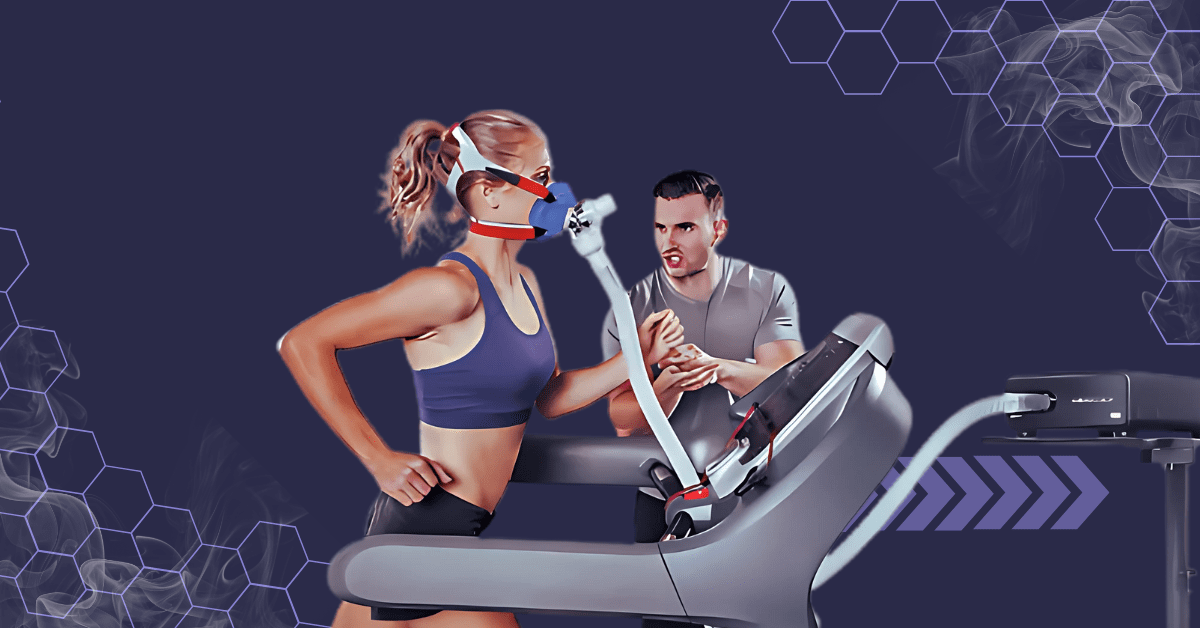
Despite showing up consistently, pushing hard in every session, and even adding extra training on their own, some clients experience a sudden stall in progress. Their heart rate stays elevated, performance declines, and despite their best efforts, they seem to be moving backward instead of forward. What once looked like dedication may have turned into overtraining syndrome, leaving you with the tough challenge of helping them recover and regain their momentum.
This situation presents one of the most complex challenges we face as fitness professionals. Research indicates that overtraining affects up to 65% of endurance athletes during their training cycles1,2. As trainers, we’re not just responsible for pushing our clients to achieve their goals—we’re responsible for protecting them from the devastating effects of overtraining that can derail months or even years of progress.
This is where metabolic testing becomes a valuable tool in your professional arsenal. Rather than relying on generic formulas or subjective measures of exercise intensity, metabolic testing provides you with precise, client-specific data that can transform how you monitor training. Using advanced mixing chamber technology, you can identify your clients’ exact training zones and metabolic efficiency, allowing you to create programs that optimize performance while preventing overtraining.
Think of metabolic testing as your early warning system. It gives you objective data about each client’s physiological responses to exercise, helping you identify their peak training zones—especially Zone 2 where fat-burning efficiency peaks and sustainable endurance is built. This approach enables you to make evidence-based decisions about training intensity and progression, channeling your clients’ enthusiasm for long-term success.
Understanding Overtraining Syndrome
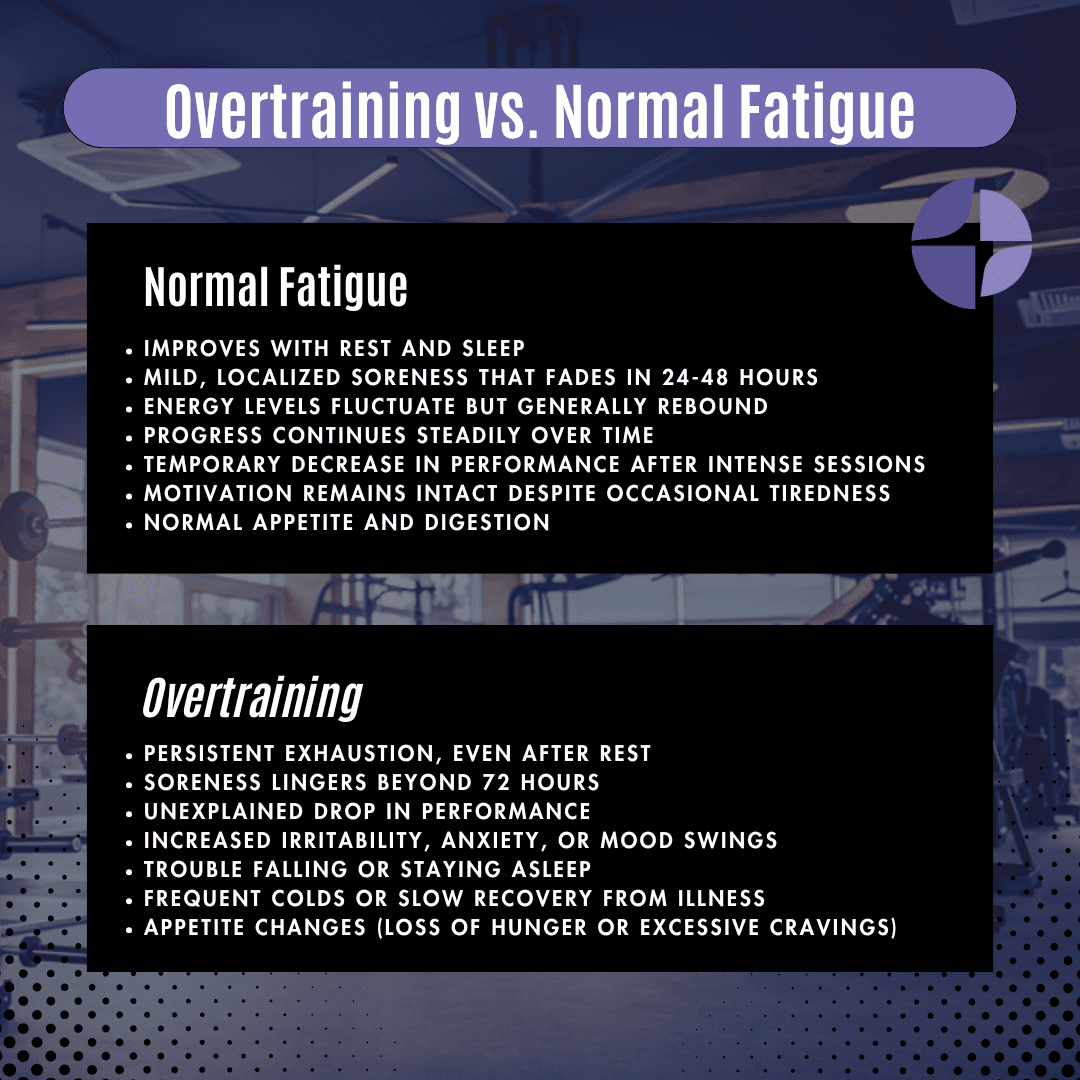
Trainers have to differentiate between normal training fatigue and true overtraining syndrome (OTS). While temporary fatigue is a natural part of the training process that leads to adaptation and improvement, OTS represents a serious physiological breakdown that can derail a client’s progress and health.
The manifestation of overtraining syndrome extends far beyond simple muscle fatigue. One of the earliest warning signs is a persistently elevated resting heart rate, typically 5-10 beats per minute above normal, which can signal autonomic nervous system disruption. This is often accompanied by a puzzling decrease in performance despite continued training – what once felt manageable becomes increasingly challenging, and clients struggle to maintain their usual training intensities.
The Fatigue Factor
The fatigue associated with OTS is particularly insidious because it doesn’t improve with rest. Unlike normal training fatigue that resolves with adequate sleep, clients with OTS often report feeling exhausted upon waking, even after getting eight or more hours of sleep. This exhaustion is often paired with actual sleep disruption – despite feeling tired, clients struggle to fall asleep or maintain restful sleep, creating a vicious cycle that further impairs recovery.
Hormonal imbalances from overtraining can significantly impact mood regulation. Previously stable clients may become unusually irritable, anxious, or show signs of depression. These mood changes often coincide with a noticeable decrease in motivation and training enthusiasm. What’s particularly telling is that this isn’t just mental fatigue—it’s often the body’s protective mechanism attempting to force rest.
The immune system becomes another casualty of OTS. Clients may notice they’re catching frequent colds or taking longer to recover from minor illnesses. This increased susceptibility to infection occurs because of elevated cortisol levels and decreased immune function, making it harder for the body to defend against common pathogens.
What makes OTS particularly challenging for trainers is its complexity. It’s not simply a matter of doing too much exercise; rather, it’s a syndrome involving intricate interactions between multiple physiological systems. The autonomic nervous system’s balance between sympathetic (“fight or flight”) and parasympathetic (“rest and digest”) responses becomes disrupted. This disruption affects everything from heart rate variability to recovery capacity.
The Role of Metabolic Testing
Understanding individual training thresholds becomes crucial because every client responds differently to training stress. These thresholds are influenced by numerous factors: current metabolic efficiency, cardiovascular fitness level, recovery rate, stress tolerance, sleep quality, nutritional status, previous training history, age, gender, and genetic predisposition. Each of these factors plays a role in determining how much training stress a client can handle before tipping into overtraining.
This is exactly why individualized metabolic testing is a vital tool for fitness trainers. Traditional methods of monitoring training intensity like perceived exertion or standard heart rate formulas, fall short because they don’t account for these individual differences. Through metabolic testing, you can identify your clients’ physiological thresholds, determine their actual aerobic and anaerobic thresholds, and establish precise heart rate training zones that optimize results while preventing overtraining.
The Science of Metabolic Testing
VO2 Max testing measures cardiovascular fitness and opens a window into your client’s metabolic efficiency and training capacity. Using mixing chamber technology, you can precisely measure how effectively a client’s body utilizes oxygen during exercise. This test reveals their maximal oxygen consumption, training zones, and metabolic markers that inform training decisions.
The Power of Mixing Chamber Technology
What sets our approach apart is the use of mixing chamber technology—considered the gold standard in metabolic testing. Unlike breath-by-breath systems that can produce variable results, mixing chamber technology provides stable, accurate measurements by analyzing the complete composition of expired air. This method delivers reliable data about your client’s:
- Aerobic threshold (AeT)
- Anaerobic threshold (AT)
- Peak oxygen consumption
- Fat utilization efficiency
- Precise heart rate training zones
Metabolic Efficiency and Training Tolerance
Understanding a client’s metabolic efficiency is key to determining their training tolerance. Metabolic testing accurately identifies multiple transition points where the body shifts its energy sources, going from mostly fat at low-intensity, to mostly carbohydrate at high-intensity. This insight helps define heart rate zones for endurance development, ensures Zone 2 training occurs at the right intensity for maximum fat-burning efficiency, and identifies when increased intensity may become counterproductive. With this data, trainers can establish sustainable training volumes tailored to each client’s metabolic capacity, preventing burnout and fueling long-term progress.
Training Zones
Our mixing chamber technology goes beyond basic heart rate calculations to establish precise, individualized training zones. While standard formulas might suggest similar zones for two clients of the same age, metabolic testing reveals different peak training ranges. This precision allows you to:
Determine true Zone 2 training ranges: Zone 2 is where the magic happens for endurance development and metabolic efficiency. Through precise testing, you can identify the exact heart rate range where your client achieves the best fat oxidation and aerobic development. This zone is individual – while generic formulas might place it at 65-75% of max heart rate, metabolic testing often reveals it could be significantly different for each client. Training in the correct Zone 2 range improves mitochondrial function, enhances fat utilization, and builds a strong aerobic base without accumulating excessive fatigue.
Identify exact intensity levels: Mixing chamber technology measures precisely where your client’s body achieves peak fat oxidation. Understanding exactly where this occurs allows you to program sessions that enhance the body’s ability to utilize fat as fuel, improving endurance capacity and reducing reliance on limited glycogen stores.
Establish upper limits for high-intensity work: Rather than guessing at appropriate high-intensity training thresholds, metabolic testing shows exactly where your client transitions from aerobic to anaerobic metabolism. This allows you to prescribe high-intensity intervals that provide stimulus without excessive stress, reducing the risk of overtraining while maximizing adaptation.
Create personalized heart rate guidelines: Whether the goal is endurance development, lactate threshold improvement, or VO2 max enhancement, metabolic testing provides precise heart rate ranges for each training objective. This guarantees that every session has a specific purpose and delivers the intended physiological adaptation.
Monitoring Progress and Preventing Overtraining
Regular metabolic testing provides data about how your clients are adapting to training. By tracking changes in metabolic efficiency and training zones over time, you can:
Detect early signs of overtraining: Regular testing can reveal subtle changes in metabolic efficiency before obvious symptoms of overtraining appear. A decrease in fat oxidation at previously efficient heart rates or a shift in training zones can signal the need to adjust training volume or intensity.
Adjust training intensities: As your clients adapt to training, their metabolic efficiency and training zones will change. Regular testing allows you to fine-tune training intensities to match their current fitness level, continuing progress without overreaching.
Make evidence-based decisions: Rather than relying on subjective measures or arbitrary progression schemes, metabolic testing provides objective data to guide training advancement. This ensures program progression matches your client’s physiological adaptations.
The Power of Individualized Training Zones
While many trainers rely on age-based formulas to calculate training zones, metabolic testing reveals these generic calculations frequently miss the mark. Through mixing chamber technology, we can identify five training zones that are unique to each client:
Zone 1 (Recovery): This highly individualized zone is where true recovery occurs. While standard formulas might place this at 50-60% of max heart rate, metabolic testing reveals this zone can vary widely between individuals. Accurate identification of this zone is crucial for proper recovery between challenging sessions.
Zone 2 (Fat Optimization): Perhaps the most important zone for endurance development and overtraining prevention. This zone is where clients build their aerobic foundation while maintaining metabolic efficiency.
Zone 3 (Aerobic Power): This zone identifies the transition away from aerobic metabolism and towards anaerobic metabolism. The primary benefits of training in this zone are improved lactate management and “race pace” efforts. Spending too much time here can add in unnecessary fatigue that impacts long-term training adaptations.
Zone 4 (Anaerobic Threshold): This high-intensity zone requires careful management to prevent overtraining. Metabolic testing shows exactly where this threshold occurs, allowing you to prescribe the right amount of high-intensity work for each client.
Zone 5 (VO2 Max): The highest intensity zone, where maximum oxygen consumption occurs. This zone is best determined through metabolic testing and is essential for prescribing appropriate high-intensity intervals.
The Zone 2 Revolution
Zone 2 training has emerged as a tool in preventing overtraining while building fitness, and its importance cannot be overstated. At its core, Zone 2 training enhances metabolic efficiency by improving mitochondrial function, optimizing fat utilization, and improving oxygen delivery and utilization. This response creates a more efficient energy system that can sustain effort for longer periods without accumulating excessive fatigue.
What makes Zone 2 training valuable is its sustainability. Unlike high-intensity training that requires significant recovery time, proper Zone 2 training can be performed frequently while maintaining adequate recovery. This consistent training stimulus develops the aerobic system methodically, creating a solid foundation for more intense work when appropriate.
The role of Zone 2 training in preventing overtraining is significant. By maintaining intensity at a level where fat oxidation is optimized and stress hormones remain controlled, athletes can build fitness while keeping their bodies in a recoverable state. This balance is core for long-term progress and helps prevent excessive fatigue that often leads to overtraining syndrome.
Application in Training Design
Understanding true training zones through metabolic testing revolutionizes program design by providing precise, actionable data. Recovery days become truly regenerative when based on accurate Zone 1 measurements. Instead of guessing at appropriate recovery intensities, trainers can prescribe exact heart rate ranges that promote restoration without adding unnecessary stress to the system.
Base building takes on new meaning when Zone 2 is properly identified. Rather than relying on perceived effort or arbitrary percentages, trainers can prescribe training that targets aerobic development and metabolic efficiency. The prescription of high-intensity work becomes more precise and effective when based on accurate Zone 4 and 5 measurements. Knowing where these thresholds occur allows trainers to design interval sessions that provide prime stimulus without excessive stress. This precision prevents overtraining while achieving performance improvements.
Progressive overload, a cornerstone of effective training, becomes more scientific and reliable when based on metabolic testing data. Trainers can track changes in metabolic efficiency and training zones over time, using this information to guide program progression, ensuring that training intensity increases match physiological adaptations, reducing the risk of overtraining while maximizing results.
Early Warning Signs
Metabolic testing serves as an early warning system, capable of detecting subtle changes in performance and efficiency long before visible symptoms of overtraining appear. Through regular assessment, trainers can identify metabolic shifts that might indicate the onset of overtraining syndrome. These changes often manifest up to several weeks before traditional signs like decreased performance or chronic fatigue become apparent.
Identifying Metabolic Warning Signs
Zone 2 Efficiency Changes
One of the earliest and most reliable indicators of potential overtraining is a decline in Zone 2 efficiency. When clients who previously maintained steady fat oxidation at a given heart rate suddenly show decreased efficiency in this zone, it may signal the early stages of overtraining. This manifests first as higher heart rates at previously comfortable workloads – a client who typically maintained Zone 2 at 130-140 bpm might now require 140-150 bpm for the same output. Their fat oxidation rates may decline at familiar intensities, indicating reduced metabolic efficiency.
The shift in training zones, including lowered aerobic or anaerobic thresholds, provides concrete evidence of decreased fitness that might not yet be apparent in performance. A client’s reduced ability to maintain steady-state exercise in Zone 2 often appears in metabolic testing before they feel any different during training.
Metabolic Flexibility Assessment
Changes in metabolic flexibility – the body’s ability to switch between fat and carbohydrate utilization – often provide early warning signs of systemic fatigue. Through mixing chamber technology, we can measure when a client transitions from primarily fat oxidation to carbohydrate utilization during incremental exercise. When this transition occurs earlier than in previous tests, it suggests compromised metabolic function.
We also see reduced fat oxidation at previously efficient intensities, indicating that the body is struggling to access and utilize fat as fuel effectively. This often appears with increased reliance on glycogen at lower intensities than previously observed. Compromised recovery between intervals becomes apparent in the metabolic data before the client notices subjective changes in their training quality.
Recovery Rate Indicators
Metabolic testing provides objective data about recovery capacity through several measurements. The time required for heart rate to return to baseline after standardized efforts lengthens as overtraining develops. We can measure a client’s ability to maintain oxygen utilization during repeated efforts – a decrease in this consistency often precedes a visible performance decline.
Changes in substrate utilization during recovery periods provide valuable information. A client showing normal training adaptation should maintain or improve their ability to return to fat oxidation quickly after high-intensity efforts. When this ability declines, it may Indicate excessive fatigue. Changes in ventilatory efficiency – how effectively a client processes oxygen during exercise – can indicate developing problems before they affect performance.
Importance of Regular Assessment
Training Phase Considerations
Different training phases require careful consideration of testing frequency and timing. During base building phases, testing every 8-12 weeks provides adequate monitoring of aerobic development. However, when clients enter high-intensity training phases, more frequent testing (every 4-6 weeks) may be necessary to monitor their stress response and recovery capacity.
Competition preparation requires strategic testing to reach peak performance without overtraining. This often means more frequent monitoring as intensity increases, with particular attention to metabolic efficiency in Zone 2, which often declines first when training load becomes excessive. During recovery periods, testing verifies return to baseline metabolic function and readiness for training progression.
Individual Risk Factor Analysis
Testing frequency should be carefully calibrated based on individual risk factors. Athletes with a history of overtraining syndrome require more frequent monitoring, often every 4-6 weeks, to catch early signs of regression. Clients in high-stress occupations benefit from closer metabolic tracking, as external stress greatly impacts training tolerance and recovery capacity.
Age also influences recovery capacity and testing intervals – older athletes often benefit from more frequent monitoring as their recovery capacity may be more easily compromised. Training experience and volume also affect monitoring needs – less experienced athletes or those increasing volume need closer tracking to ensure appropriate adaptation.
Elevate Your Training Through Precision
Throughout this exploration of overtraining syndrome and metabolic testing, one thing becomes crystal clear: prevention through measurement is far more effective than trying to recover from overtraining once it occurs. The ability to identify early warning signs through metabolic testing transforms how we approach training progression and client health.
Beyond Traditional Methods
While traditional methods of monitoring training—perceived exertion, heart rate formulas, and performance metrics—have their place, mixing chamber technology provides an added level of precision in understanding individual client responses to training. This technology provides your clients with the most efficient path to their goals while protecting their long-term health and performance capacity.
Partner with KORR to bring scientific precision to your training practice. Our metabolic testing technology provides you with:
- Industry-leading accuracy through proven mixing chamber technology
- Automatic calibration for consistent, reliable results
- Immediate, actionable data for program design
- Clear, client-friendly reports that demonstrate your professional expertise
Don’t wait until you see signs of overtraining in your clients. Contact KORR today to learn how our metabolic testing equipment can enhance your training practice and protect your clients’ health and performance. Take the first step toward precision-based training by partnering with KORR—where science meets results in preventing overtraining and optimizing performance.
References:
- Weakley J, Halson SL, Mujika I. Overtraining Syndrome Symptoms and Diagnosis in Athletes: Where Is the Research? A Systematic Review. Int J Sports Physiol Perform. 2022;17(5):675-81. Epub 20220323. doi: 10.1123/ijspp.2021-0448. PubMed PMID: 35320774.
- Carfagno DG, Hendrix JC, 3rd. Overtraining syndrome in the athlete: current clinical practice. Curr Sports Med Rep. 2014;13(1):45-51. doi: 10.1249/jsr.0000000000000027. PubMed PMID: 24412891.