



For decades, fitness professionals and healthcare providers relied on predictive formulas and estimations to determine metabolic rates and design exercise programs. These methods lead to frustration for practitioners and clients when results don’t match expectations. Enter indirect calorimetry—a game-changing technology that measures how many calories your body burns and how efficiently you use oxygen, providing a window into your unique metabolic fingerprint.
At its core, indirect calorimetry is elegantly simple, yet scientifically strong. It relies on a biological truth: burning one calorie requires precisely 208.06 milliliters of oxygen. By measuring the volume of expired air and analyzing oxygen concentrations, these systems can determine exactly how many calories you’re burning—whether at rest or during intense exercise. Unlike equations or calculations based on population averages, indirect calorimetry provides individualized data about your body’s energy expenditure.
For fitness professionals, this technology transforms program design from guesswork to precision engineering. Imagine telling a client exactly which heart rate zone will maximize their fat burning efficiency, or knowing how many calories they need to maintain weight after significant loss. For health practitioners, indirect calorimetry offers objective metrics for metabolic health, allowing for personalized interventions and progress tracking. And for performance coaches, the ability to pinpoint an athlete’s true anaerobic threshold and training zones can be the difference between podium finishes and plateaued performance.
In an era where personalized health and fitness solutions are in demand, indirect calorimetry is the gold standard for metabolic assessment—turning metabolic science into actionable insights that drive results, improve adherence, and ultimately transform lives.
What is VO2 Max and Why Does It Matter?
VO2 Max is a measurement that reflects your body’s ability to perform sustained exercise – it’s widely considered the gold standard for assessing cardiovascular fitness and aerobic endurance.[1,2] Specifically, it measures the maximum amount of oxygen your body can utilize during intense exercise, expressed as milliliters of oxygen used per minute per kilogram of body weight (ml/kg/min).
Research has consistently shown that VO2 Max is one of the strongest predictors of cardiovascular and all-cause mortality.[3,4] Even a modest improvement in VO2 Max – an increase of just one metabolic equivalent (3.5 ml/kg/min) – is associated with a remarkable 10-25% improvement in survival rates.[5] This makes VO2 Max not just a performance metric but a vital health indicator.
The Science Behind VO2 Max Testing
When you undergo a VO2 Max test, you’re getting a window into how efficiently your body processes and uses oxygen. The test measures the volume of oxygen you consume while exercising at your maximum intensity.
During the test, you’ll wear a mask that collects all the air you breathe out. Precision sensors analyze the oxygen concentration in your expired air compared to the ambient air. This allows for an exact calculation of how much oxygen your body is consuming.
Modern VO2 Max testing equipment like KORR’s CardioCoach® uses advanced mixing chamber technology – considered the “Gold Standard” for accuracy.[6,7] Unlike breath-by-breath systems that can produce noisy data, mixing chamber technology provides stable, reliable measurements that truly reflect your physiological state.[8,9]
How the Technology Works
Modern indirect calorimetry devices integrate technology with user-friendly interfaces to deliver professional-grade metabolic assessment. Here’s how these systems work to measure gas exchange:
Air Flow Measurement: A precision air flow sensor (pneumotach) measures the exact volume of air your client exhales. The best systems use medical-grade pneumotachs with no moving parts, guaranteeing accuracy without mechanical wear over time. This technology—the same used in hospital respirators—provides reliable flow measurements without the need for frequent recalibration.
Oxygen Analysis: An oxygen sensor measures the concentration of oxygen in exhaled air compared to ambient air. Modern sensors can detect minute changes in oxygen concentration with remarkable precision—down to 0.01% differences—allowing for accurate calculation of oxygen consumption (VO₂).
Carbon Dioxide Analysis: A carbon dioxide analyzer measures CO₂ concentration in exhaled air. This measurement allows for calculation of the Respiratory Exchange Ratio (RER), which reveals whether your client is primarily burning carbohydrates or fats at different exercise intensities.
Automated Calibration: Leading systems incorporate automatic calibration procedures that compensate for variations in barometric pressure, temperature, and humidity—all factors that affect gas measurement accuracy. This ensures consistent results regardless of environmental conditions in the training facility.
Data Processing: Integrated software analyzes the collected data in real-time, applying validated metabolic equations to convert gas exchange measurements into practical metrics like caloric expenditure, fat vs. carbohydrate utilization, and personalized heart rate training zones.
User Interface: Modern systems transform complex physiological data into intuitive reports and visualizations that trainers and clients can easily understand and apply to training programs.
The most advanced systems, like those from KORR Medical Technologies, have refined this technology to be remarkably user-friendly. A complete test—from turning on the device to receiving results—can be accomplished in minutes without sacrificing accuracy or detail.
For trainers seeking to differentiate their services in a competitive market, incorporating this sophisticated yet accessible technology offers a powerful combination of scientific validity and practical application that clients can’t find with standard training approaches.
Beyond the Numbers: What VO2 Max Testing Reveals
Resting Metabolic Rate (RMR) Testing
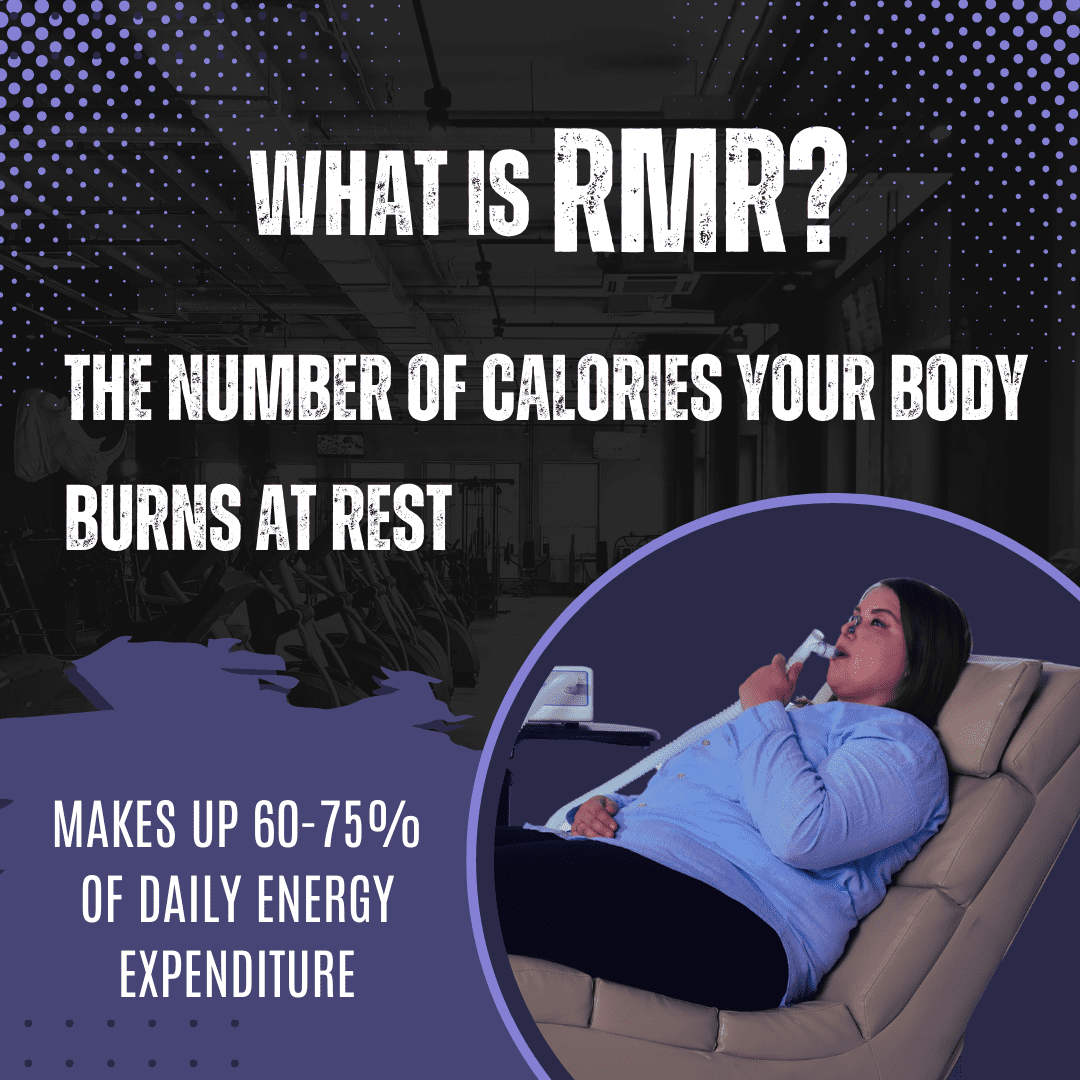
Resting Metabolic Rate testing provides the cornerstone for nutrition and weight management programs. RMR quantifies how many calories a client burns at rest, doing nothing more than sitting in a chair. This measurement represents 60-75% of total daily energy expenditure for most individuals—making it the single most important variable in weight management.
Unlike predictive equations that can be off by hundreds of calories, indirect calorimetry provides precise measurements of your client’s metabolic rate. Research published in the Annals of Surgery examined 112 morbidly obese adults and concluded that “in view of the inability to generate a valid predictive equation for the morbidly obese, measuring energy expenditure is the only viable alternative.”
The testing procedure is remarkably straightforward:
- Clients avoid eating for 4 hours before testing
- Exercise is avoided on the day of testing
- Stimulants like caffeine are avoided prior to testing
- During the test, clients relax in a comfortable position
- A mouthpiece and nose clip ensure all exhaled air is analyzed
- After approximately 10 minutes, the test concludes with detailed results
RMR testing offers numerous benefits beyond simple caloric assessment:
- Proof of normal metabolism: Most overweight clients believe they have a slow metabolism when in fact most have average or above-average metabolic rates
- Stabilizing weight loss: Identifying the precise calorie target during the period after weight loss when metabolic adaptation occurs
- Detecting clinical hypo-metabolism: Identifying clients with genuinely low metabolic rates who may require medical intervention
- Assessing treatment effects: Measuring how interventions like exercise programs, dietary changes, or medications affect baseline metabolism
For trainers working with weight management clients, RMR testing provides the objective foundation needed to create realistic expectations and sustainable programs.
Zone Training Determination
A comprehensive VO2 Max test provides much more than just a single number. It identifies several critical physiological markers:
1. Your Fat-Burning Zone
Find your personal “FatMax” – the precise heart rate where your body burns fat most efficiently. This isn’t based on generic formulas but on your unique physiology.[10]
2. Aerobic Threshold (AeT)
This marks the intensity where your body begins shifting from primarily fat burning to using more carbohydrates as fuel – a critical transition point for endurance training.[11]
3. Anaerobic Threshold (AT)
Perhaps the most valuable data point for serious training, your AT identifies exactly when your body begins accumulating lactate faster than it can clear it – your physiological “red line.” Traditional formulas can be off by 20+ beats per minute when estimating this threshold![12]
4. Personalized Training Zones
Rather than relying on age-based calculations (like the outdated “220 minus age” formula), VO2 Max testing establishes precise heart rate zones tailored specifically to your physiology.
Zone 2 Training: The Sweet Spot for Health and Performance
Zone 2 training – exercise performed below your aerobic threshold where fat burning is maximized – is critical.[13] Training in this zone helps build aerobic capacity and endurance, optimizes fat burning, and has been shown to improve overall cardiovascular fitness levels.[14]
The challenge? Finding your true Zone 2 requires precise measurement – it cannot be accurately estimated using formulas. VO2 Max testing identifies your exact Zone 2 heart rate range, allowing you to train with precision.
What makes Zone 2 training so powerful is that improvements in this zone enhance performance across all other zones. It builds the aerobic foundation that supports higher-intensity efforts, making it valuable for athletes and fitness enthusiasts alike.
Why Accurate Testing Matters
Generic formulas and calculators provide approximate estimates at best. Consider these facts from research studies:
- Studies show that estimating exercise results using predictive formulas is inadequate. One NIH-funded research study concluded that “in view of the inability to generate a valid predictive equation… measuring energy expenditure is the only viable alternative.”[15]
- A meta-analysis on training intensity found that similar improvements in VO2 Max can be achieved with various training intensities, with higher-intensity training requiring less total training volume to achieve the same results. However, spending too much time at high-intensity can compromise recovery and lead to overtraining. This highlights the importance of using accurate physiological data to guide training – ensuring optimal adaptation and recovery.[16]
- Research with contestants from “The Biggest Loser” revealed that metabolism and metabolic efficiency can change dramatically after weight loss, making regular testing essential for continued progress.[17]
Fat Burning Efficiency Assessment
Beyond measuring maximal capacity, indirect calorimetry provides detailed insights into metabolic efficiency—specifically, how effectively a client utilizes fat as fuel at different exercise intensities. This application has profound implications for weight management, endurance performance, and metabolic health.
By measuring oxygen consumption and carbon dioxide production, these systems calculate the Respiratory Exchange Ratio (RER)—a value that indicates the proportion of energy derived from fats versus carbohydrates:
- RER of 0.7: Indicates nearly 100% fat utilization
- RER of 0.85: Indicates approximately 50% fat and 50% carbohydrate utilization
- RER of 1.0: Indicates nearly 100% carbohydrate utilization
This assessment reveals:
- Personal Fat-Burning Zone: The exact heart rate range where fat utilization is maximized
- Metabolic Flexibility: How effectively the client transitions between fuel sources
- Substrate Efficiency: How well the client utilizes fat at different intensities
- Training Status: Well-trained individuals typically burn fat more efficiently at higher intensities
For weight management clients, pinpointing the exact fat-burning zone eliminates guesswork and allows for maximally efficient training sessions. For endurance athletes, improving fat utilization at higher intensities can improve performance by preserving limited glycogen stores.
The practical application is straightforward: once you identify a client’s fat-burning zone through indirect calorimetry, you can prescribe heart rate ranges for different training goals:
- Maximum fat utilization: For weight management clients focusing on fat loss
- Improved metabolic flexibility: For clients with metabolic health concerns
- Enhanced substrate efficiency: For endurance athletes seeking performance gains
For trainers working with clients from weight management to performance, fat burning efficiency assessment provides insights that directly inform effective program design.
The KORR Advantage
When it comes to VO2 Max testing technology, all systems are not created equal. KORR’s CardioCoach® offers several key advantages:
- Mixing Chamber Technology: Scientific research confirms mixing chamber systems provide more accurate and consistent measurements compared to breath-by-breath systems, particularly at exercise extremes.[18]
- Complete Metabolic Analysis: These advanced systems measure both oxygen consumption and carbon dioxide production, allowing for analysis of fat vs. carbohydrate utilization during exercise.
- Easy Calibration: Auto-calibrates in just 90 seconds, making testing efficient and reliable.
- User-Friendly Experience: Simple testing protocols with clear, actionable results you can immediately apply to your training.
Transform Your Training with Precision
Imagine knowing exactly how your body responds to different exercise intensities. With accurate VO2 Max testing, you can:
- Train smarter, not harder – focus your efforts at the intensities that produce optimal results
- Maximize fat burning by training in your personal fat-burning zone
- Improve endurance by precisely targeting your aerobic threshold
- Enhance performance by training at the right intensity to push your anaerobic threshold higher
- Track improvements in metabolic efficiency over time with periodic retesting
Whether you’re an athlete looking to break through performance plateaus or someone focused on improving health and losing weight, VO2 Max testing provides the physiological insights needed to optimize your approach.
Choosing the Right Indirect Calorimetry Technology
When investing in indirect calorimetry technology for your facility, the differences between systems can dramatically impact your workflow and the quality of data you receive. KORR Medical Technologies has established itself as the industry leader by focusing on features that matter most to fitness professionals and health practitioners.
Unlike competitors that offer stripped-down devices that measure only oxygen consumption, KORR’s CardioCoach® systems provide complete metabolic assessment through comprehensive gas analysis. This allows for measurements like Respiratory Exchange Ratio (RER), which reveals whether your client is burning primarily fat or carbohydrates—essential information for targeted program design that competitors cannot provide.
Key differentiating features to prioritize include:
Mixing Chamber Technology: KORR’s gold-standard mixing chamber technology provides superior accuracy compared to breath-by-breath systems used by competitors. This technology has been independently validated by leading research institutions, confirming its precision across the full spectrum of exercise intensities.
Complete Metabolic Analysis: Look for systems measuring oxygen consumption and carbon dioxide production. KORR’s advanced systems provide this complete analysis, enabling accurate calculation of fat vs. carbohydrate utilization that single-gas competitors cannot match.
Integrated Heart Rate Monitoring: KORR systems integrate heart rate data with metabolic measurements, allowing for precise zone determination based on physiological markers rather than arbitrary percentages.
User-Friendly Software: KORR’s interface transforms complex physiological data into actionable insights without requiring a degree to interpret results.
Comprehensive Testing Capabilities: The ability to perform both RMR and VO2 Max testing with a single system maximizes your investment. KORR offers this versatility while competitors often require separate devices for different test types.
These essential features distinguish professional-grade systems from entry-level devices that lack the comprehensive capabilities needed for evidence-based practice.
Ease of Use and Calibration
Perhaps the most dramatic difference between KORR and competitors lies in user experience—particularly calibration and operational simplicity. While competitors market “portable” solutions, they often require cumbersome setup procedures that make daily use impractical.
KORR’s revolutionary self-calibrating systems transform the user experience:
90-Second Auto-Calibration: KORR systems automatically calibrate in just 90 seconds with the push of a button—no syringes, calibration gases, or manual procedures required. Competitors typically require 5-10 additional minutes of manual calibration using external tools before each testing session.
No Moving Parts Flow Sensor: KORR’s advanced pneumotach contains no moving parts to wear out or require replacement—unlike the mechanical sensors in competing devices that demand frequent maintenance and recalibration.
Simple Mask System: While competitors require disassembling and reassembling mask components between tests and clients, KORR offers a streamlined approach that allows quick transitions between clients without compromising hygiene or accuracy.
Intuitive Testing Interface: KORR’s user-friendly software guides even inexperienced staff through the testing process with clear, step-by-step instructions.
For busy professionals, KORR’s emphasis on operational efficiency means more time delivering value to clients and less time wrestling with technology.
Embrace the Future of Metabolic Assessment with KORR
The science is clear: indirect calorimetry transforms how we understand, assess, and improve human metabolism. As the fitness and health industries increasingly shift toward evidence-based, personalized approaches, the ability to measure—rather than estimate—metabolic function has become essential for professionals committed to delivering results.
KORR’s pioneering technology has made this powerful assessment methodology accessible to trainers, coaches, and health practitioners without sacrificing the gold-standard accuracy previously available only in research settings. By combining medical-grade precision with intuitive operation and reporting, KORR has democratized metabolic assessment—enabling professionals across the spectrum to implement truly personalized programming based on physiological data.
The impact on practice is profound. Rather than relying on generic formulas and population averages, you can now design programs based on each client’s unique metabolic fingerprint. This precision approach transforms the client experience—replacing frustration and plateaus with clear progress and sustainable outcomes.
For your business, KORR’s technology offers a powerful differentiation in an increasingly competitive marketplace. While others continue to offer standardized approaches, you can provide the evidence-based personalization that today’s clients demand. The return on investment extends beyond equipment costs to enhanced client outcomes, improved retention, and the professional reputation that comes from delivering superior results.
Take the next step toward evidence-based excellence. Experience how KORR’s systems can elevate your clients’ results and position your business at the forefront of metabolic optimization. Your clients deserve nothing less than the gold standard in metabolic assessment—and with KORR, that standard is now within reach.
References
- University of Virginia Exercise Physiology Core Laboratory. VO2 Max Testing. Retrieved from https://med.virginia.edu/exercise-physiology-core-laboratory/fitness-assessment-for-community-members/vo2-max-testing/
- UC Davis Sports Medicine. VO2max and Oxygen Consumption. Retrieved from https://health.ucdavis.edu/sports-medicine/resources/vo2description
- The Conversation. VO₂max: the gold standard for measuring fitness explained. Retrieved from https://theconversation.com/vo-max-the-gold-standard-for-measuring-fitness-explained-109486
- Fung, E., et al. (2021). Predicting 10-year mortality in older adults using VO2max, oxygen uptake efficiency slope and frailty class. European Journal of Preventive Cardiology, 28(10), 1148-1151.
- The Effect of Training Intensity on VO2max in Young Healthy Adults: A Meta-Regression and Meta-Analysis. Retrieved from https://pmc.ncbi.nlm.nih.gov/articles/PMC4836566/
- Winkert, K., et al. Differences in V˙O2max Measurements Between Breath-by-Breath and Mixing-Chamber Mode in the COSMED K5. Retrieved from https://pubmed.ncbi.nlm.nih.gov/33771939/
- Beijst, C., et al. (2013). Accuracy and precision of CPET equipment: a comparison of breath-by-breath and mixing chamber systems. Journal of Medical Engineering & Technology, 37(1), 35-42.
- AEI Technologies. Metabolic Carts with a Mixing chamber. Retrieved from https://aeitechnologies.com/metabolic-carts-with-a-mixing-chamber/
- KORR Medical Technologies. Mixing Chamber versus Breath by Breath. Retrieved from https://korr.com/resource/mixing-chamber-versus-breath-by-breath/
- Carey, D.G. (2009). Quantifying differences in the “fat burning” zone and the aerobic zone: implications for training. Journal of Strength and Conditioning Research, 23(7), 2090-5.
- Strengthmatters. What Is The Aerobic Threshold: The Ultimate Guide. Retrieved from https://strengthmatters.com/what-is-the-aerobic-threshold/
- Ghosh, A.K. (2004). Anaerobic Threshold: Its Concept and Role in Endurance Sport. Malaysian Journal of Medical Sciences, 11(1), 24-36.
- Scientific Triathlon. Threshold Confusion: Aerobic, Anaerobic, Lactate, Functional. Retrieved from https://scientifictriathlon.com/tts71/
- Polar. Anaerobic Threshold: What Is It And How To Measure It? Retrieved from https://www.polar.com/blog/understand-anaerobic-threshold/
- Feurer et al. (1983). Resting Energy Expenditure in Morbid Obesity. Annals of Surgery.
- Bacon, A.P., et al. (2013). VO2max trainability and high intensity interval training in humans: a meta-analysis. PLoS One, 8(9), e73182.
- Hall, K.D., et al. (2016). Metabolic adaptation after weight loss in contestants of “The Biggest Loser.” Obesity International.
- Beijst, C., et al. (2012). Accuracy and precision of CPET equipment: A comparison of breath-by-breath and mixing chamber systems. Journal of Medical Engineering & Technology, 37(1), 35-42.