


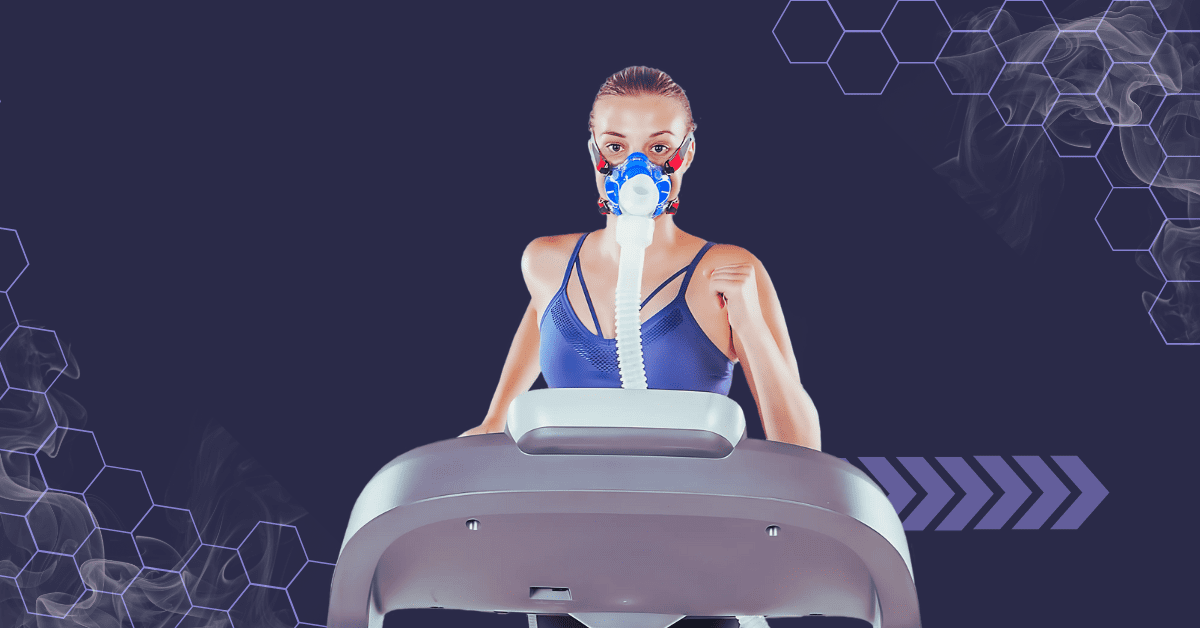
For too long, VO2 Max testing has been viewed as the exclusive domain of elite athletes. This misconception has prevented many fitness professionals from recognizing its potential for every client who walks through their door. The reality is that VO2 Max testing provides invaluable insights for anyone seeking to improve their health and fitness, from military personnel to retirees, and everyone in between.
Research has shown that cardiorespiratory fitness, measured through VO2 Max testing, is one of the strongest predictors of cardiovascular and all-cause mortality. Recent meta-analyses demonstrate that individuals classified as “fit” show no statistically significant increase in mortality risk compared to their normal-weight counterparts, regardless of their body mass index1,2. This powerful finding reinforces that fitness, not just body composition, plays an important role in long-term health outcomes for everyone.
Why VO2 Max Matters for Everyone
VO2 Max represents your body’s maximum rate of oxygen consumption during intense exercise – essentially, it’s a measure of your cardiorespiratory fitness. But it’s more than a number. Studies show that improving VO2 Max can enhance quality of life, reduce disease risk, and increase longevity across all populations3,4. Whether someone is looking to lose weight, maintain independence in their golden years, or improve their overall health, VO2 Max testing provides the foundation for effective, personalized exercise programming.
While breath-by-breath systems have limitations, mixing chamber technology represents the gold standard in metabolic testing. This technology creates the most accurate measurements possible by collecting and analyzing expired air in a mixing chamber, providing stable, reliable data5that can be used to create precisely targeted training programs. This accuracy is vital for determining true training zones and tracking progress over time.
The Role of Accurate Zone 2 Training
Zone 2 training has emerged as a critical component of fitness programming, and its benefits extend beyond athletic performance. This low-intensity zone, where the body efficiently burns fat while building aerobic capacity, is best determined through VO2 Max testing6. Whether working with a weekend warrior or a cardiac rehabilitation patient, knowing their true Zone 2 heart rate enables trainers to design safe, effective programs that deliver results.
For fitness professionals, understanding how VO2 Max testing applies to different populations helps provide every client with the most effective path to their goals.
Military and First Responders
Whether training elite military units or preparing first responders for the demands of emergency response, VO2 Max testing provides critical data for optimizing performance and proving operational readiness7-13. These professionals require exceptional cardiovascular fitness to perform their duties safely under extreme conditions.
Performance Optimization for Duty Requirements
Military personnel and first responders face unique physical challenges that demand peak cardiovascular performance. A VO2 Max test using mixing chamber technology provides precise heart rate zones that guarantee training matches the intensity of real-world scenarios. This data allows trainers to:
- Design programs that improve performance at the specific intensities required for duty
- Create targeted protocols that enhance aerobic and anaerobic capacity
- Build foundational fitness that supports carrying heavy equipment and gear
- Develop the stamina needed for extended operations
Recovery Monitoring
Military personnel and first responders face extreme physical demands, making proper recovery essential. VO2 Max testing provides objective data to track cardiovascular adaptations to training, identify optimal work-to-rest ratios based on individual fitness levels, monitor improvements in aerobic efficiency, and guide training intensity progression without the risk of overtraining.
Readiness Assessment
Regular VO2 Max testing is a vital tool for assessing operational readiness.. It allows trainers to establish baseline fitness levels for various units or departments, track changes in cardiovascular fitness over time, compare individual results to duty-specific standards, and identify areas needing improvement before deployment or active duty.
Training Protocol Validation
The precision of VO2 Max testing makes it invaluable for validating training protocols. This allows trainers to:
- Measure the effectiveness of current training programs
- Adjust protocols based on objective data
- Ensure training methods are producing desired adaptations
- Demonstrate program success through measurable improvements
For military and first responder populations, the accuracy of Zone 2 training boundaries is key. These professionals need to build a strong aerobic base while maintaining the capacity for high-intensity performance. Only through precise VO2 Max testing can trainers determine the exact heart rate zones that will optimize endurance and power output for these demanding roles.
By incorporating regular VO2 Max testing into military and first responder training programs, fitness professionals can verify their clients are prepared for the physical demands of their duties while minimizing the risk of injury and overtraining.
Active Aging Population
For the aging population, maintaining independence and quality of life through proper exercise is paramount. VO2 Max testing provides essential data that allows trainers to develop safe, effective programs tailored to each individual’s capabilities and goals. This precision is central as we help older adults navigate the challenges of maintaining fitness while aging.
Maintaining Functional Fitness
Cardiorespiratory fitness is essential for maintaining independence and performing daily activities, with research showing that higher VO2 Max levels directly correlate with improved functional capacity in older adults3,14-16. Accurate VO2 Max testing enables trainers to create personalized programs that enhance everyday activities, track improvements in cardiovascular efficiency, build programs that support daily living tasks and focus on maintaining mobility and independence.
Safe Exercise Intensity Guidelines
Establishing exercise intensity that is safe and effective is crucial when training older adults. Being able to find precise heart rate zones, eliminates guesswork and allows trainers to determine exact Zone 2 training parameters for optimal cardiovascular benefits. This technology helps avoid overexertion while ensuring sufficient training stimulus, adjust intensity based on individual capacity, and monitor exercise response with confidence.
Quality of Life Improvements
Regular VO2 Max testing provides older adults with tangible evidence of progress, motivating them to continue their exercise routines. Accurate testing allows trainers to show measurable improvements in cardiovascular fitness, track increases in stamina and energy levels, and document enhanced exercise tolerance. It highlights the direct connection between improved fitness and better daily function, reinforcing the benefits of consistent physical activity.
Fall Prevention
Falls represent a significant risk for the aging population, and cardiovascular fitness plays a role in maintaining balance and coordination. VO2 Max testing helps trainers:
- Develop muscular power to reduce falls
- Track improvements in functional capacity
- Create progressive programs that build confidence
The accuracy of Zone 2 training becomes especially important for this population, as it represents the optimal intensity for improving cardiovascular fitness while minimizing risk. Through precise VO2 Max testing, trainers can identify the exact heart rate ranges where their older clients can safely and effectively improve their fitness.
By incorporating regular VO2 Max testing into programs for older adults, fitness professionals can provide evidence-based training that supports healthy aging and maintains quality of life. This data guides proper program design and motivates measurable progress.

Weight Management Clients
For clients focused on weight management, precision in training intensity can make the difference between success and stagnation. VO2 Max testing provides data that helps trainers optimize their clients’ exercise programs for maximum effectiveness in weight loss and fitness improvement17,18.
Effective Weight Management Through Mixed Intensity Training
Achieving effective weight management involves training at the right intensity while balancing recovery and minimizing injury risk. It also helps individuals maximize adaptations and maintain consistency. Here’s how this approach can be beneficial:
- Determine Optimal Heart Rate Zones: Using VO2 Max testing, trainers can identify the precise heart rate zones where clients transition from low to high intensity.
- Understand Metabolic Shifts: Pinpoint the exact moment when the body transitions from primarily burning fat to carbohydrates, allowing for more targeted training.
- Create Balanced Training Programs: Develop programs that mix low and high-intensity workouts to maximize calorie burn and fat loss while ensuring adequate recovery.
- Avoid Overtraining: Prevent the common mistake of consistently training at high intensities, which can lead to overtraining and hinder weight management efforts.
Training Efficiency
With the accuracy of mixing chamber technology, trainers can design programs that maximize results while minimizing time investment. This technology confirms that every minute of exercise contributes to the client’s goals, eliminating wasted effort from training at ineffective intensities. Workouts can be crafted to provide the best stimulus for fitness improvements. Trainers can also adjust training parameters based on objective data, rather than relying on perceived effort, leading to more effective training plans.
Progress Tracking
VO2 Max testing offers measurements that showcase progress beyond the scale. It allows trainers to track improvements in cardiovascular fitness, independent of weight changes, and monitor increases in metabolic efficiency. It documents fat-burning capacity and measures progress in work capacity and endurance. Even if weight loss plateaus, VO2 Max testing can demonstrate improvements in overall fitness, providing a clearer picture of a client’s progress.
Motivation Through Measurable Results
One of the most powerful aspects of VO2 Max testing for weight management clients is the objective evidence of progress it provides:
- Demonstrate tangible improvements in fitness even before significant weight loss occurs
- Show enhanced fat-burning efficiency through metabolic testing
- Provide concrete data that validates training efforts
- Help clients understand the relationship between proper training intensity and results
- Build confidence through documented improvements in cardiovascular fitness
For weight management clients, the precision of Zone 2 training is essential. Training here allows clients to both sustainably lose weight and recover well, both of which help with consistency over the long-term. . Through accurate VO2 Max testing, trainers can show clients exactly where they need to train for the best results.
By incorporating regular VO2 Max testing into weight management programs, trainers can provide their clients with science-based training zones that target sustainable weight loss while improving overall fitness. This approach enhances results and provides the motivation needed for long-term success.
Corporate Wellness Programs
In the competitive business environment, corporate wellness programs are increasingly recognizing the value of precision fitness testing. VO2 Max testing offers a scientific approach to employee health that resonates with corporate clients while providing data for program design.
Executive Health Screening
Executive health represents an investment for corporations, and VO2 Max testing provides the standard in fitness assessment:
- Delivers precise cardiovascular fitness measurements
- Offers objective baseline data for health improvement programs
- Provides measurable outcomes that justify wellness program investments
- Creates individualized exercise prescriptions based on accurate heart rate zones
- Demonstrates company commitment to evidence-based health initiatives
The science is clear: research shows that cardiorespiratory fitness is one of the strongest predictors of longevity and work productivity1,3-4. By incorporating VO2 Max testing into executive health programs, companies can proactively maintain their leadership team’s health and performance.
Stress Management Through Proper Exercise Intensity
Workplace stress is a major concern for corporations19, and regular exercise can help with stress management20:
- Accurate Zone 2 training parameters ensure exercise helps rather than hinders stress recovery
- Precise heart rate zones prevent overtraining, which can negatively impact stress recovery
Group Program Design
The precision of VO2 Max testing enhances group programming while allowing for individual optimization by establishing fitness baselines for different departments or teams and creating targeted group training zones that accommodate varying fitness levels. It allows organizations to track program effectiveness across diverse employee populations, design programs based on objective data, and guarantee safe participant progression.
Corporate wellness programs benefit from the accuracy of Zone 2 training parameters. This low-intensity zone allows employees to improve fitness without compromising work performance or recovery. Precise VO2 Max testing can help trainers determine the exact heart rate zones that will optimize health improvements and productivity.
By incorporating VO2 Max testing into corporate wellness programs, fitness professionals can:
- Provide evidence-based program design
- Demonstrate concrete results to stakeholders
- Create sustainable, long-term wellness initiatives
- Support both individual and group fitness goals
- Deliver measurable improvements in employee health
This scientific approach improves program effectiveness and aligns with corporate expectations for data-driven decision making and measurable outcomes.
Medical Integration
The integration of VO2 Max testing in medical settings is a powerful opportunity to enhance patient care through precise data. Recent research demonstrates that cardiorespiratory fitness is a stronger predictor of mortality than many traditional risk factors1,2,21. VO2 Max testing offers medical professionals the best in fitness assessments, enabling evidence-based approaches to patient care.
For cardiac rehabilitation patients, accurate training zones are essential:
- Precise heart rate training zone boundaries create safe, effective exercise progression
- Gold standard technology provides reliable data for monitoring recovery
- Regular testing helps track improvements in cardiovascular function
- Objective measurements guide protocol adjustments
Chronic Disease Management
The accuracy of VO2 Max testing is valuable for managing chronic conditions by providing a clear understanding of an individual’s limitations. It allows for the assessment of current cardiovascular capacity, identification of safe training parameters, monitoring of disease progression, and guidance in creating personalized exercise prescriptions, allowing individuals with chronic conditions to engage in physical activity safely.
VO2 Max testing plays an important role in tracking progress over time. It documents improvements in functional capacity, allowing providers to make informed decisions about the direction of care. By supporting long-term management strategies, this approach helps individuals and healthcare professionals optimize fitness and well-being.
Preventive Healthcare
VO2 Max testing is a powerful tool for preventive care, allowing for the early identification of cardiovascular fitness deficits before they develop into more serious health concerns. By establishing clear baseline measurements, individuals and healthcare professionals can better understand current fitness levels and set realistic goals for health improvement.
Zone Training
Heart rate zone training helps to optimize exercise for medical populations, enforcing safe and effective workouts tailored to individual needs. By accurately identifying training zones, practitioners can prescribe exercise intensities that promote cardiovascular health without overexertion. Zone 1 focuses on active recovery and gentle movement, ideal for rehabilitation and individuals with limited mobility. Zone 2, the foundation of aerobic endurance, is especially critical for medical populations, as it enhances fat metabolism, supports heart health, and improves overall stamina while minimizing stress on the body. This low-intensity, sustainable effort level is key for long-term cardiovascular improvement and chronic disease management.
As patients progress, Zone 3 introduces moderate-intensity work that builds work capacity, while Zone 4 pushes the anaerobic threshold, improving resilience and functional performance. For those capable, Zone 5 challenges peak performance, strengthening cardiovascular fitness. By utilizing precise zone-based training, medical professionals can design individualized programs that promote steady progression, optimize patient outcomes, and provide improvements in cardiovascular function over time.
As healthcare emphasizes prevention and evidence-based interventions, VO2 Max testing will play an important role in patient care. This approach supports immediate medical needs and long-term health outcomes.
Youth and School Programs
The application of VO2 Max testing in youth and school settings provides unique opportunities to establish proper training habits early while supporting safe athletic development. Through regular VO2max testing, coaches and educators can create programs that focus on performance while protecting young athletes.
Athletic Development: A Scientific Approach
Youth athletic development demands a delicate balance between performance enhancement and safety. VO2 Max testing provides the precise data needed to achieve this balance:
- Precise cardiovascular fitness baselines that account for individual maturation rates and development stages, allowing coaches to create personalized training programs
- Accurate heart rate zones that ensure young athletes train at appropriate intensities, preventing under-training and overexertion
- Clear metrics for monitoring development over time, including improvements in Zone 2 efficiency and overall cardiovascular capacity
- Data that helps coaches adjust training volumes and intensities based on individual adaptation rates
- Safe parameters that consider the unique physiological demands of youth sports and growing bodies
Physical education programs have evolved with the integration of VO2 Max testing. By utilizing this precision testing, teachers can now create evidence-based programs that serve students of all fitness levels, allowing for individualized training zones that keep students engaged while developing proper exercise habits.
Sports Team Conditioning
Sports teams gain valuable insights from VO2 Max testing through:
- Team-wide fitness assessments that establish baseline data for entire squads while identifying individual needs
- Sport-specific conditioning guidelines based on precise metabolic measurements
- Individual training zones that account for positional demands and personal fitness levels
- Objective measures that track team and individual improvements throughout the season
- Safe progression strategies that prevent overtraining during development periods
School athletic programs have redefined their approach to conditioning with VO2max testing. By utilizing mixing chamber technology, coaches now have access to precise data that guides both team and individual training protocols. This scientific approach supports young athletes in developing proper fitness foundations while promoting safety and reducing the risk of burnout. The ability to measure exact training parameters has transformed how teams structure both in-season maintenance and off-season development, leading to more sustainable performance gains.
Transforming Lives Through Precision
The power of VO2 Max testing extends beyond simple measurements. Through superior accuracy, fitness professionals can deliver precisely targeted programs that transform lives across every population segment. The evidence is clear: from military personnel to young athletes, accurate metabolic testing provides the foundation for peak fitness programming.
Expanding Your Impact as a Fitness Professional
The integration of VO2 Max testing into your practice transforms your role in the fitness industry. By offering scientific precision through mixing chamber technology, you differentiate your services in a crowded marketplace. The result? Stronger, longer-term client relationships built on measurable progress and proven results, positioning you as a leader in evidence-based fitness.
Everyone Deserves Precision
The era of one-size-fits-all fitness programming is over. Every client, regardless of their starting point or goals, benefits from precise metabolic testing. When trainers have accurate training zones, they can prescribe safe, effective exercise intensities that maximize results. This precision builds client confidence and supports steady progress through evidence-based program adjustments. It’s not just about better results—it’s about providing every client with the advantage of science-based programming.
Transform your fitness practice by implementing VO2 Max testing for your diverse client base. Begin by exploring how mixing chamber technology enhances your current services and identifying which populations you can immediately impact. Learn about seamless integration into your business model and discover how accurate Zone 2 training revolutionizes your programming. Join the growing community of evidence-based fitness professionals who are elevating the industry through precision and science.
The future of fitness lies in precision, and VO2 Max testing provides the key to unlocking each client’s full potential. Don’t let your clients settle for guesswork when they could benefit from gold-standard accuracy.
References:
- Weeldreyer 2025. Cardiorespiratory fitness, body mass index and mortality: a systematic review and meta-analysis. PMID: 39537313.
- Ortega 2016. . Obesity and Cardiovascular Disease. PMID: 27230640.
- Strasser 2018. Survival of the fittest: VO2max, a key predictor of longevity? PMID: 29293447.
- Mandsager 2018. Association of Cardiorespiratory Fitness With Long-term Mortality Among Adults Undergoing Exercise Treadmill Testing. PMID: 30646252; PMCID: PMC6324439.
- Beijst 2013. Accuracy and precision of CPET equipment: a comparison of breath-by-breath and mixing chamber systems. PMID: 23110656.
- Mujika IE. Endurance Training: Science and Practice. Second ed: Iñigo Mujika S.L.U.; 2023.
- Sammito 2021. Risk factors for musculoskeletal injuries in the military: a qualitative systematic review of the literature from the past two decades and a new prioritizing injury model. PMID: 34886915; PMCID: PMC8662851.
- Jones 2017. Impact of physical fitness and body composition on injury risk among active young adults: A study of Army trainees. PMID: 28993131.
- Poplin 2014. The association of aerobic fitness with injuries in the fire service. PMID: 24186973.
- Rappole 2017. Associations of age, aerobic fitness, and body mass index with injury in an operational Army brigade. PubMed PMID: 28882434.
- Maupin 2018. Fitness Profiles in Elite Tactical Units: A Critical Review. PMID: 30147824; PMCID: PMC6102190.
- Robinson 2018. Aerobic Fitness is of Greater Importance than Strength and Power in the Load Carriage Performance of Specialist Police. PMID: 30147827; PMCID: PMC6102195.
- Pryor 2012. Fitness characteristics of a suburban special weapons and tactics team. PMID: 22289693.
- Freudenberger 2016. . Fitness and cognition in the elderly: The Austrian Stroke Prevention Study. PMID: 26740674; PMCID: PMC4773949.
- McPhee 2016. J Physical activity in older age: perspectives for healthy ageing and frailty. PMID: 26936444; PMCID: PMC4889622.
- Langhammer 2018. The Importance of Physical Activity Exercise among Older People. PMID: 30627571; PMCID: PMC6304477.
- Jayedi 2024. Aerobic Exercise and Weight Loss in Adults: A Systematic Review and Dose-Response Meta-Analysis. PMID: 39724371; PMCID: PMC11672165.
- Seiler 2010. What is best practice for training intensity and duration distribution in endurance athletes? PMID: 20861519.
- https://www.uml.edu/research/cph-new/worker/stress-at-work/financial-costs.aspx
- Sapolsky RM. Why zebras don’t get ulcers / Robert M. Sapolsky. 3rd ed. New York: Times Books; 2004. xv, 539 p. p.
- Blair 1989. Physical fitness and all-cause mortality. A prospective study of healthy men and women. PMID: 2795824.