



Every January, millions of people make the same resolution: lose weight. Fitness centers see membership spikes, diet books fly off shelves, and scales become the daily judge and jury of success. But what if we’ve been measuring the wrong thing all along? What if the number on your bathroom scale isn’t the health indicator you should be most concerned about?
For decades, our cultural obsession with weight has overshadowed what might be a far more important measure of health: your cardiovascular fitness. The fixation on BMI and weight loss has created a society where many people feel like failures if they can’t achieve or maintain an “ideal” weight, even when their bodies are functioning well and their fitness is improving.
Recent research is challenging this weight-centric approach to health. A groundbreaking meta-analysis published in 2025 analyzed nearly 400,000 individuals and found something remarkable: people classified as overweight or obese but who maintained good cardiovascular fitness showed no statistically significant increase in mortality risk compared to their normal-weight, fit counterparts. Meanwhile, unfit individuals had a two to three times higher risk of death regardless of their weight category1.
This finding isn’t isolated – it’s been seen in multiple studies over the years2-4.
The evidence is becoming clear: being aerobically fit can improve your health and longevity, regardless of what the scale says. Your heart, lungs, and circulatory system don’t care as much about the weight you’re carrying as they do about how efficiently you can use oxygen during physical activity.
This efficiency is measured through VO2 max – the maximum amount of oxygen your body can utilize during intense exercise. While we’ll touch more on this powerful health marker later, what’s important to understand now is that improving your cardiovascular fitness (reflected in your VO2 max) appears to be one of the most important things you can do for your long-term health, even if your weight never reaches what conventional charts consider “ideal.”
The Science Behind “Fit Not Fat”
When researchers began looking beyond weight alone and examining fitness levels alongside BMI, they discovered something that challenges conventional wisdom about health and body size. Let’s explore the evidence that’s reshaping our understanding of fitness and mortality risk.
Groundbreaking Research on Fitness and Mortality
The relationship between fitness and mortality across weight categories has been the subject of extensive research. In the above-mentioned meta-analysis published in 2025, researchers found that cardiovascular fitness was a stronger predictor of mortality than BMI alone1. People classified as overweight or obese but who maintained good cardiovascular fitness showed no significant increase in mortality risk compared to normal-weight, fit individuals.
This finding supports earlier research that looked at over 80,000 adults and found that unfit individuals had twice the risk of mortality regardless of their BMI category4. Remarkably, fit individuals who were overweight or obese had lower mortality rates than normal-weight individuals who were unfit.
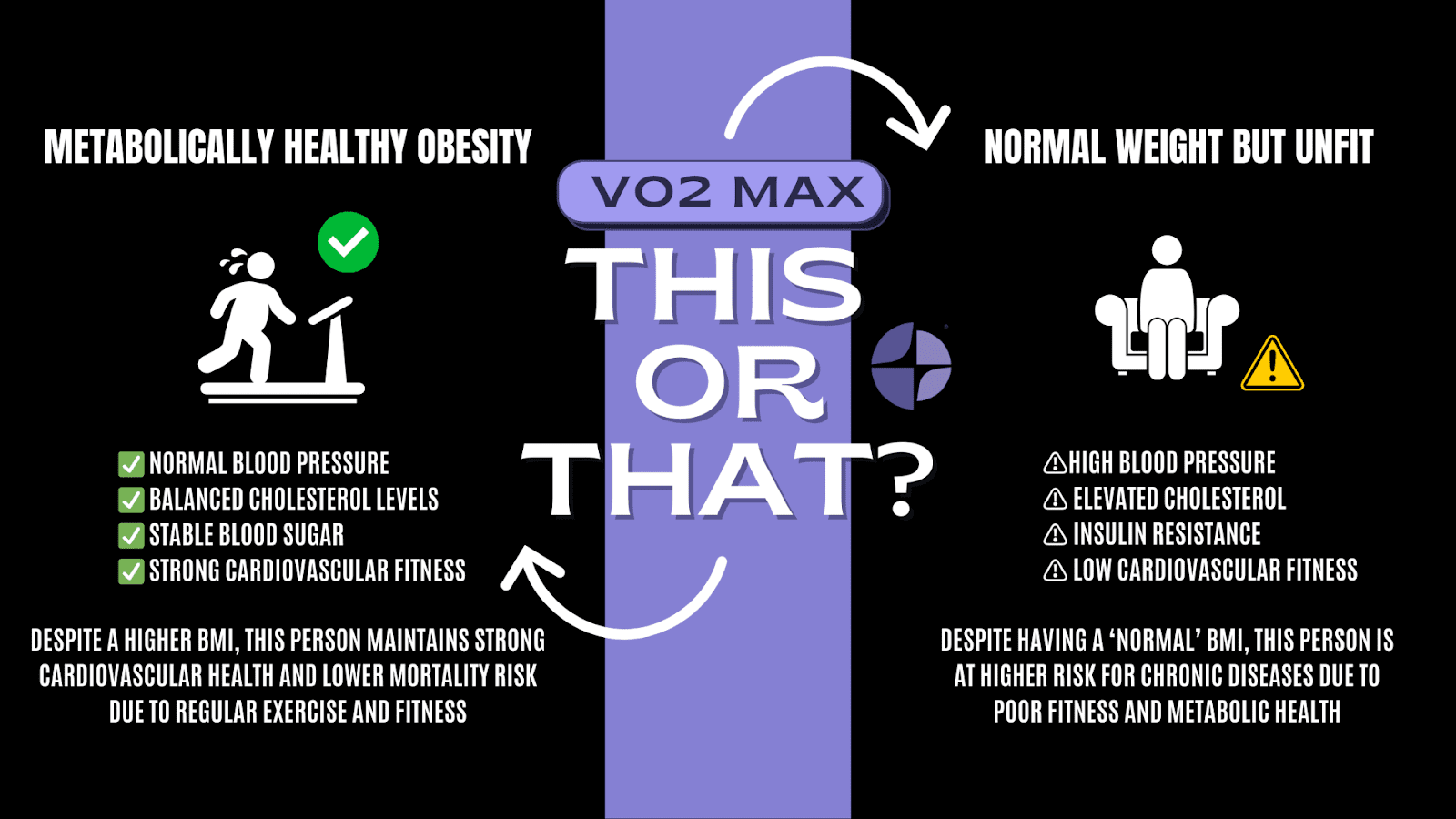
“Metabolically Healthy Obesity” vs. “Normal Weight but Unfit”
These findings have led to the concept of “metabolically healthy obesity” – individuals who carry excess weight according to BMI standards but maintain normal blood pressure, blood sugar, and cholesterol levels. These individuals often maintain regular physical activity and good cardiovascular fitness.
Research has also identified the “normal weight but metabolically unhealthy” phenotype – individuals whose weight appears ideal on paper but who have poor metabolic health markers and low fitness levels. A study published in the European Heart Journal found that normal-weight individuals with metabolic abnormalities had a higher risk of mortality than metabolically healthy overweight or obese individuals5.
VO2 Max: The Gold Standard Measure of Cardiovascular Health
At the center of this research is a critical health marker: VO2 max. This measurement represents the maximum amount of oxygen your body can utilize during intense exercise and is considered the gold standard for assessing cardiovascular fitness.
VO2 max is measured in milliliters of oxygen used per kilogram of body weight per minute (ml/kg/min). It reflects the combined efficiency of your lungs taking in oxygen, your heart pumping oxygenated blood to muscles, and your muscles extracting and using that oxygen.
Research has shown that VO2 max is one of the strongest predictors of longevity6. A study in the Journal of the American Medical Association found that for each metabolic equivalent (MET) increase in exercise capacity (roughly equivalent to a 3.5 ml/kg/min increase in VO2 max), there was a 12-15% reduction in all-cause mortality7.
What makes VO2 max valuable is that it’s responsive to training regardless of weight changes. A sedentary individual can improve their VO2 max by 15-20% within 6 months of regular cardiovascular training, even if their weight remains stable8. This improvement translates to reductions in mortality risk, highlighting why fitness—not just fatness—deserves our attention.
The science is clear: while maintaining a healthy weight has benefits, focusing exclusively on weight loss while neglecting cardiovascular fitness misses what might be the more important target for health and longevity. Measuring and improving your cardiovascular fitness through VO2 max may be one of the most valuable health strategies available, regardless of what the scale says.
Real Health Benefits of Cardiovascular Fitness
The benefits of being cardiovascularly fit go past what you might see in the mirror. Let’s explore the wide-ranging health advantages that come from improving your aerobic fitness, regardless of whether your weight changes on the scale.
Lower Risk of Cardiovascular Disease
Cardiovascular disease remains the leading cause of death globally, but strong cardiorespiratory fitness offers protection. Individuals with higher cardiovascular fitness have a markedly reduced risk of developing heart disease compared to their unfit counterparts, independent of their BMI9,10.
This protection occurs through multiple mechanisms. Aerobic exercise strengthens the heart muscle, allowing it to pump more blood with each beat while requiring less oxygen to function. Regular cardio training also improves vascular function, reducing arterial stiffness and enhancing endothelial function (the inner lining of blood vessels). These adaptations lower blood pressure, reduce inflammation, and improve overall circulatory health.
A compelling study from the Cooper Institute followed more than 25,000 men with no history of cardiovascular disease. The researchers found that fitness level was a stronger predictor of mortality than established risk factors like smoking, high blood pressure, or diabetes11. Even modest improvements in fitness translated to big reductions in cardiovascular events.
Improved Metabolic Health
The relationship between fitness and metabolic health is remarkable. Regular aerobic exercise improves insulin sensitivity, helping your body manage blood glucose more effectively, even without changes in body weight.
A single session of moderate-intensity exercise can improve insulin sensitivity for up to 48 hours12. Over time, consistent training creates lasting improvements in glucose metabolism. This is why exercise is often described as “medicine” for those with type 2 diabetes or insulin resistance.
Beyond blood sugar regulation, cardiovascular fitness positively impacts blood lipid profiles. Research shows that aerobic exercise helps to decrease LDL cholesterol, an important marker of cardiovascular health8. These benefits occur even when weight loss is minimal or non-existent, reinforcing that fitness improvements have independent metabolic benefits.
Reduced All-Cause Mortality
Perhaps the most compelling evidence for focusing on fitness comes from mortality data. The meta-analysis mentioned earlier found that unfit individuals had a two to three-fold higher risk of all-cause mortality compared to fit individuals, regardless of BMI4.
This relationship appears to be dose-dependent—the higher your fitness level, the lower your mortality risk. A landmark study in the New England Journal of Medicine found that improvements in cardiovascular fitness were associated with substantial mortality benefits. For each 1-MET increase in exercise capacity (equivalent to being able to walk about one-third of a mile per hour faster), mortality risk decreased by 12%7.
What’s encouraging is that the largest relative benefit was seen when the most sedentary individuals became even slightly more fit. This suggests that everyone can reduce their mortality risk by improving their cardiovascular fitness, regardless of their starting point or weight status.
Mental Health Benefits
The benefits of cardiovascular fitness extend to brain health and emotional well-being. Aerobic exercise increases blood flow to the brain and stimulates the production of brain-derived neurotrophic factor (BDNF), which promotes neural growth and protects against cognitive decline13.
Regular aerobic exercise has been shown to reduce symptoms of depression and anxiety with efficacy comparable to medication in some cases14. A study in Frontiers in Psychology found that even a single bout of aerobic exercise can boost mood and reduce anxiety, while regular training has cumulative effects on mental health over time15.
These psychological benefits appear to be independent of weight changes. In fact, focusing on fitness rather than weight loss may create a healthier relationship with exercise, as the motivation shifts from appearance to function and feeling good.
Everyday Functional Improvements
Beyond clinical measures, cardiovascular fitness enhances quality of life in practical ways. Improved stamina makes daily activities less taxing—whether climbing stairs, keeping up with children, or carrying groceries. This increased physical capability often translates to greater energy throughout the day and improved sleep quality at night.
Cardiovascular fitness also supports better immune function. Regular moderate exercise has been shown to enhance immune surveillance and reduce the risk of upper respiratory tract infections16. During the COVID-19 pandemic, research suggested that higher cardiorespiratory fitness might be associated with reduced disease severity17.
For older adults, maintaining cardiovascular fitness helps preserve independence and reduces the risk of falls. The functional benefits of being fit extend into all aspects of daily living, from work performance to leisure activities, making a strong case for prioritizing fitness regardless of weight.
The evidence is overwhelming: cardiovascular fitness delivers a wide array of health benefits independent of body weight or BMI category. While achieving a healthy weight has its advantages, the science suggests that improving your cardiorespiratory fitness may be the more important goal for overall health and longevity.
Understanding Cardiorespiratory Fitness
Cardiorespiratory fitness represents your body’s ability to take in, transport, and use oxygen during sustained physical activity. While we’ve established its importance for health outcomes, let’s explore the gold standard measure of this fitness—VO2 Max—and why it provides such valuable insights into your overall health.
What is VO2 Max and Why It Matters
VO2 Max is the maximum volume of oxygen your body can utilize during intense exercise, typically measured in milliliters of oxygen per kilogram of body weight per minute (ml/kg/min). This measurement represents the upper limit of your cardiorespiratory system’s capacity to deliver oxygen to working muscles and those muscles’ ability to extract and use that oxygen.
Think of VO2 Max as the ultimate indicator of your aerobic engine’s horsepower. It integrates the performance of multiple physiological systems:
- Your respiratory system’s ability to bring oxygen into the lungs
- Your cardiovascular system’s capacity to transport that oxygen via red blood cells
- Your muscular system’s capability to extract and utilize oxygen for energy production
What makes VO2 Max important as a health marker is its strong correlation with longevity and disease risk. A review in the Journal of the American Medical Association (JAMA) identified cardiorespiratory fitness as a more powerful predictor of mortality than established risk factors like hypertension, smoking, and diabetes. Each 3.5 ml/kg/min increase in VO2 Max (equivalent to 1 metabolic equivalent or MET) was associated with a 12% drop in mortality risk7. Beyond its predictive value for mortality, VO2 Max reflects your body’s overall metabolic health. Higher values indicate more efficient oxygen utilization and better mitochondrial function—the cellular powerhouses that convert nutrients into energy. These processes influence everything from daily energy levels to disease resistance.
How VO2 Max is Measured
The gold standard for measuring VO2 Max is a graded exercise test performed under controlled conditions. During this test, you’ll exercise at progressively increasing intensities while wearing a specialized mask that analyzes your expired air.
Here’s what happens during a proper VO2 Max test:
- You’ll begin exercising at a low intensity on a treadmill, stationary bike, or other cardio equipment
- Every few minutes, the workload increases (either through speed, incline, or resistance)
- Throughout the test, you breathe through a mask connected to a metabolic analyzer
- The analyzer measures the volume of air you breathe and the concentration of oxygen and carbon dioxide in that air
- The test continues until you reach volitional exhaustion—the point where you cannot maintain the required intensity
What sets a true VO2 Max test apart from other fitness assessments is the use of clinical-grade oxygen measurement, which creates the most accurate measurement of oxygen consumption throughout the test. This technology measures oxygen consumption and carbon dioxide production, providing insights into maximal capacity and substrate utilization (whether you’re burning primarily fats or carbohydrates) at different exercise intensities.
While the test is demanding, it typically takes only 8-12 minutes and provides invaluable data about your cardiovascular fitness. Beyond just the VO2 Max number, the test reveals:
- Your anaerobic threshold—the point where your body can no longer sustainably clear lactate, and fatigue sets in fast. Your aerobic threshold—the point where your body shifts away from mostly fat to burning more carbs for energy
- Your individual heart rate training zones—enabling precisely targeted workouts for specific fitness goals
VO2 Max as a Vital Health Sign Independent of Weight
What makes VO2 Max vital in the “fit not fat” paradigm is that it serves as an objective measure of health that’s largely independent of weight or appearance. While VO2 Max is typically expressed relative to body weight (ml/kg/min), the absolute value (l/min) and improvements in this measure matter regardless of BMI category.
Consider these key aspects of VO2 Max as an independent health marker:
- Response to Training: VO2 Max can improve with proper training even when weight remains stable. Research shows previously sedentary individuals can increase their VO2 Max by 15-20% over 6 months of consistent training without significant weight changes8.
- Metabolic Efficiency: A high VO2 Max reflects metabolic flexibility—your body’s ability to switch between different energy sources (fats and carbohydrates) depending on activity intensity. This efficiency is associated with better insulin sensitivity and reduced cardiovascular risk18,19.
- Functional Reserve: Your VO2 Max represents your physiological reserve capacity—how much buffer you have before reaching your limits during physical activity. This reserve becomes more important during illness, surgery, or other physiological stressors, providing resilience against health challenges.
- Aging Trajectory: While VO2 Max naturally declines with age (approximately 10% per decade after age 30 in sedentary individuals), maintaining higher cardiorespiratory fitness can substantially slow this decline. Research suggests that maintaining higher fitness levels throughout life compresses the period of morbidity, keeping you healthier and more functional in your later years6.
The American Heart Association has advocated for cardiorespiratory fitness to be considered a vital sign that should be regularly assessed in clinical settings20. Unlike weight or BMI, which can fluctuate for many reasons unrelated to health, VO2 Max provides a direct window into your body’s physiological function and resilience.
By understanding and tracking your VO2 Max, you gain insight into a health marker that truly matters for longevity and quality of life—one that reflects your body’s function rather than just its form. This shift in focus from appearance to performance represents a more scientific, sustainable approach to health that benefits people of all body types and sizes.
How to Improve Your Fitness (Regardless of Weight)
Now that we understand the importance of cardiovascular fitness and VO2 Max, let’s explore practical strategies to improve these vital health markers—no matter your current fitness level or body weight. The good news is that cardiorespiratory fitness is remarkably responsive to the right training approach.
The Importance of Consistent Zone-Appropriate Training
Understanding your individual heart rate training zones based on your physiology (not age-based formulas) is critical for effective training. These zones correspond to different physiological responses and adaptations:
Zone 1: Active Recovery
This very light intensity promotes recovery while maintaining movement. It’s ideal for warm-ups, cool-downs, and recovery days between harder sessions.
Zone 2: Aerobic Base
Often called the “fat-burning zone,” Zone 2 training builds aerobic endurance and metabolic efficiency. Training here improves your body’s ability to use fat as fuel and builds the capillary network that delivers oxygen to muscles.
Zone 3: Aerobic Development
This moderate intensity zone improves aerobic capacity and endurance. It’s challenging but sustainable. However, training here too often may impact performance.
Zone 4: Threshold Training
Working at or near your anaerobic threshold pushes your body to process lactate more efficiently. This zone significantly improves performance and pushes your VO2 Max higher.
Zone 5: VO2 Max Development
High-intensity intervals in this zone directly challenge and improve your maximal oxygen consumption. These efforts are intense but brief, typically lasting 30 seconds to 3 minutes.
The key to effective zone training lies in knowing your actual zones—not estimates. A proper VO2 Max test reveals your precise training zones based on your unique physiology, making sure your workouts deliver the intended adaptations. Without this personalization, you might be training too hard or not hard enough for the best results.
Research has shown that a polarized training approach—combining substantial low-intensity work (Zones 1-2) with strategically placed high-intensity sessions (Zones 4-5), while minimizing moderate intensity (Zone 3)—optimizes improvements in cardiorespiratory fitness for most people21,22.
Focus on Progress
When improving cardiovascular fitness, tracking the right metrics keeps you motivated and informed about your progress, regardless of weight changes:
Effective Fitness Metrics to Track:
- Resting heart rate: As your cardiovascular fitness improves, your resting heart rate typically decreases. Measure it first thing in the morning before getting out of bed.
- Heart rate recovery: How quickly your heart rate drops after intense exercise indicates cardiovascular efficiency. Track how many beats your heart rate drops in the first minute after stopping a hard effort.
- Submaximal heart rate: At the same workload (speed, incline, or resistance), your heart rate should decrease as fitness improves, indicating greater efficiency.
- Performance metrics: Track distance covered in a set time, time to complete a set distance, or power output at a specific heart rate. These concrete measures often improve before changes in VO2 Max become noticeable.
- Perceived exertion: How hard an activity feels at a given workload should decrease as your fitness improves.
- Energy levels and recovery: Better cardiovascular fitness translates to more consistent energy throughout the day and quicker recovery from physical exertion.
Importantly, all these metrics can improve even when weight remains stable. By focusing on these functional improvements rather than the scale, you’ll gain a more accurate picture of your health progress and likely enjoy the process more.
Consider keeping a simple training log tracking your workouts and how they felt. This practice helps you recognize patterns and improvements that might otherwise go unnoticed. Over time, you’ll see that consistency in appropriate training leads to meaningful improvements in fitness metrics—often regardless of whether your weight changes.
The science is clear: improvements in cardiovascular fitness deliver health benefits independent of changes in body weight. By focusing on training for your current fitness level, understanding your training zones, and tracking functional improvements rather than weight, you can enhance your health and longevity regardless of BMI.
Transform Your Approach to Fitness
Cardiovascular fitness is a powerful predictor of health and longevity. This paradigm shift from “fit vs. fat” to “fit but fat” opens new possibilities for how we approach health and fitness for ourselves and our clients.
But to truly optimize cardiovascular fitness, guesswork isn’t enough. Generic formulas for heart rate zones based on age or perceived exertion can miss your true physiological markers by 20 beats per minute or more. This difference isn’t just academic—it’s the difference between training effectively and wasting valuable time and effort.
This is where KORR’s precision metabolic testing makes all the difference. With mixing chamber technology that was once only available to elite athletes and research institutions, KORR has made accurate VO2 Max testing accessible to fitness professionals, healthcare providers, and individuals serious about improving their health.
A single test with KORR equipment provides:
- Your precise VO2 Max measurement— one of the strongest predictors of longevity
- Your exact fat-burning zone for metabolic efficiency
- Your personal anaerobic threshold for performance improvements
- Customized heart rate zones based on your actual physiology, not estimates
- A comprehensive understanding of your metabolic efficiency
For fitness professionals and health practitioners, offering KORR metabolic testing elevates your practice by providing data-driven, personalized guidance that delivers results. Your clients will experience more efficient workouts, better progress tracking, and the motivation that comes from seeing objective improvements in their cardiovascular fitness.
For individuals, understanding your unique metabolic profile through KORR testing removes the frustration of plateaus and one-size-fits-all approaches. Whether your goal is improved health, better performance, or enhanced quality of life, knowing precisely how your body responds to exercise transforms your fitness journey.
The future of fitness isn’t about arbitrary numbers on a scale—it’s about measurable improvements in how efficiently your body functions. KORR’s precision metabolic testing provides the roadmap for that journey, empowering you with accurate data to make every workout count.
Take the first step toward truly personalized fitness. Partner with KORR for metabolic testing that goes beyond the scale and taps into what really matters: building a stronger cardiovascular system for a healthier, longer life—regardless of your weight.
Don’t just exercise—train with precision. Your heart will thank you for it.
References:
- Weeldreyer NR, De Guzman JC, Paterson C, Allen JD, Gaesser GA, Angadi SS. Cardiorespiratory fitness, body mass index and mortality: a systematic review and meta-analysis. Br J Sports Med. 2025;59(5):339-46. Epub 20250220. doi: 10.1136/bjsports-2024-108748. PubMed PMID: 39537313.
- Blair SN, Kohl HW, 3rd, Paffenbarger RS, Jr., Clark DG, Cooper KH, Gibbons LW. Physical fitness and all-cause mortality. A prospective study of healthy men and women. JAMA. 1989;262(1):2395-401. doi: 0.1001/jama.262.17.2395. PubMed PMID: 2795824.
- Ortega FB, Lavie CJ, Blair SN. Obesity and Cardiovascular Disease. Circ Res. 2016;118(11):1752-70. doi: 10.1161/CIRCRESAHA.115.306883. PubMed PMID: 27230640.
- Barry VW, Baruth M, Beets MW, Durstine JL, Liu J, Blair SN. Fitness vs. fatness on all-cause mortality: a meta-analysis. Prog Cardiovasc Dis. 2014;56(4):382-90. Epub 20131011. doi: 10.1016/j.pcad.2013.09.002. PubMed PMID: 24438729.
- Lassale C, Tzoulaki I, Moons KGM, Sweeting M, Boer J, Johnson L, et al. Separate and combined associations of obesity and metabolic health with coronary heart disease: a pan-European case-cohort analysis. European Heart Journal. 2017;39(5):397-406. doi: 10.1093/eurheartj/ehx448.
- Strasser B, Burtscher M. Survival of the fittest: VO2max, a key predictor of longevity? Front Biosci (Landmark Ed). 2018;23(8):1505-16. doi: 10.2741/4657. PubMed PMID: 29293447.
- Kodama S, Saito K, Tanaka S, Maki M, Yachi Y, Asumi M, et al. Cardiorespiratory fitness as a quantitative predictor of all-cause mortality and cardiovascular events in healthy men and women: a meta-analysis. Jama. 2009;301(19):2024-35. doi: 10.1001/jama.2009.681. PubMed PMID: 19454641.
- Kenney WL, Wilmore JH, Costill DL. Physiology of Sport and Exercise. Ninth ed: Human Kinetics; 2024. 680 p.
- Kokkinos P, Faselis C, Franklin B, Lavie CJ, Sidossis L, Moore H, et al. Cardiorespiratory fitness, body mass index and heart failure incidence. Eur J Heart Fail. 2019;21(4):436-44. Epub 20190219. doi: 10.1002/ejhf.1433. PubMed PMID: 30779281.
- Henriksson H, Henriksson P, Tynelius P, Ekstedt M, Berglind D, Labayen I, et al. Cardiorespiratory fitness, muscular strength, and obesity in adolescence and later chronic disability due to cardiovascular disease: a cohort study of 1 million men. Eur Heart J. 2020;41(15):1503-10. doi: 10.1093/eurheartj/ehz774. PubMed PMID: 31710669; PubMed Central PMCID: PMC7154806.
- Farrell SW, Kampert JB, Kohl HW, 3rd, Barlow CE, Macera CA, Paffenbarger RS, Jr., et al. Influences of cardiorespiratory fitness levels and other predictors on cardiovascular disease mortality in men. Med Sci Sports Exerc. 1998;30(6):899-905. doi: 10.1097/00005768-199806000-00019. PubMed PMID: 9624649.
- Magkos F, Tsekouras Y, Kavouras SA, Mittendorfer B, Sidossis LS. Improved insulin sensitivity after a single bout of exercise is curvilinearly related to exercise energy expenditure. Clin Sci (Lond). 2008;114(1):59-64. doi: 10.1042/cs20070134. PubMed PMID: 17635103.
- Fiuza-Luces C, Garatachea N, Berger NA, Lucia A. Exercise is the real polypill. Physiology (Bethesda). 2013;28(5):330-58. doi: 10.1152/physiol.00019.2013. PubMed PMID: 23997192.
- Noetel M, Sanders T, Gallardo-Gómez D, Taylor P, Del Pozo Cruz B, van den Hoek D, et al. Effect of exercise for depression: systematic review and network meta-analysis of randomised controlled trials. Bmj. 2024;384:e075847. Epub 20240214. doi: 10.1136/bmj-2023-075847. PubMed PMID: 38355154; PubMed Central PMCID: PMC10870815.
- Brand S, Colledge F, Ludyga S, Emmenegger R, Kalak N, Sadeghi Bahmani D, et al. Acute Bouts of Exercising Improved Mood, Rumination and Social Interaction in Inpatients With Mental Disorders. Frontiers in Psychology. 2018;9. doi: 10.3389/fpsyg.2018.00249.
- Nieman DC, Wentz LM. The compelling link between physical activity and the body’s defense system. J Sport Health Sci. 2019;8(3):201-17. Epub 20181116. doi: 10.1016/j.jshs.2018.09.009. PubMed PMID: 31193280; PubMed Central PMCID: PMC6523821.
- Myers J, Kokkinos P, Cadenas-Sanchez C, Liappis A, Lavie CJ, Goraya NK, et al. Impact of Cardiorespiratory Fitness on COVID-19-Related Outcomes: The Exercise Testing and Health Outcomes Study (ETHOS). Mayo Clin Proc. 2024;99(11):1744-55. Epub 20240907. doi: 10.1016/j.mayocp.2024.07.004. PubMed PMID: 39243247.
- San-Millán I, Brooks GA. Assessment of Metabolic Flexibility by Means of Measuring Blood Lactate, Fat, and Carbohydrate Oxidation Responses to Exercise in Professional Endurance Athletes and Less-Fit Individuals. Sports Med. 2018;48(2):467-79. doi: 10.1007/s40279-017-0751-x. PubMed PMID: 28623613.
- Palmer BF, Clegg DJ. Metabolic Flexibility and Its Impact on Health Outcomes. Mayo Clin Proc. 2022;97(4):761-76. Epub 20220311. doi: 10.1016/j.mayocp.2022.01.012. PubMed PMID: 35287953.
- Ross R, Blair SN, Arena R, Church TS, Després JP, Franklin BA, et al. Importance of Assessing Cardiorespiratory Fitness in Clinical Practice: A Case for Fitness as a Clinical Vital Sign: A Scientific Statement From the American Heart Association. Circulation. 2016;134(24):e653-e99. Epub 20161121. doi: 10.1161/cir.0000000000000461. PubMed PMID: 27881567.
- Stoggl T, Sperlich B. Polarized training has greater impact on key endurance variables than threshold, high intensity, or high volume training. Front Physiol. 2014;5:33. Epub 20140204. doi: 10.3389/fphys.2014.00033. PubMed PMID: 24550842; PubMed Central PMCID: PMC3912323.
- Rosenblat MA, Watt JA, Arnold JI, Treff G, Sandbakk Ø B, Esteve-Lanao J, et al. Which Training Intensity Distribution Intervention will Produce the Greatest Improvements in Maximal Oxygen Uptake and Time-Trial Performance in Endurance Athletes? A Systematic Review and Network Meta-analysis of Individual Participant Data. Sports Med. 2025. Epub 20250131. doi: 10.1007/s40279-024-02149-3. PubMed PMID: 39888556.