


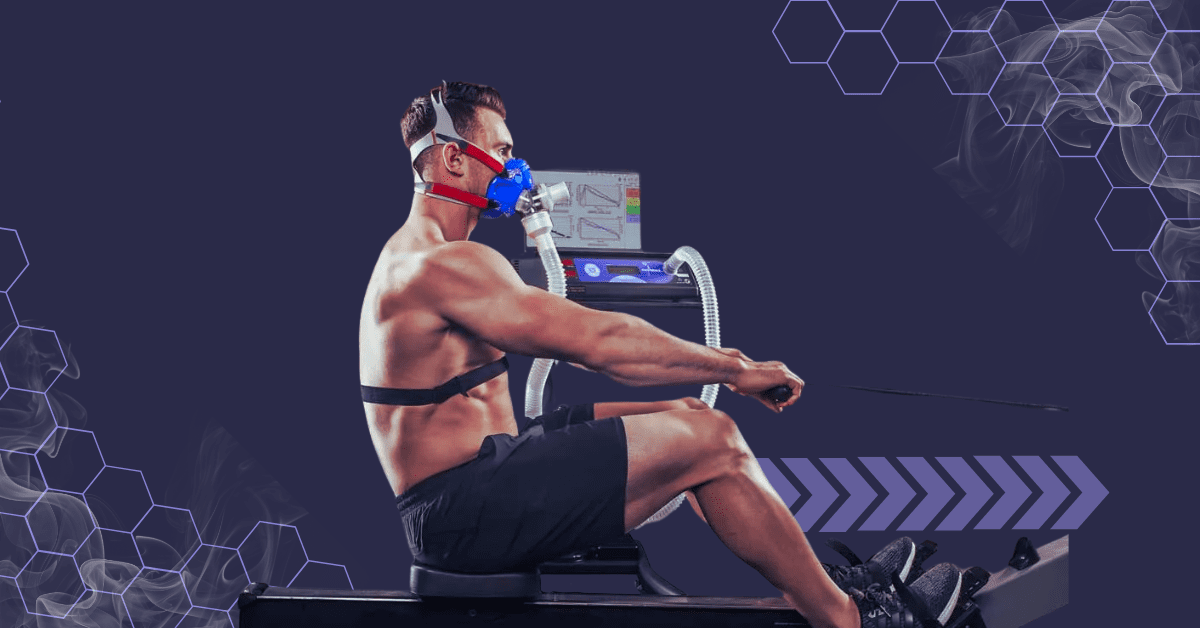
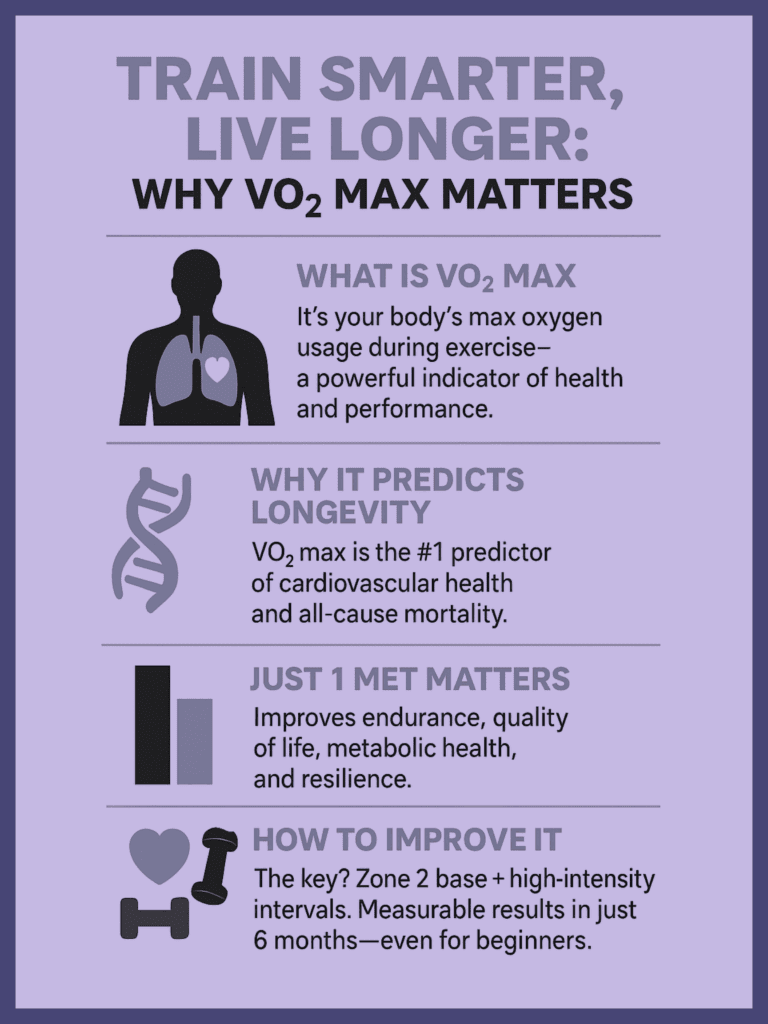
What if there was one metric that could predict your lifespan better than any other health marker? VO2 max—your body’s ability to utilize oxygen during exercise—is one of the strongest predictors of cardiovascular disease and all-cause mortality. Improving your VO2 max by just one metabolic equivalent (3.5 ml O2·kg−1·min−1) can reduce your risk of death by 10-25%. Yet despite its impact on health and performance, many fitness enthusiasts train without ever knowing their cardiovascular capacity or how to optimize it.
Whether you’re an elite athlete seeking that competitive edge or someone wanting to enhance your quality of life, understanding how to train your VO2 max is one of the most valuable investments you can make in your health. The good news? The science is clear on what works and what doesn’t.
What is VO2 Max and Why Should You Care?
VO2 max is the maximum rate of oxygen consumption your body can achieve during intense exercise. Think of it as your cardiovascular engine’s horsepower—the higher your VO2 max, the more efficiently your heart, lungs, and muscles work together to deliver and utilize oxygen throughout your body.
But VO2 max isn’t just about athletic performance. It’s a window into your overall health and longevity. People with higher VO2 max values experience:
- Reduced risk of cardiovascular disease
- Lower all-cause mortality rates
- Better quality of life as they age
- Enhanced daily functional capacity
- Improved metabolic health
- Greater resilience to physical stress
The beauty of VO2 max is that it’s highly trainable at any age. Previously sedentary individuals can increase their VO2 max by 15-20% in just six months with proper training. Even more encouraging, those classified as “fit” regardless of their body weight show no significant increase in mortality risk compared to normal-weight, fit individuals.
Effective VO2 Max Training
For most people, training at intensities above 60% of your VO₂ max improves cardiovascular fitness. However, the exact intensity needed depends on current fitness level – beginners may adapt at lower intensities, while trained athletes often require higher intensities to keep progressing. But going harder doesn’t always mean better results. What typically changes with higher intensity is how quickly you get those results.
Here’s how different training zones stack up:
- Moderate Intensity (60–70% VO₂ max): Great for building endurance but requires longer sessions and more total time.
- High Intensity (80–92.5% VO₂ max): The efficiency zone—delivers strong improvements with less overall volume.
- Supramaximal Intensity (≥100% VO₂ max): Demanding and time-efficient, but not necessarily more effective than high intensity.
The sweet spot is in the high-intensity range. You’ll get more done in less time—ideal for anyone who wants maximum benefit with minimal time commitment.
The Foundation: Why Zone 2 Training Matters Most
While high-intensity training gets much of the attention, the foundation of any effective VO2 max training program lies in Zone 2 training. Zone 2 is the intensity where your body maximizes fat oxidation while maintaining aerobic metabolism. This goes beyond burning fat for weight loss, it also helps to build the aerobic engine that supports all other training zones.
Zone 2 training enhances your body’s ability to:
- Utilize fat as a main fuel source
- Improve mitochondrial density and function
- Increase cardiac stroke volume
- Enhance oxygen delivery and utilization
- Build the aerobic base that supports higher intensities
Think of Zone 2 as the foundation of a pyramid. Without a solid base, you can’t build higher. Athletes and fitness enthusiasts who neglect Zone 2 training often find themselves plateauing quickly or struggling to maintain higher intensities. Zone 2 training doesn’t just improve Zone 2 performance—it enhances your capacity in Zones 3, 4, and 5 as well.
The challenge with Zone 2 training is identifying your true Zone 2 heart rate. Generic formulas based on age are notoriously inaccurate and can lead to training at the wrong intensity. The best way to determine your personal Zone 2 is through precise VO2 max testing that measures your respiratory exchange ratio and identifies the exact heart rate where fat oxidation is maximized.
The Best Training Methods to Maximize Your VO2 Max
1. Zone 2 Base Building: The 80/20 Foundation
The most successful endurance athletes and fitness enthusiasts follow some version of the 80/20 rule: 80% of training time spent in lower intensities (primarily Zone 2) and 20% in higher intensities. This approach builds a massive aerobic base while allowing for the high-intensity work needed to push VO2 max to its peak. It selects for an optimal combination of training intensity and volume while still allowing for sufficient recovery and adaptation.
Zone 2 Training Protocol:
- Train at your personalized Zone 2 heart rate (determined through VO2 max testing)
- Sessions should last 45-90 minutes
- You should be able to maintain nasal breathing or hold a conversation
- Frequency: 3-4 sessions per week during base-building phases
What Zone 2 Training Looks Like:
- Steady-state cycling, running, or rowing
- Easy hiking or swimming
- Any continuous aerobic activity at your Zone 2 heart rate
The key is consistency and patience. Zone 2 adaptations take time but provide the foundation for all other improvements. During Zone 2 training, your body becomes efficient at utilizing fat for fuel, which improves endurance and enhances metabolic health.
2. High-Intensity Interval Training (HIIT): Maximum Efficiency
High-intensity interval training performed at 80-92.5% of VO2 max is the most time-efficient method for improving cardiovascular fitness. These sessions challenge your aerobic system while allowing for recovery between efforts.
Classic VO2 Max Intervals:
- 4-6 intervals of 4-6 minutes at 85-92% VO2 max
- 2-3 minutes recovery between intervals
- Total session time: 30-45 minutes including warm-up and cool-down
- Frequency: 1-2 sessions per week
Shorter Interval Options:
- 8-12 intervals of 30 seconds to 2 minutes at 90-95% VO2 max
- Equal or slightly longer recovery periods
- Focus on maintaining consistent power/pace across intervals
Pyramid Intervals:
- Varying interval lengths (1-2-3-4-3-2-1 minutes) at threshold pace
- Allows for different physiological stresses within one session
The beauty of HIIT for VO2 max improvement lies in its efficiency. You can achieve similar cardiovascular adaptations with less total training time compared to moderate-intensity continuous training. However, the intensity demands mean these sessions require more recovery and shouldn’t be performed more than 2-3 times per week.
3. Threshold Training: Building Your Anaerobic Ceiling
Training at or near your anaerobic threshold—the point where lactate accumulation begins to exceed clearance—is vital for improving your sustainable pace and raising your VO2 max ceiling. Threshold training usually occurs at 85-90% of your VO2 max.
Threshold Training Protocols:
- Tempo runs/rides of 20-40 minutes at threshold pace
- Broken threshold sessions (2-3 x 8-15 minutes with short recoveries)
- Progressive threshold builds starting below and finishing above threshold
Identifying Your Threshold: Your anaerobic threshold occurs at a specific heart rate and power output that can be precisely identified through VO2 max testing. Training at your actual threshold rather than estimated values ensures you’re targeting the right physiological adaptations.
Threshold training improves your body’s ability to clear lactate, buffer acid, and maintain higher intensities for extended periods. It’s particularly valuable for athletes competing in events lasting 30 minutes to 2 hours.
4. Neuromuscular Power and VO2 Max
While not the main focus for most fitness enthusiasts, short, very high-intensity efforts (15-30 seconds at maximal effort) can contribute to VO2 max improvements, especially in trained individuals. These sessions target neuromuscular power while still stressing the cardiovascular system.
Power Development Protocols:
- 6-10 x 15-30 seconds all-out efforts
- 3-5 minutes recovery between efforts
- Focus on maximum power output rather than pacing
These sessions are useful for athletes who need explosive power alongside high VO2 max values, like cyclists, runners in shorter events, or team sport athletes.
The Importance of Personalized Training Zones
One of the biggest mistakes in cardiovascular training is relying on generic heart rate formulas. The classic “220 minus age” formula can be off by 20+ beats per minute for many individuals, leading to training at completely wrong intensities.
Why Generic Formulas Fail
Heart rate response to exercise is individual and influenced by:
- Genetics
- Training history
- Body composition
- Medications
- Environmental factors
- Current fitness level
Using generic formulas results in:
- Training too easy to stimulate adaptation
- Training too hard to maintain consistently
- Missing the Zone 2 heart rate for fat oxidation
- Inaccurate threshold and VO2 max training zones
The Power of Precise Testing
Professional VO2 max testing using mixing chamber technology provides the exact physiological data needed for optimal training. Unlike breath-by-breath systems that can be inconsistent, mixing chamber technology delivers precise measurements of:
- Your actual VO2 max value
- Exact heart rate zones for different training intensities
- The specific heart rate where fat burning is maximized
- Your anaerobic threshold
- Respiratory exchange ratios showing fuel utilization
This data transforms training from guesswork into precise, personalized programming. When you know your Zone 2 heart rate, you can maximize fat oxidation and build your aerobic base efficiently. When you know your threshold and VO2 max heart rates, you can target specific adaptations with precision.
Understanding Metabolic Information
Advanced VO2 max testing goes beyond measuring oxygen consumption. It provides detailed insights into how your body utilizes different fuel sources at various intensities. This metabolic information shows:
- The heart rate range where you burn the highest percentage of fat
- When your body shifts from fat to carbohydrate utilization
- How training changes your metabolic efficiency over time
- Optimal intensities for different training goals
This level of detail allows for maximized results with minimized wasted effort.
Training Strategies for VO2 Max Development
Periodization: The Long-Term Approach
Effective VO2 max training requires an approach that varies training stress and allows for adaptation. A well-designed plan might look like:
Base Phase (8-12 weeks):
- 80% Zone 2 training
- 15% threshold/tempo work
- 5% high-intensity intervals
- Focus on building aerobic capacity and fat oxidation
Build Phase (6-8 weeks):
- 70% Zone 2 training
- 15% threshold work
- 15% VO2 max intervals
- Increase intensity while maintaining aerobic base
Peak Phase (3-4 weeks):
- 60% Zone 2 training
- 20% threshold work
- 20% VO2 max and neuromuscular work
- Fine-tune top-end fitness
Recovery Phase (1-2 weeks):
- Easy Zone 1-2 training only
- Allow for full adaptation and preparation for next cycle
Progressive Overload Principles
Like strength training, cardiovascular training requires progressive overload to continue improving. This can be achieved through:
Volume Progression:
- Gradually increase training duration
- Add additional training sessions
- Extend interval sessions
Intensity Progression:
- Slightly increase training pace within zones
- Add more challenging interval formats
- Increase work-to-rest ratios
Complexity Progression:
- Combine different training zones in single sessions
- Add environmental challenges (heat, altitude, hills)
- Incorporate cross-training modalities
Avoiding Common Plateaus
Many individuals experience plateaus in VO2 max improvement after initial gains. Common causes and solutions include:
Insufficient Recovery:
- Solution: Ensure adequate sleep and stress management
- Include easy weeks every 3-4 weeks of training
Lack of Training Variety:
- Solution: Rotate between different interval formats
- Include cross-training activities
Inadequate Zone 2 Base:
- Solution: Return to base-building phases regularly
- Make sure 80% of training remains aerobic
Training Too Hard Too Often:
- Solution: Monitor training intensity distribution
- Use heart rate data to create proper intensity
Training Mistakes That Limit VO2 Max Improvement
The “Gray Zone” Trap
One of the most common mistakes is spending too much time in the “gray zone”—an intensity that’s too hard to be truly aerobic but too easy to stimulate high-end adaptations. This occurs around 70-80% of VO2 max and often results from:
- Training by “feel” without objective metrics
- Group training where social pressure increases intensity
- Misunderstanding of proper Zone 2 intensity
While the gray zone can still offer some adaptations, it tends to generate more fatigue relative to the benefit it provides. This can make it harder to recover between sessions and may reduce the ability to push hard during high-intensity efforts or accumulate volume in lower zones..
Neglecting the Aerobic Base
Many fitness enthusiasts, particularly those coming from high-intensity fitness backgrounds, underestimate the importance of aerobic base building. They focus exclusively on high-intensity work, leading to:
- Quick initial improvements followed by plateaus
- Increased injury risk
- Poor recovery between sessions
- Inability to maintain quality high-intensity work
Training Without Objective Data
Training without proper heart rate zones or power metrics is like driving blindfolded. Without these tools, athletes train at inconsistent intensities, making it difficult to accurately track progress. This can lead to pushing too hard on days meant for recovery and not working hard enough during key workouts. As a result, they miss the optimal training zones needed to develop specific physiological adaptations.
Ignoring Individual Response
Not everyone responds to training the same way. Individual response can vary depending on several factors, including training history, current fitness level, age, genetics, stress levels, recovery capacity, and even environmental conditions. For VO2 max training to be effective, protocols must be adjusted to match these factors rather than applying a one-size-fits-all approach. Success comes from personalization, not rigidity.
Recovery and Adaptation: The Other Half of the Equation
Training stimulus is only half the equation for VO2 max improvement. The adaptation occurs during recovery, making rest and recovery protocols crucial for the best results.
Sleep and Recovery
Quality sleep is essential for recovery and performance gains:
- Deep sleep is when most growth hormone is released, which supports tissue repair and cardiovascular function
- Poor sleep increases stress hormones and inflammation, impairing recovery and adaptation
- Sleep debt reduces training quality by increasing perceived effort and lowering physiological readiness
Aim for 7-9 hours of quality sleep nightly to optimize recovery, reduce injury risk, and support long-term training progress.
Nutrition for Cardiovascular Adaptation
Proper nutrition plays an important role in supporting the physiological adaptations that improve VO2 max. Carbohydrate timing is essential—high-intensity sessions should be fueled with enough carbohydrates, while lower-intensity Zone 2 training can benefit from practicing fat adaptation. Strategically timing carbohydrate intake around training sessions helps maximize energy availability and enhances adaptation.
Protein is equally important for recovery and muscle adaptation. Athletes should aim for 1.6 grams of protein per kilogram of body weight per day, focusing on sources that provide complete amino acid profiles to support muscle repair and growth.
Hydration is another critical factor. Dehydration can impair cardiovascular function, reducing the effectiveness of training. It’s important to monitor hydration status closely, especially in hot or humid conditions, and maintain fluid intake throughout the day to support performance and recovery.
Stress Management
Chronic stress impairs cardiovascular adaptation through:
- Elevated cortisol levels
- Impaired sleep quality
- Reduced recovery capacity
- Decreased motivation and training quality
Incorporate stress management techniques like meditation, yoga, or other relaxation practices to optimize adaptation.
Your Path to Improved VO2 Max
Step 1: Establish Your Baseline
Before beginning any training program, it’s essential to know your starting point. VO2 max testing provides your current VO2 max value, personalized heart rate zones, and metabolic efficiency data, allowing for specific training recommendations. This baseline data guarantees that your training is targeted and effective from day one.
Step 2: Design Your Program
Using your testing results, goals, and available training time, build a program that includes Zone 2 base building, strategically placed high-intensity efforts, progressive overload, and appropriate recovery protocols. This structure creates a balanced and sustainable path toward improving aerobic capacity.
Step 3: Monitor and Adjust
Ongoing monitoring is key to maintaining training effectiveness. Track your heart rate during sessions, pay attention to measures like sleep quality and energy levels, and conduct periodic retesting to gauge progress. Be prepared to adjust your training based on how your body is responding and adapting.
Step 4: Be Patient and Consistent
Improving VO2 max is a long-term process that requires patience and consistency. While some initial gains may appear within 4–6 weeks, big improvements can take 3–6 months, and ongoing progress can take years. Focus on showing up, doing the work, and trusting the process rather than getting caught up in daily fluctuations.
Precision Training for Peak Results
Modern cardiovascular training has been revolutionized by precise testing technology. Unlike older methods that relied on estimation and guesswork, advanced VO2 max testing using mixing chamber technology provides the exact data needed for optimal training.
Why Precision Matters
The difference between training at your actual Zone 2 heart rate versus an estimated one can mean the difference between maximizing fat oxidation and training in the gray zone. When you have precise data showing exactly where your body burns fat most efficiently, every training session becomes more effective.
Knowing your anaerobic threshold and VO2 max heart rates allows for targeted training that produces specific adaptations. This precision eliminates wasted training time and accelerates improvement.
The Future of Cardiovascular Training
As our understanding of cardiovascular physiology evolves, one thing remains clear: individualized training based on data produces superior results compared to generic approaches. The combination of scientific training principles with advanced testing technology provides the roadmap for maximizing your cardiovascular potential.
Your Journey to Peak Cardiovascular Fitness
Improving your VO2 max is one of the most impactful investments you can make in your health and performance. While high-intensity efforts drive efficient gains, long-term progress depends on a well-developed aerobic base. That foundation is built by consistent work in the right zones – especially Zone 2 – where your body becomes more efficient at producing and using energy.
The key to success lies in precision. Generic training approaches based on age-predicted formulas can’t provide the individualized data needed for optimal results. Professional VO2 max testing using advanced mixing chamber technology gives you the exact physiological data needed to train smarter, not just harder.
Remember that VO2 max improvement is a journey, not a destination. Progressive training based on individual physiology will yield remarkable results over time. Whether your goal is enhanced athletic performance, improved health, or feeling better in daily life, optimizing your cardiovascular fitness through intelligent VO2 max training is an investment that pays dividends for life.
Ready to discover your true cardiovascular potential? The first step is understanding where you stand today. VO2 max testing provides the data needed to transform your training from guesswork into a science-based approach to peak cardiovascular fitness. Your heart, health, and performance goals deserve nothing less than the precision and expertise that advanced metabolic testing provides.