


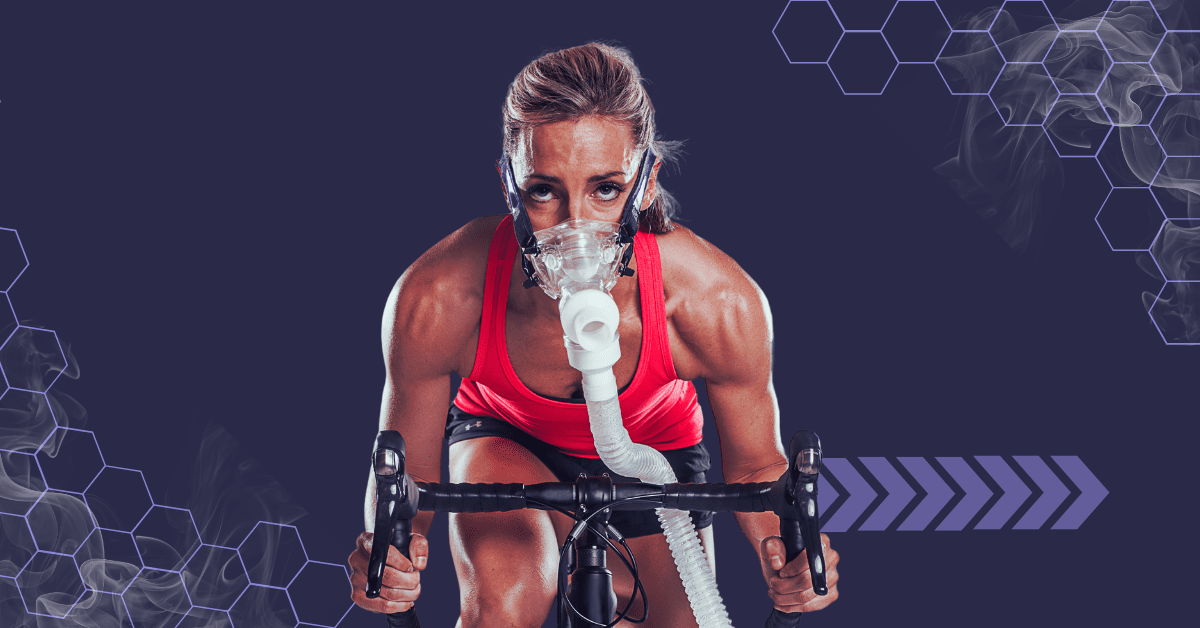
Visualize yourself being halfway through an intense workout, your heart is pounding, your breathing is rapid, and you can feel your muscles working harder than ever. At some point, no matter how much willpower you have, your body reaches its absolute limit. That moment represents your VO2 max—the maximum amount of oxygen your body can consume and utilize during exercise. It’s the horsepower rating of your human engine.
Understanding the physiology behind VO2 max is the key to unlocking your performance potential. Whether you’re an elite athlete pushing for that extra edge, a fitness enthusiast looking to improve your endurance, or someone wanting to optimize your health, knowing how your body’s oxygen delivery system works can transform how you approach training and performance.
What is VO2 Max? The Foundation of Endurance
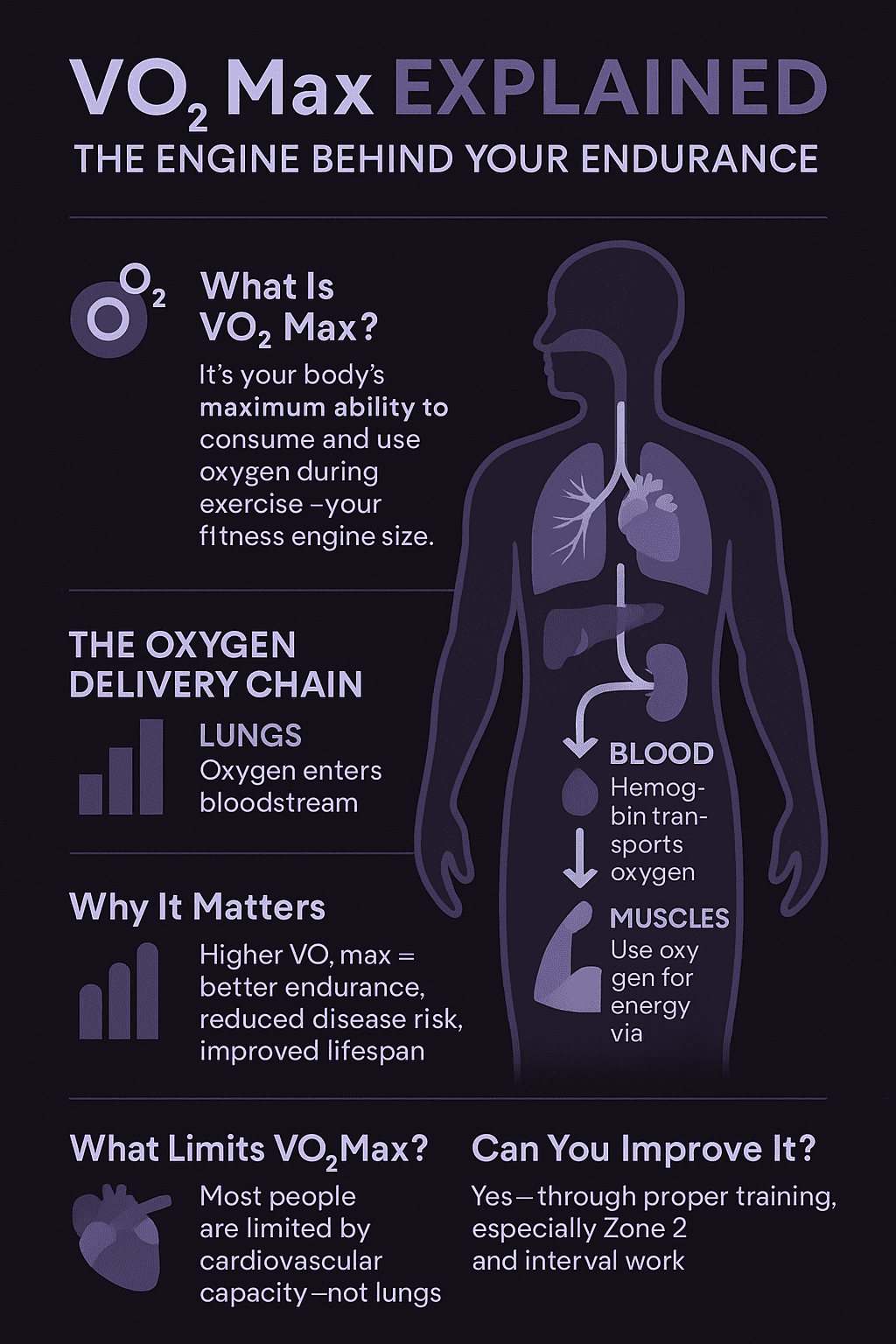
VO2 max, or maximal oxygen consumption, is the maximum rate at which your body can consume oxygen during increasingly intense exercise. Measured in milliliters of oxygen consumed per kilogram of body weight per minute (ml/kg/min), it’s widely recognized as the standard for measuring cardiovascular fitness and aerobic endurance capacity.
Think of VO2 max as your body’s engine displacement. Just as a car’s engine size determines its power output, your VO2 max determines your aerobic power ceiling. This measurement reflects the integrated function of your respiratory, cardiovascular, and muscular systems working together to deliver and utilize oxygen for energy production.
What makes VO2 max valuable is its strong correlation with performance and health outcomes. Higher VO2 max values are associated with better endurance performance, reduced risk of cardiovascular disease, and lower all-cause mortality rates. In fact, even modest improvements in VO2 max can impact your health trajectory and quality of life.
The Oxygen Delivery Chain
To understand VO2 max, you need to appreciate the coordination required between multiple body systems. Oxygen delivery operates like a supply chain, with each link in the chain playing a critical role in determining your overall capacity.
Step 1: Breathing and Pulmonary Function
The journey begins in your lungs, where oxygen from the air you breathe crosses into your bloodstream. This process, called pulmonary gas exchange, occurs across millions of tiny air sacs called alveoli. The efficiency of this exchange depends on several factors:
Lung Capacity and Ventilation: Your ability to move large volumes of air in and out of your lungs directly impacts oxygen availability. Trained athletes often develop increased lung capacity and more efficient breathing patterns, allowing them to process more oxygen with each breath.
Diffusion Efficiency: The transfer of oxygen from your lungs to your blood occurs across the alveolar-capillary membrane. The thickness and surface area of this membrane, along with the concentration gradient of oxygen, determine how quickly and completely this transfer occurs.
Breathing Mechanics: The coordination between your diaphragm, intercostal muscles, and accessory breathing muscles affects how efficiently you can ventilate your lungs during exercise. Breathing coordination becomes more important as exercise intensity rises.
Step 2: Cardiovascular Transport System
Once oxygen enters your bloodstream, your cardiovascular system takes over as the delivery truck of your oxygen supply chain. This step involves several components:
Cardiac Output: Your heart’s pumping capacity, measured as cardiac output (heart rate × stroke volume), determines how much oxygenated blood can be circulated throughout your body. Elite endurance athletes can have remarkably high cardiac outputs, sometimes exceeding 35-40 liters per minute during intense exercise.
Stroke Volume: This is the amount of blood your heart pumps with each beat. Training adaptations that increase stroke volume—like increased heart chamber size and improved contractility—are among the biggest contributors to VO2 max improvements.
Hemoglobin and Oxygen Carrying Capacity: Your blood’s ability to carry oxygen depends mainly on hemoglobin concentration. Each gram of hemoglobin can carry 1.34 mL of oxygen, making adequate hemoglobin levels vital for oxygen transport.
Vascular Network: The network of blood vessels, particularly capillaries, determines how effectively oxygen can be delivered to working muscles. Training adaptations that increase capillary density (capillarization) enhance oxygen delivery at the tissue level.
Step 3: Muscle Utilization and Cellular Respiration
The final step in the oxygen delivery chain occurs within your muscle cells, where oxygen is consumed to produce energy:
Mitochondrial Function: Often called the powerhouses of the cell, mitochondria are where oxygen is consumed to produce ATP (adenosine triphosphate), the energy currency of cellular work. The number, size, and efficiency of mitochondria in your muscles impact your ability to utilize delivered oxygen.
Enzyme Activity: Specialized enzymes within the mitochondria facilitate the complex biochemical reactions that consume oxygen and produce energy. Training adaptations that increase the concentration and activity of these enzymes enhance your muscles’ ability to extract and utilize oxygen.
Muscle Fiber Composition: Different types of muscle fibers have varying capacities for oxygen consumption. Type I (slow-twitch) fibers are rich in mitochondria and are efficient at using oxygen for sustained energy production.
Oxygen Extraction: The difference between oxygen content in arterial blood entering the muscle and venous blood leaving the muscle (called the arteriovenous oxygen difference or a-vO2 difference) reflects how effectively your muscles can extract oxygen from the blood.
Understanding the Limiting Factors
One of the most fascinating aspects of VO2 max physiology is identifying which component of the oxygen delivery chain is the primary limitation. For most healthy individuals, the cardiovascular system tends to be the limiting factor rather than pulmonary function or muscle oxygen utilization capacity.
This cardiovascular limitation explains why heart rate training zones are so effective for improving VO2 max. When you train at specific intensities that challenge your cardiovascular system appropriately, you stimulate adaptations that increase your heart’s pumping capacity and efficiency.
However, the limiting factor can vary between individuals and can shift as training adaptations occur. Highly trained endurance athletes may develop such efficient cardiovascular systems that peripheral factors—like muscle oxygen extraction capacity—become more limiting.
What Determines Your VO2 Max Potential?
Understanding the factors that influence VO2 max helps explain why some people seem naturally gifted with exceptional endurance capacity while others struggle despite dedicated training efforts.
Genetic Factors
Genetics account for approximately 40-50% of VO2 max variability between individuals. Several genetic factors contribute to this variation:
Cardiac Structure: Genetic factors influence heart size, chamber dimensions, and wall thickness. Individuals with larger hearts or more efficient cardiac geometry may have higher baseline VO2 max values.
Muscle Fiber Composition: The proportion of Type I (slow-twitch) versus Type II (fast-twitch) muscle fibers is largely determined by genetics. Higher percentages of Type I fibers generally correlate with better endurance capacity and higher VO2 max values.
Mitochondrial Genetics: Both nuclear and mitochondrial DNA influence mitochondrial function and biogenesis capacity. Some individuals are genetically predisposed to develop more efficient cellular energy production systems.
Hemoglobin and Hematocrit: Genetic factors influence baseline hemoglobin concentrations and red blood cell production, affecting oxygen-carrying capacity.
Trainability and Adaptation
While genetics set the baseline, training is the biggest modifiable factor for VO2 max improvement. The concept of “trainability” refers to an individual’s capacity to adapt and improve in response to training stimuli:
Training Response Variability: There is enormous variability in training responses, with some individuals improving VO2 max by 15-25% while others may see minimal changes despite identical training programs. This variability appears to have genetic components but is not entirely predictable.
Adaptation Timeline: Most significant VO2 max improvements occur within the first 8-16 weeks of consistent training, though continued gains are possible with progressive overload and varied training stimuli.
Ceiling Effects: As individuals become more highly trained, improvements become more difficult. Elite athletes may train for years to achieve small percentage improvements that can still be performance-defining.
Age and Physiological Changes
Age impacts VO2 max through several physiological mechanisms:
Cardiac Changes: Maximum heart rate declines predictably with age (approximately 1 beat per minute per year after age 25), directly impacting maximum cardiac output potential.
Muscle Mass and Quality: Age-related muscle loss (sarcopenia) and changes in muscle fiber composition can reduce oxygen consumption capacity at the cellular level.
Vascular Changes: Aging affects blood vessel flexibility and capillary density, impacting oxygen delivery efficiency.
Mitochondrial Function: Mitochondrial number and efficiency tend to decline with age, though this decline can be attenuated through regular exercise.
Sex Differences
Biological sex influences VO2 max in several ways:
Cardiac Size: On average, men have larger hearts and higher stroke volumes, contributing to higher absolute VO2 max values.
Hemoglobin Levels: Men typically have higher hemoglobin concentrations, enhancing oxygen-carrying capacity.
Body Composition: Differences in muscle mass and body fat percentages between sexes influence absolute and relative VO2 max values.
Hormonal Factors: Hormones like testosterone and estrogen influence muscle development, red blood cell production, and cardiovascular adaptations.
The Science Behind VO2 Max Improvement
Understanding how training adaptations occur at each level of the oxygen delivery system provides insight into effective training strategies for VO2 max improvement.
Cardiovascular Adaptations
The cardiovascular system shows the most dramatic adaptations to endurance training:
Increased Stroke Volume results from:
- Increased left ventricular chamber size (eccentric hypertrophy)
- Improved cardiac contractility
- Enhanced venous return through increased blood volume
- Better cardiac filling dynamics
Enhanced Cardiac Output: The combination of increased stroke volume and the ability to achieve high heart rates during exercise increases maximum cardiac output capacity.
Improved Circulation: Training adaptations include:
- Increased blood volume and red blood cell count
- Enhanced capillarization of trained muscles
- Improved vascular function and flexibility
Pulmonary Adaptations
While often not the main limiting factor, pulmonary adaptations contribute to VO2 max improvements:
Enhanced Ventilation: Training improves the efficiency of breathing mechanics and increases maximum ventilatory capacity.
Improved Gas Exchange: Adaptations may include increased alveolar surface area and enhanced diffusion capacity.
Respiratory Muscle Strength: Stronger respiratory muscles can maintain effective ventilation even during intense exercise.
Cellular and Metabolic Adaptations
At the muscle level, training produces remarkable adaptations that enhance oxygen utilization:
Mitochondrial Biogenesis: Training stimulates the production of new mitochondria and increases the size of existing ones, enhancing cellular oxygen consumption capacity.
Enzyme Adaptations: Increased concentrations of oxidative enzymes improve the efficiency of oxygen-dependent energy production pathways.
Improved Oxygen Extraction: Enhanced capillary density and improved oxygen diffusion within muscles increase the ability to extract oxygen from circulating blood.
Metabolic Flexibility: Training improves the muscle’s ability to efficiently utilize fats and carbohydrates for energy production.
Zone 2 Training: The Foundation for All Performance Zones
Among the various training intensities, Zone 2 training has emerged as crucial for long-term aerobic development and endurance performance. Zone 2 is the highest sustainable intensity where aerobic metabolism predominates and fat oxidation is near its peak, making it ideal for building endurance and metabolic efficiency.
The Physiological Significance of Zone 2
Zone 2 training occurs at approximately 60-70% of your VO2 max, corresponding to a range of physiological markers:
Aerobic Threshold: Zone 2 training typically sits just below your aerobic threshold, where your body is still able to meet energy demands primarily through aerobic metabolism. At this intensity, lactate production and clearance remain in balance, allowing for maximum aerobic adaptations without triggering large anaerobic stress.
Fat Oxidation: At Zone 2 intensities, your body preferentially burns fat for fuel, improving metabolic efficiency and fat oxidation capacity. This metabolic flexibility becomes crucial for sustained endurance performance.
Mitochondrial Adaptations: Zone 2 training provides stimulation for mitochondrial biogenesis and improvements in oxidative enzyme activity.
How Zone 2 Enhances All Training Zones
One of the most compelling aspects of Zone 2 training is its positive impact on performance across all intensity zones:
Zone 1 (Active Recovery): Enhanced aerobic efficiency improves recovery between training sessions and during low-intensity activities.
Zone 3 (Tempo): A stronger aerobic base allows you to sustain higher intensities for longer periods before accumulating significant lactate.
Zone 4 (Lactate Threshold): Improved aerobic capacity raises your lactate threshold, allowing you to perform at higher absolute intensities while maintaining steady-state conditions.
Zone 5 (VO2 max): A strong aerobic foundation supports higher peak power outputs and improves recovery between high-intensity intervals.
The Challenge of Accurate Zone 2 Determination
The importance of Zone 2 training highlights why accurate heart rate zone determination is essential. Many athletes and fitness enthusiasts rely on age-predicted formulas or generic zones, but these approaches miss the mark significantly.
True Zone 2 corresponds to your individual aerobic threshold, which is best determined through proper physiological testing. This threshold shows the highest intensity at which your aerobic system can meet energy demands without significant anaerobic contribution.
The Importance of Accurate VO2 Max Testing
Given the complexity of VO2 max physiology and the individual variability in responses, accurate testing becomes crucial for anyone serious about optimizing their endurance performance.
Limitations of Prediction Formulas
Many fitness assessments rely on prediction equations that estimate VO2 max based on factors like age, gender, and submaximal exercise performance. While convenient, these predictions have limitations:
Individual Variation: Prediction formulas are based on population averages and may be wildly inaccurate for any given individual. The standard error for most prediction equations means that actual VO2 max could vary by 15-20% or more from predicted values.
Training Status: Most prediction formulas don’t account for training adaptations that can alter the relationship between submaximal and maximal performance.
Physiological Uniqueness: Individual differences in cardiac output, oxygen extraction, and metabolic efficiency mean that two people with identical submaximal performance may have vastly different VO2 max values.
The Superiority of Direct Measurement
Accurate VO2 max testing requires direct measurement of oxygen consumption during progressive exercise to exhaustion. This approach provides several advantages:
Personalized Data: Direct testing reveals your unique physiological profile, including not just VO2 max but also aerobic and anaerobic thresholds, heart rate zones, and metabolic characteristics.
Training Precision: Accurate heart rate zones allow for precise training prescription, guaranteeing that each workout targets the intended physiological adaptations.
Progress Tracking: Reliable baseline measurements allow accurate tracking of improvements over time, providing motivation and validation of training effectiveness.
Mixing Chamber Technology
The technology used for VO2 max testing impacts the accuracy and reliability of results. Mixing chamber technology is the gold standard for metabolic measurement, offering many advantages over breath-by-breath systems:
Superior Accuracy: Mixing chamber technology provides more stable and accurate measurements across all exercise intensities. The technology averages measurements over time, reducing the noise and variability inherent in breath-by-breath systems.
Metabolic Information: Beyond measuring oxygen consumption, mixing chamber systems provide detailed information about substrate utilization—showing exactly when and how efficiently you burn fat versus carbohydrates during exercise.
Environmental Stability: Mixing chamber technology is less susceptible to environmental factors like air movement or temperature fluctuations that can affect breath-by-breath measurements.
Clinical Reliability: The same mixing chamber technology used in research and clinical settings ensures that your testing provides research-grade accuracy and reliability.
The KORR Advantage: Precision Without Complexity
Modern VO2 max testing has evolved to combine accuracy with convenience. KORR’s systems offer:
Rapid Calibration: Auto-calibration systems can prepare for testing in under 90 seconds, eliminating the time-consuming calibration procedures required by older systems.
No Syringe Requirements: Advanced flow sensors eliminate the need for manual calibration with syringes and gas tanks, reducing setup time and human error.
Comprehensive Metabolic Data: Beyond VO2 max measurement, advanced systems provide detailed information about fat burning efficiency, helping optimize training and nutrition strategies.
User-Friendly Operation: Modern systems combine research-grade accuracy with intuitive operation, making precise testing accessible to fitness professionals at all levels.
Practical Applications: From Testing to Training
Understanding VO2 max physiology transforms how you approach training and performance optimization. Armed with accurate testing data, you can:
Design Precision Training Programs: Use your physiological thresholds to create training zones that target specific adaptations, whether building aerobic base, improving anaerobic threshold, or developing VO2 max power.
Optimize Recovery: Understanding individual recovery heart rate patterns helps determine appropriate recovery periods between intervals and training sessions.
Track Progress Meaningfully: Regular testing provides feedback on training effectiveness, allowing for data-driven adjustments to training programs.
Prevent Overtraining: Accurate heart rate zones help ensure that easy days remain easy, preventing the accumulation of excessive training stress.
Maximize Training Efficiency: Precise zone determination guarantees that every training minute targets the intended physiological adaptation, maximizing the return on your training investment.
The Future of VO2 Max Understanding
As our understanding of VO2 max physiology continues to evolve, several exciting areas of research are emerging:
Genetic Testing: Advances in genetic analysis may soon allow for more personalized training recommendations based on individual genetic profiles and predicted training responses.
Metabolic Flexibility: Growing understanding of metabolic flexibility and substrate utilization is revealing new strategies for optimizing endurance performance and health outcomes.
Recovery Science: Better understanding of the physiological processes involved in recovery is leading to more sophisticated approaches to training periodization and adaptation.
Technology Integration: Advances in wearable technology and continuous monitoring are making it possible to track training responses and adaptations in real-time.
Unlock Your Physiological Potential
The physiology of VO2 max is one of the most fascinating and practical areas of exercise science. Understanding how your body’s oxygen delivery system works—from the first breath in your lungs to the final energy production in your muscle cells—provides the foundation for intelligent training and performance optimization.
Whether you’re seeking to improve athletic performance, enhance health outcomes, or simply understand your body better, accurate VO2 max testing provides the roadmap for achieving your goals. The precision of modern testing technology, combined with our growing understanding of training adaptations, makes it possible to optimize your physiological potential like never before.
Ready to discover the true capacity of your human engine? KORR’s VO2 max testing with mixing chamber technology can reveal your unique physiological profile and provide the precise data needed to unlock your endurance potential. Don’t guess at your training zones—measure them accurately and train with the confidence that comes from knowing exactly how your body responds to exercise.