


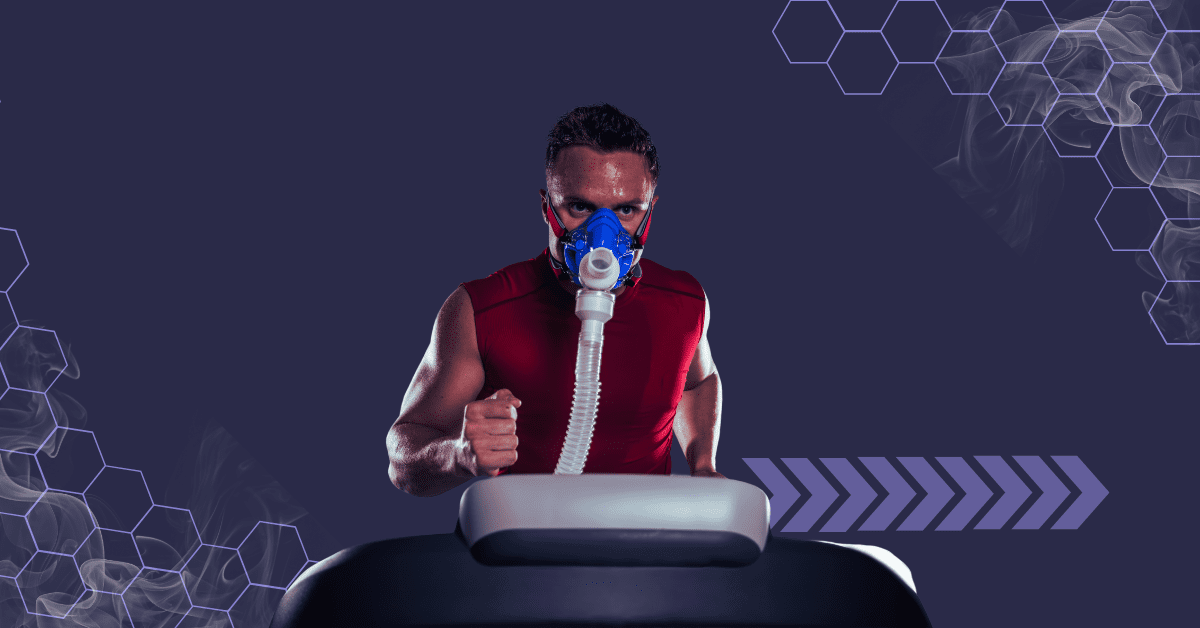
Firefighters and first responders operate in some of the most physiologically demanding conditions in any profession. A structural firefighting task can elevate heart rate to near-maximal levels within minutes. Heat stress compounds cardiovascular strain. Heavy gear adds significant load. And unlike most athletic events, the duration and intensity of a response are unpredictable. A crew may be pushed to near-maximal exertion and then required to sustain that effort for an extended period with minimal recovery.
Cardiovascular endurance is not a supplementary fitness component for this population. It is a core operational requirement. And the facilities, clinics, training centers, and wellness programs serving firefighters and first responders are increasingly recognizing that objective metabolic data is the most reliable way to assess, track, and improve it.
VO2 max testing for firefighters is moving from an occasional performance evaluation to a standard component of occupational wellness and tactical readiness programs. Here is what facilities need to know to implement it effectively.
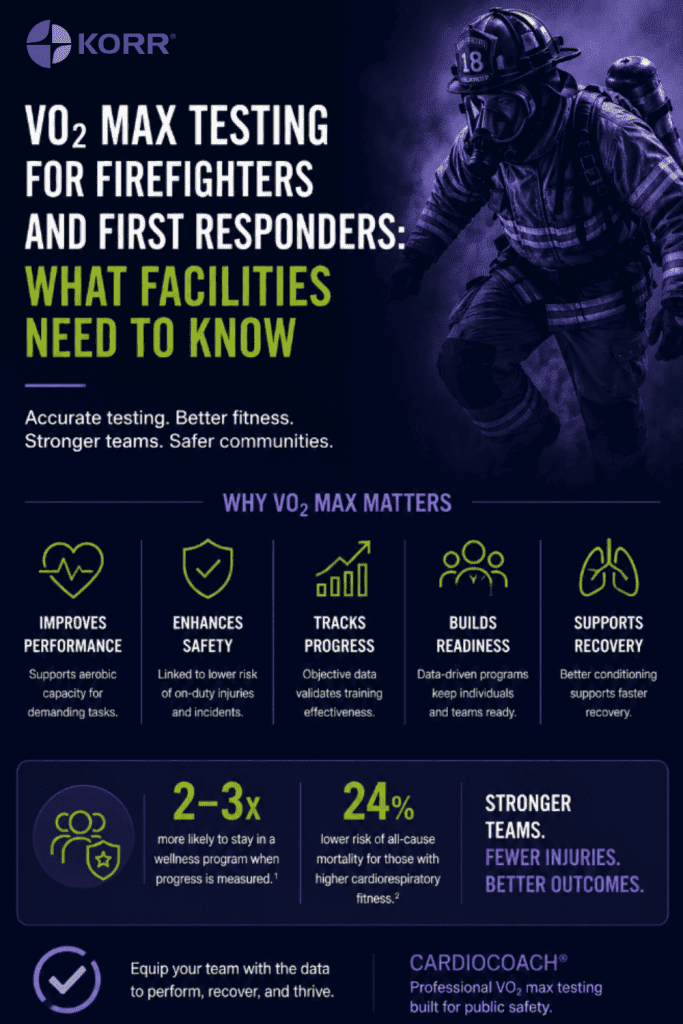
Why VO2 Max Matters for Firefighters and First Responders
VO2 max measures the maximum rate at which the body can consume oxygen during exercise. It is one of the best validated markers of cardiovascular fitness available in a clinical or training setting, and it is directly relevant to the physical demands of firefighting and emergency response.
The physiological requirements of a typical structural firefighting task combine sustained cardiovascular output, resistance to heat stress, and load-bearing movement under time pressure. Stair climbs with full gear, hose advances, victim carries, and extended search operations all place sustained demands on the cardiovascular system. Firefighters with higher aerobic capacity can perform these tasks at a lower relative intensity, recover more efficiently between efforts, and sustain output longer before fatigue compromises performance and safety.
Historically, the NFPA 1582 standard recommended a minimum VO2 max of 42 mL/kg/min (12 METS) for full-duty firefighters. More recent updates have moved towards age and sex-adjusted percentiles as minimums for safe and effective performance of physically demanding firefighting activities. Fire suppression places major cardiovascular strain on firefighters through heavy exertion, heat stress, sympathetic activation, and sustained elevations in heart rate. Cardiac events remain a leading cause of line-of-duty deaths in the fire service, and low cardiorespiratory fitness is a primary contributing factor.
Beyond performance, cardiorespiratory fitness is increasingly relevant to firefighter wellness because it reflects more than job-task capacity. Firefighter-specific research has linked higher fitness with more favorable metabolic risk profiles, while lower physical activity has been associated with higher occupational stress. Although direct evidence connecting measured VO2 max with anxiety, depression, PTSD symptoms, sleep quality, and post-shift recovery in firefighters is still limited, broader evidence suggests that cardiorespiratory fitness and regular physical activity are meaningfully related to mental health, resilience, and long-term disease risk. For departments building comprehensive wellness programs, VO2 max is not just a performance metric. It is a health surveillance tool with implications across multiple dimensions of firefighter wellbeing.
How Facilities Are Using VO2 Max Testing in Tactical Programs
The application of VO2 max testing in tactical settings has expanded significantly as equipment has become more accessible and program infrastructure has matured. Facilities serving firefighters and first responders are using metabolic testing across a range of program types.
Baseline fitness assessments establish individual cardiovascular capacity at program entry, academy enrollment, or annual wellness evaluation. Baseline data provides the reference point against which all subsequent testing is compared. Without it, progress cannot be measured and fitness trends cannot be identified.
Annual wellness evaluations are the most common structured application of VO2 max testing in the fire service. Annual re-testing allows departments and their partner facilities to monitor individual fitness over time, identify members whose cardiorespiratory fitness is trending below operational thresholds, and intervene with targeted conditioning support before fitness deteriorates to a clinically significant level.
Return-to-duty assessments use VO2 max testing to evaluate whether a firefighter recovering from injury, illness, or extended leave has returned to a level of cardiovascular fitness consistent with safe operational deployment. Objective metabolic data provides a defensible, evidence-based standard for return-to-duty decisions that protects both the individual and the department.
Tactical athlete development programs use repeated VO2 max testing to track conditioning improvements over a training cycle, measure the effectiveness of programming changes, and individualize training zone prescriptions for each participant. Heart rate zones derived from actual metabolic data are more precise than population-based estimates and produce better training outcomes.
Academy and recruit testing applies VO2 max assessment at program entry to identify recruits who may need additional cardiovascular conditioning support before completing physical training requirements, and at program completion to document fitness gains achieved during the academy.
In all of these applications, the value of the testing is directly proportional to the accuracy and repeatability of the equipment delivering it. A facility that produces reliable, consistent results across testing sessions and testing personnel provides meaningful data. A facility whose results vary with operator technique or equipment drift provides numbers that cannot be confidently used for clinical or operational decisions.
The Value of Objective Fitness Data in Occupational Wellness
One of the consistent findings from tactical performance programs is that firefighters respond strongly to objective, individualized data. A fitness recommendation backed by a specific number carries more weight than a general encouragement to improve cardiovascular conditioning. A VO2 max result that places a firefighter below the NFPA threshold creates a concrete performance target that most firefighters are strongly motivated to address.
This motivational dynamic is particularly valuable in occupational wellness contexts where participation is voluntary and program engagement varies widely. Generic fitness assessments that produce subjective or population-averaged results are less effective at driving behavior change than individualized metabolic data that tells a firefighter exactly where they stand and precisely what improvement looks like.
For facilities and wellness coordinators, objective data also enables more precise programming. Training zone prescriptions derived from actual VO2 max test results allow coaches to assign cardiovascular work at the correct intensity for each individual. Zone 2 training, which builds aerobic base and improves cardiovascular efficiency, requires precise data to implement correctly. Without a real metabolic test, zone assignments are estimates. With one, they are individualized to the firefighter’s actual physiology.
Repeat testing creates a longitudinal data record that supports multiple program goals. Individual progress can be tracked over months and years. Department-level trends can be monitored in aggregate without identifying individuals, giving leadership a population-level picture of the cardiovascular health of their workforce. That data is increasingly valuable for departments making evidence-based decisions about wellness policy, resource allocation, and return-to-duty standards.
Why Accuracy and Repeatability Matter in Tactical Testing
In a performance or clinical context, a single inaccurate test result is an inconvenience. In an occupational health context, an inaccurate result can inform a consequential decision. A return-to-duty clearance, a fitness-for-duty determination, or a programming intervention for a firefighter whose cardiovascular health is already at risk.
Accuracy and repeatability are non-negotiable requirements for any equipment used in tactical wellness programs. Both depend on the underlying measurement technology.
The KORR CardioCoach uses mixing chamber technology, which collects expired air from multiple breaths into a stabilized sample before analysis. This approach smooths the breath-to-breath variation inherent in human respiration through physics rather than algorithmic correction, producing measurements that are more stable and consistent across test conditions and operators. For programs that rely on repeat testing to track fitness trends over time, measurement consistency is as important as single-test accuracy. A system that produces variable results between testing sessions makes longitudinal comparison unreliable.
Hands-free auto-calibration in approximately 90 seconds using ambient room air eliminates the operator-dependent calibration procedures that introduce variability in other systems. No gas tanks, no syringes, no multi-step manual procedures that can be performed inconsistently. The calibration result is the same regardless of which staff member performs it.
There are no mandatory cooldown periods between sessions and no documented daily session limits. For facilities running group testing days with multiple firefighters scheduled back-to-back, this means no scheduling constraints imposed by the equipment. A testing event can run as many assessments as the schedule requires without mandatory gaps between clients.
The oxygen sensor is user-replaceable in under one minute without tools or recalibration. There are no ongoing software fees, no service contracts, and no factory send-in requirements for routine maintenance. The total cost of operating a testing program on the CardioCoach is predictable and contained.
Operational Considerations for Facilities Running Tactical Testing Programs
Implementing a VO2 max testing program for a fire department, municipal wellness program, or tactical training facility involves logistical considerations beyond equipment selection. The most successful programs share a few common operational characteristics.
Staff training is manageable. KORR includes free training by credentialed personnel with every CardioCoach purchase. The software interface guides users through the testing process with on-screen prompts. New staff can conduct assessments competently after a brief onboarding session without requiring exercise physiology credentials or ongoing specialist oversight.
Portability supports on-site program delivery. Many fire departments do not have the space or infrastructure to bring personnel to a fixed testing facility. The CardioCoach weighs under ten pounds and operates on battery power. It can be transported to fire stations, training academies, and department headquarters for on-site testing days without complex setup requirements.
Group testing is operationally feasible. Departments testing multiple personnel in a single day need equipment that can sustain back-to-back sessions without performance degradation. No session caps and no mandatory cooldown periods between tests make high-volume testing days logistically straightforward.
Dual capability extends program value. The CardioCoach supports both VO2 max and resting metabolic rate testing using dual flow sensors optimized for each application. Facilities that offer RMR testing alongside VO2 max assessment can provide a more complete metabolic picture and generate additional revenue from the same equipment investment.
Scalability supports program growth. A facility that begins with annual VO2 max assessments for one department can expand to serve multiple departments, municipal agencies, or university tactical training programs using the same equipment and staff infrastructure.
VO2 Max Testing Beyond Performance
The performance applications of VO2 max testing in tactical settings are well established. The broader health and wellness applications are increasingly relevant as the fire service and emergency response community place greater emphasis on long-term member wellbeing.
Cardiorespiratory fitness is one of the strongest predictors of all-cause mortality in published research. For a population that faces elevated cardiovascular risk due to occupational stress, heat exposure, sleep disruption, and shift work, tracking VO2 max as a health indicator over a career has meaningful preventive value. A firefighter whose VO2 max is declining below operational thresholds may be at elevated health risk independent of their current performance status.
Recovery monitoring is an emerging application. Cardiorespiratory fitness data provides context for understanding how well an individual is recovering from the accumulated physiological stress of shift work and operational exposure. Facilities that integrate VO2 max testing into broader wellness programs, including sleep quality assessment, stress monitoring, and metabolic health screening, are building more comprehensive support systems for their tactical populations.
Preventive health initiatives that include regular metabolic testing give departments a proactive tool for identifying health risk before it becomes a line-of-duty health event. The economic case for this investment is straightforward. Cardiovascular events in the line of duty carry significant costs in lost personnel, workers’ compensation, disability claims, and recruitment and training of replacements. A VO2 max testing program that identifies and supports at-risk members is an investment in the long-term financial sustainability of the department as much as the health of its members.
Frequently Asked Questions About VO2 Max Testing for Firefighters
Why is VO2 max important for firefighters? VO2 max measures the maximum rate at which the body can consume oxygen during exercise. For firefighters, higher aerobic capacity supports sustained physical output during suppression and rescue operations, faster recovery between efforts, and reduced cardiovascular risk during high-intensity tasks. Research also links higher VO2 max to better mental health outcomes and recovery from shift work in tactical populations.
What is the recommended VO2 max for firefighters? Firefighters should meet at least the 35th percentile for aerobic capacity based on age and biological sex, with higher fitness levels preferred for the demands of full-duty work.Firefighters below this threshold face elevated cardiovascular risk during suppression activities and may benefit from targeted conditioning programs.
How often should firefighters be tested? Annual testing is the most common standard in occupational wellness programs, allowing departments to track individual fitness trends over time and identify members whose cardiorespiratory fitness may be declining toward clinical thresholds. High-performance programs may test more frequently, particularly during structured conditioning cycles.
What equipment is used for VO2 max testing in fire departments? Professional indirect calorimetry systems are used for accurate VO2 max assessment. The KORR CardioCoach is a mixing chamber-based metabolic analyzer used in more than 1,000 facilities worldwide. It offers portable, hands-free operation suitable for on-site testing at fire stations and training academies.
Can VO2 max testing be done on-site at a fire station? Yes. Portable metabolic testing systems like the CardioCoach weigh under ten pounds and operate on battery power, making on-site testing at fire stations logistically straightforward without requiring dedicated laboratory infrastructure.
Is VO2 max testing only relevant for athletic performance in firefighters? No. VO2 max is increasingly used as a health surveillance metric in tactical populations, with research linking cardiorespiratory fitness to cardiovascular health, mental health outcomes, recovery from shift work, and long-term mortality risk. Departments using VO2 max testing for annual wellness evaluations are using it as a preventive health tool as much as a performance assessment.
Facilities That Serve Tactical Populations Need Equipment That Can Keep Up
Firefighters and first responders are not a standard gym population. They have specific fitness requirements, occupational health stakes, and professional cultures that place a high value on objectivity, accountability, and measurable performance standards. The facilities, clinics, and training centers that serve them effectively are the ones that can deliver accurate, repeatable metabolic data in a format that is operationally practical for both the testing facility and the department.
That means equipment that travels to the station, calibrates in 90 seconds, runs back-to-back sessions without downtime, and produces results that can be confidently used for programming, wellness monitoring, and occupational health decisions. It means staff who can conduct assessments competently without specialist credentials. And it means a total cost of ownership that makes sustaining a testing program financially viable over the long term.The KORR CardioCoach is in use at more than 1,000 locations worldwide across tactical training centers, occupational health clinics, universities, and municipal wellness programs. To learn how the CardioCoach can support your facility’s tactical testing program, visit korr.com or call 1-801-483-2080 to schedule a demonstration.