


Ever noticed how the right song can transform your workout from a sluggish struggle to an energetic session where you blow past your limits? There’s actually science behind this phenomenon, and it could be the key to optimizing your VO₂ Max training.
As exercise physiologists and fitness experts, we’ve seen firsthand how music can dramatically impact performance metrics – especially when it comes to cardiovascular training. But creating the perfect playlist isn’t just about picking songs you enjoy – it’s about strategic selection that aligns with your training zones and physiological targets.
The Science Behind Music and Exercise Performance
Research shows that music can enhance exercise performance in a few different ways. A review published in the Psychological Bulletin found that music can function as a stimulant and a sedative during exercise, helping athletes achieve peak arousal levels for their specific activity1.
When integrated properly into your training regimen, music can provide:
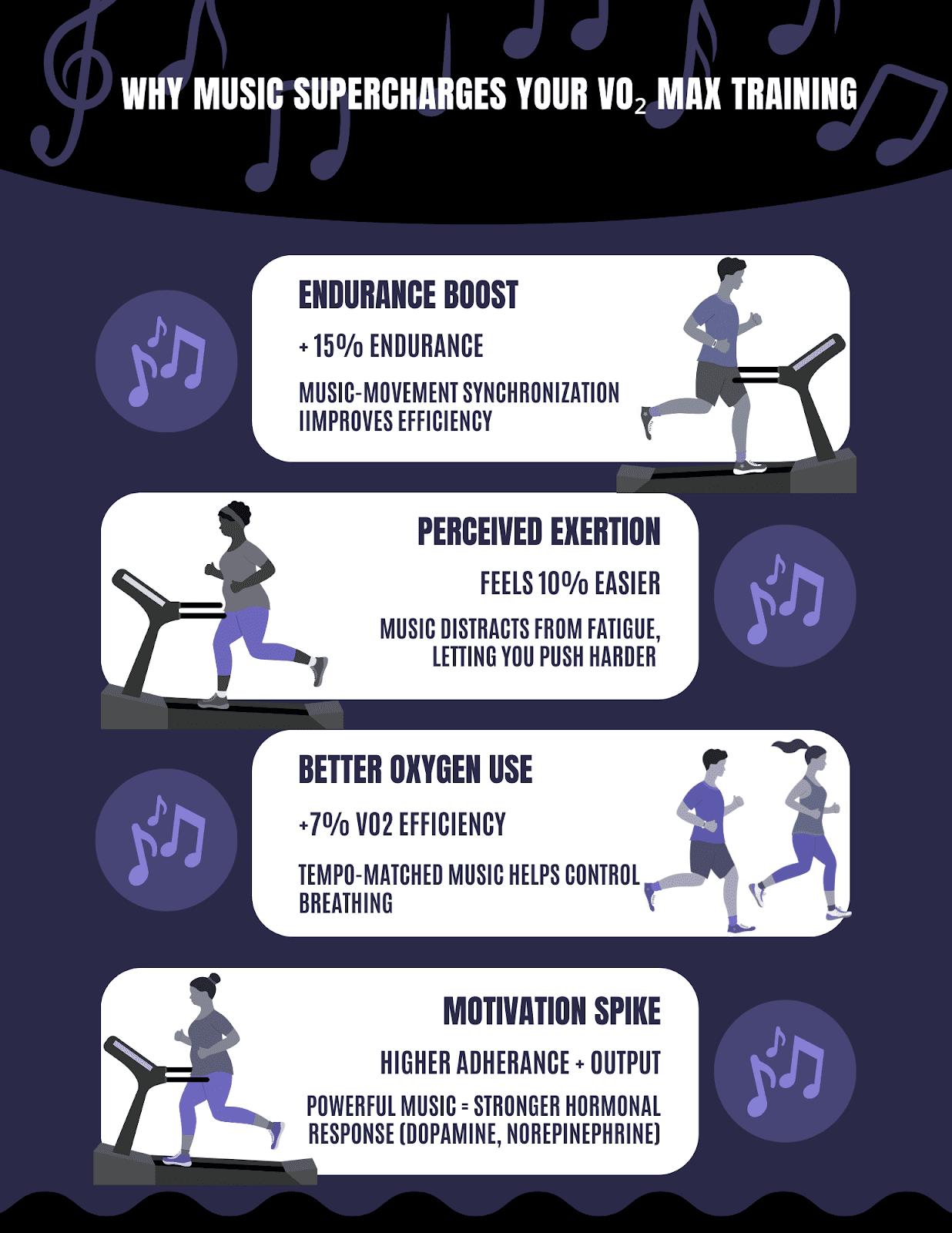
- Increased endurance: Synchronizing movement to music can increase endurance. This synchronization, known as “auditory-motor synchronization,” allows your body to use energy more efficiently.
- Reduced perceived exertion: The right music can decrease ratings of perceived exertion (RPE). This means intense exercise feels easier, allowing you to work harder without feeling like you’re pushing your limits.
- Improved oxygen consumption: When synchronized, music can help maximize your breathing patterns and oxygen uptake efficiency. .
- Enhanced motivation: The psychological boost from motivational music can increase workout adherence and effort, especially during high-intensity intervals that are crucial for VO₂ Max development.
- Distraction from fatigue: Music provides a form of dissociation, allowing you to partially block out the sensations of fatigue, which is valuable during Zone 2 and Zone 3 training sessions that require sustained effort.
What’s interesting is how music tempo can be matched to specific heart rate zones – a factor for effective VO₂ Max training. This approach transforms your playlist from mere entertainment into a precision training tool.
Understanding VO₂ Max and Training Zones
Before diving deeper into creating the ultimate workout playlist, it’s important to understand what VO₂ Max is and why training zones matter.
VO₂ Max is the maximum rate at which your body can consume oxygen during intense exercise. It’s measured in milliliters of oxygen consumed per kilogram of body weight per minute (ml/kg/min) and is the standard for assessing cardiorespiratory fitness. A higher VO₂ Max indicates better cardiovascular fitness and endurance capacity.
Training to improve your VO₂ Max requires working at varying intensities across specific heart rate zones:
- Zone 1: Active recovery, improves basic endurance and fat metabolism
- Zone 2: Develops aerobic capacity and metabolic efficiency
- Zone 3: Improves functional capacity and lactate threshold
- Zone 4: Challenges your anaerobic threshold
- Zone 5: Develops maximum oxygen uptake (VO₂ Max)
These zones represent physiological states where your body uses different energy systems and adapts in specific ways. The problem is that generic formulas for calculating these zones (like “220 minus your age”) can be wildly inaccurate. This is why VO₂ Max testing is so valuable – it identifies your exact, personalized zones.
Matching Music Tempo to Your Training Zones
Now that we understand the importance of training zones, let’s explore how to match your music to each one for peak performance. Understand that your individual zones may differ, so you’ll want to choose music that works within your own heart rate ranges.
Zone 1 (Recovery): 60-110 BPM
Your recovery zone requires gentle, steady rhythms that prevent you from pushing too hard. The goal here is active recovery, where you’re moving enough to stimulate blood flow and recovery without adding training stress. Music in this zone should be calming yet uplifting.
Recommended tracks:
- “Easy” by Commodores (65 BPM)
- “Watermelon Sugar” by Harry Styles (95 BPM)
- “Circles” by Post Malone (120 BPM but with a relaxed feel)
- “Sunday Morning” by Maroon 5 (90 BPM)
- “Breathe” by Faith Hill (68 BPM)
- “Dreams” by Fleetwood Mac (120 BPM but with a laid-back rhythm)
Zone 1 playlists work best when they include songs that naturally calm your nervous system. Acoustic versions of favorite songs often work well here, as do tracks with smooth, flowing rhythms rather than driving beats.
Zone 2 (Aerobic Base): 110-130 BPM
Zone 2 is arguably the most important training zone for building the aerobic foundation that supports all other performance. You develop mitochondrial density, capillary networks, and metabolic efficiency here, improving endurance and metabolic health
In this zone, you need music that keeps you moving steadily without pushing into higher intensities:
- “Don’t Start Now” by Dua Lipa (124 BPM)
- “The Middle” by Zedd (107 BPM)
- “Blinding Lights” by The Weeknd (117 BPM)
- “Levitating” by Dua Lipa (103 BPM)
- “Higher Love” by Kygo & Whitney Houston (104 BPM)
- “Dancing With A Stranger” by Sam Smith & Normani (102 BPM)
- “Shape of You” by Ed Sheeran (96 BPM but with a driving rhythm)
The key to Zone 2 playlists is consistency and rhythm that matches your cadence without encouraging you to push harder. Many athletes make the mistake of training too hard in what should be Zone 2 sessions, which can limit aerobic development.
Zone 3 (Tempo): 130-150 BPM
As you push into your tempo zone where you’re challenging your anaerobic threshold, increase your music tempo. Zone 3 mixes aerobic and anaerobic energy production, with a majority of energy coming from carbs.. Music here should help you maintain a challenging but sustainable pace:
- “Uptown Funk” by Mark Ronson ft. Bruno Mars (115 BPM with an energetic feel)
- “Level Up” by Ciara (131 BPM)
- “Physical” by Dua Lipa (124 BPM with driving energy)
- “Don’t Stop Me Now” by Queen (156 BPM)
- “Can’t Stop the Feeling!” by Justin Timberlake (113 BPM but energizing)
- “Dynamite” by Taio Cruz (120 BPM with a strong beat)
- “I Wanna Dance with Somebody” by Whitney Houston (118 BPM)
Zone 3 music should help you find that “comfortably uncomfortable” pace where you’re working hard but could still maintain the effort for 30-45 minutes.
Zone 4 (Anaerobic Threshold): 150-170 BPM
When you’re pushing your anaerobic threshold, you need music that drives you forward. This zone marks the intensity at which lactate accumulates faster than it can be cleared. Training here develops lactate clearance and tolerance, and drives performance improvements.:
- “Eye of the Tiger” by Survivor (109 BPM with a driving rhythm)
- “Can’t Hold Us” by Macklemore & Ryan Lewis (146 BPM)
- “Stronger” by Kanye West (104 BPM with intense drive)
- “All I Do Is Win” by DJ Khaled (150 BPM)
- “Remember the Name” by Fort Minor (85 BPM but with intense energy)
- “Lose Yourself” by Eminem (171 BPM)
- “Thunderstruck” by AC/DC (138 BPM with high energy)
The best Zone 4 tracks have a driving urgency that matches the intensity of threshold training. Even if the BPM isn’t extremely high, songs with powerful beats and motivational lyrics can help you maintain intensity.
Zone 5 (VO₂ Max): 170+ BPM
Reserved for intervals where you’re pushing maximum oxygen consumption, Zone 5 music needs to be intensely motivating. These short, all-out efforts require tracks that trigger an adrenaline response:
- “Till I Collapse” by Eminem (171 BPM)
- “Power” by Kanye West (154 BPM with intense energy)
- “DNA” by Kendrick Lamar (140 BPM with aggressive energy)
- “Welcome to the Jungle” by Guns N’ Roses (125 BPM but with high intensity)
- “Shoot to Thrill” by AC/DC (132 BPM with driving energy)
- “Enter Sandman” by Metallica (123 BPM with intensity)
- “X Gon’ Give It To Ya” by DMX (85 BPM but extremely motivating)
For Zone 5 intervals, the emotional impact of the music often matters more than the strict BPM. Songs that make you feel powerful and energized are ideal for these maximum-effort intervals.
The Physiological Connection: Why Music Works
The effectiveness of music during exercise isn’t just psychological – there are specific physiological mechanisms at work:
Neurological Entrainment
Your brain naturally syncs with rhythmic stimuli, a phenomenon known as neural entrainment. When exercising to music, your movement patterns unconsciously synchronize with the beat. This synchronization can enhance movement efficiency during activities with repetitive motions like running, cycling, or rowing.
Cardiorespiratory Synchronization
Similarly, your breathing patterns can synchronize with musical rhythm. This may correlate to improved respiratory patterns and more economical oxygen consumption compared to those exercising without music.
This synchronization is beneficial for Zone 2 training, where developing efficient aerobic metabolism is crucial for long-term VO₂ Max improvements.
Hormonal Response
The right music can trigger the release of performance-enhancing hormones and neurotransmitters:
- Dopamine: Pleasurable music increases dopamine release, enhancing mood and motivation
- Endorphins: Combined with exercise, music can amplify the release of these natural pain-killers
- Norepinephrine: Energizing music can boost this hormone, increasing arousal and readiness for action
These hormonal responses help explain why music can improve performance even when all other factors remain constant.
Personalization Is Key
While these recommendations provide a starting point, your ideal workout playlist should be tailored to your personal preferences and specific physiological markers. This is where precision VO₂ Max testing becomes invaluable – it identifies your exact training zones, allowing you to match your music perfectly to your workout needs.
A VO₂ Max test maps out your entire metabolic profile, showing exactly which heart rates correspond to fat-burning zones, aerobic development, and anaerobic threshold. With this information, you can create the perfect soundtrack for each training phase.
Individual differences in physiological response to music are significant. Personal factors like musical background, training experience, and even personality traits can influence how well music enhances performance. Some considerations include:
- Musical preferences: Songs you genuinely enjoy provide stronger performance effects
- Emotional associations: Tracks connected to positive memories can trigger more powerful responses
- Cultural background: Musical preferences shaped by cultural influences impact motivational effects
- Training history: Experienced athletes may respond differently to musical stimuli than novices
This is why generic “workout playlists” often fall short – true optimization requires personal customization based on physiological data and individual preferences.
Building Your Ultimate Playlist
The most effective approach combines science with personal preference:
- Get tested: Determine your precise training zones through a professional VO₂ Max test. This eliminates the guesswork from your training and provides the foundation for effective playlist creation.
- Analyze your music: Use apps like Tempo Magic, jog.fm, or songbpm.com to identify the BPM of your favorite songs. Many streaming services now also categorize music by BPM.
- Create zone-specific playlists: Organize songs by BPM to match your training zones. Remember that the emotional impact of songs can sometimes override strict BPM considerations.
- Test and refine: Pay attention to how different songs affect your performance and perceived exertion. Track metrics like heart rate, pace, and subjective effort alongside your playlists.
- Update regularly: Refresh your playlists periodically to prevent psychological habituation. The motivational effect of music can diminish with overexposure.
Remember, the goal isn’t just to distract yourself during exercise – it’s to strategically enhance your physiological response through synchronization of movement, breathing, and musical rhythm.
The Emotional Component
While tempo matching is important, don’t underestimate the power of emotional connection. Songs that motivate you personally can trigger the release of performance-enhancing neurochemicals like dopamine and adrenaline. Include tracks that:
- Remind you of successful performances
- Have lyrics that resonate with your goals
- Create an emotional state conducive to pushing your limits
- Evoke memories of personal achievements or powerful experiences
The “associative” properties of music (how it connects to personal experiences and memories) can sometimes be more important than the “dissociative” properties (how it distracts from fatigue).
Practical Applications for Different Training Types
Different workout structures require different approaches to musical accompaniment:
Interval Training
For high-intensity interval training (HIIT) designed to boost VO₂ Max, consider creating playlist blocks that match your work and recovery periods:
- Work intervals: High-tempo, high-energy tracks (Zone 4-5)
- Recovery intervals: Moderate tempo tracks that prevent excessive intensity (Zone 2-3)
Some athletes find that having distinct “work songs” and “recovery songs” helps create a Pavlovian response, mentally preparing them for each phase of the interval.
Long, Steady Zone 2 Sessions
For extended Zone 2 sessions focused on building aerobic capacity, musical consistency is key:
- Maintain a steady BPM range (110-130)
- Consider podcast/music hybrids for variety during longer sessions
- Create longer playlists that don’t require frequent attention
These sessions are important for building the aerobic foundation that supports VO₂ Max development.
Race Simulation Workouts
When simulating race conditions, structure your playlist to match your pacing strategy:
- Start with moderate-tempo tracks to prevent early burnout
- Progress to higher-energy songs for middle sections
- Finish with your most motivating tracks for the final push
This approach helps reinforce smart pacing while providing motivation when fatigue sets in.
Fine-Tuning Your Training with Precision Tools
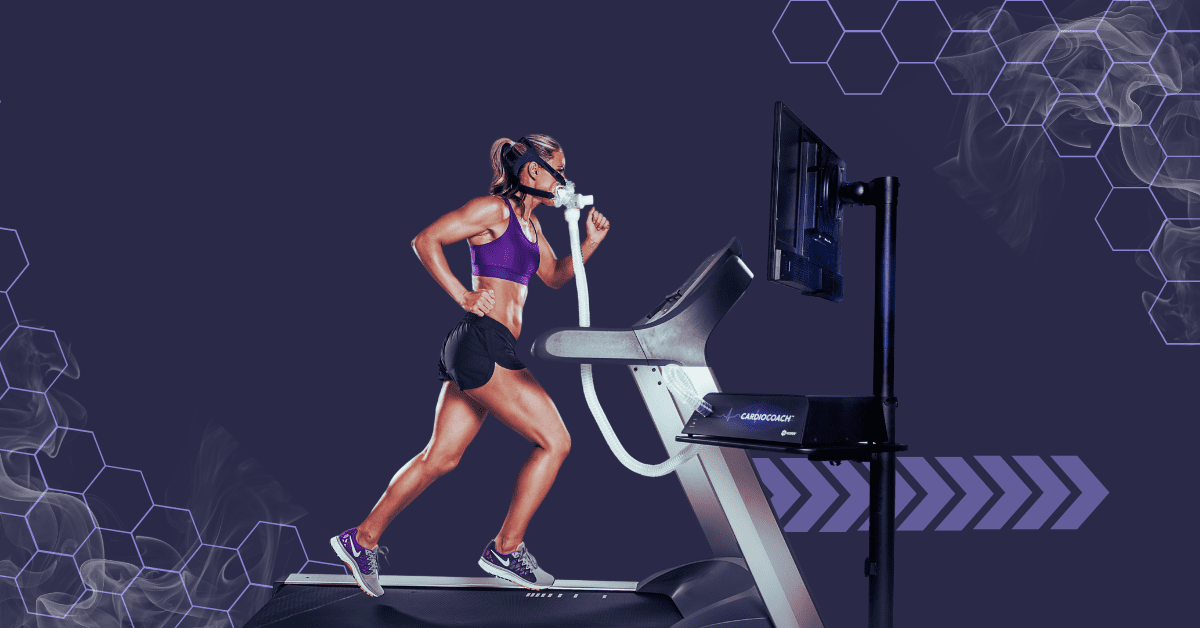
To optimize your VO₂ Max training, combine your curated playlist with precision measurement. Professional-grade metabolic testing equipment like the CardioCoach provides real-time feedback on oxygen consumption, allowing you to see exactly how effective your training (and your playlist) really is.
Understanding your personal Zone 2 heart rate – the sweet spot for building aerobic capacity and metabolic efficiency – is particularly valuable. This zone varies between individuals and can only be accurately determined through proper testing, not generic formulas.
Modern mixing chamber technology allows for precise measurement of oxygen consumption and carbon dioxide production, providing insights into:
- Your exact fat-burning zone
- Your anaerobic threshold (the point where lactate begins to accumulate faster than it can be cleared)
- Your peak oxygen consumption (VO₂ Max)
This data makes it possible to create training zones that are truly personalized, rather than based on population averages or formulas.
When to Train Without Music
Despite the benefits of music during training, there are times when training without auditory stimulation is beneficial:
- Race preparation: If your target event doesn’t allow headphones, some training sessions should simulate race conditions
- Mindfulness practice: Occasionally training without music develops greater bodily awareness and connection to effort levels
- Technical focus: When working on form or technique, external music can sometimes be distracting
A balanced approach might include music for most training sessions, with strategic music-free sessions incorporated throughout your program.
Creating a Progressive Musical Training Plan
Just as your training progresses over time, your playlist strategy can evolve throughout your training cycle:
- Base phase: Focus on Zone 1-2 playlists that support high-volume, low-intensity work
- Build phase: Introduce more Zone 3-4 tracks as intensity increases
- Peak phase: Incorporate Zone 5 power tracks for high-intensity sessions
- Taper: Return to more relaxing selections that help manage pre-event anxiety
This approach to musical selection complements the progression of your training plan.
The Future of Music and Training
Emerging technologies are creating new possibilities for integrating music with training:
- Adaptive tempo apps: Software that automatically adjusts music tempo to match your cadence or heart rate
- Biofeedback integration: Systems that select music based on real-time physiological data
- AI playlist generation: Algorithms that learn your preferences and physiological responses
These technologies promise to go beyond the synergy between music and exercise performance.
Harmonizing Science and Motivation
With the right music synchronized to your scientifically determined training zones, you create the best environment for cardiovascular development. Your playlist becomes more than entertainment – it transforms into a precision training tool that can help you achieve breakthrough performance.
The science is clear: appropriately selected music can enhance training effectiveness, particularly when aligned with physiological zones determined through VO₂ Max testing. By combining these insights with personal preferences, you create a powerful ergogenic aid that can transform your training experience and results.
Ready to take your training to the next level? Consider VO₂ Max testing to identify your training zones, then build the ultimate personalized workout playlist that matches the science and your musical taste. Your heart, lungs, and personal records will thank you.
Remember that the only way to truly know your training zones is through professional testing – guesswork and formulas simply can’t provide the precision needed for optimal training. Once you know your zones, the right playlist can help you train smarter, not harder.
References:
- Terry PC, Karageorghis CI, Curran ML, Martin OV, Parsons-Smith RL. Effects of music in exercise and sport: A meta-analytic review. Psychol Bull. 2020;146(2):91-117. Epub 20191205. doi: 10.1037/bul0000216. PubMed PMID: 31804098.