


The metabolic testing market has changed. What was once the exclusive domain of research laboratories and elite athletic training facilities is now accessible to individual consumers through portable wearables. While this has its merits, it has also created confusion among practitioners trying to select equipment for professional use. The fundamental question isn’t just “which device measures VO2?” but rather “which device is engineered for my operational reality?”
Indirect calorimetry, the measurement of oxygen consumption and carbon dioxide production to determine energy expenditure, remains the gold standard for metabolic assessment. Whether you’re working with weight loss patients, training competitive athletes, or conducting fitness assessments, accurate metabolic data forms the foundation for effective interventions. The question is which equipment delivers that accuracy consistently, day after day, client after client.
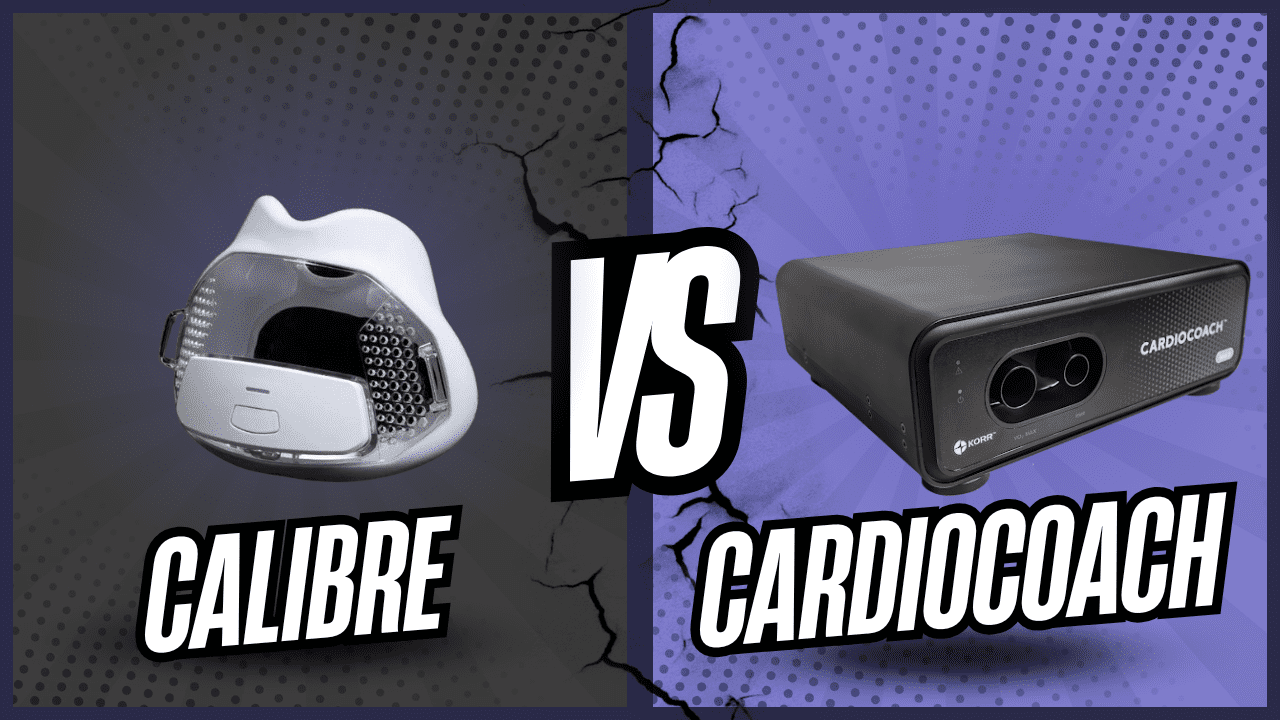
This comparison examines two products that both perform indirect calorimetry but serve fundamentally different markets: the KORR CardioCoach, a professional-grade metabolic testing system designed for clinics and training facilities, and the Calibre, a consumer wearable designed for individual athletes and health enthusiasts. Understanding these differences will help practitioners make informed equipment decisions.
Understanding the Two Product Categories
Professional Metabolic Testing Systems
The CardioCoach represents professional metabolic testing equipment built for clinical and commercial environments. These systems are engineered for daily use across multiple clients, with construction that withstands the demands of high-volume testing. The CardioCoach comes housed in a steel casing specifically designed for durability in busy facilities. Its user interface prioritizes minimal staff training, KORR states that any trainer can learn to perform a test in minutes without certification.
Professional systems like the CardioCoach also emphasize outputs designed for patient education. The printouts present results in formats that make it easy for practitioners to explain findings to clients, with clear data visualization and customizable recommendations. This focus on the practitioner-client interaction reflects equipment designed for business environments where testing is a service offered to paying customers.
Consumer Wearable Devices
The Calibre represents a different approach: portable, personally-owned equipment for individual health monitoring. Priced at $549–$599, it’s positioned for athletes, biohackers, and health-conscious individuals who want to track their own metabolic data over time. The device is compact enough to fit in a bag and connects to a smartphone app for data logging and visualization.
Consumer wearables serve a legitimate market need. An individual athlete who wants to monitor their VO2 Max progression over a training season, or someone tracking their Resting Metabolic Rate during a weight loss program, can benefit from having personal equipment. The key distinction is that these devices are optimized for single-user ownership and self-administered testing, not for commercial operations where multiple clients need testing each day.
Comparing these product categories directly is somewhat like comparing commercial kitchen equipment to home appliances, both cook food, but they’re engineered for different operational demands and throughput requirements.
Core Technology and Measurement Method
CardioCoach: Mixing Chamber Technology
The CardioCoach uses mixing chamber technology for gas sampling, which is considered the gold standard for VO2 Max measurements. A mixing chamber collects expired gases and allows them to equilibrate before analysis, which decreases algorithm errors inherent in breath-by-breath calculations. This methodology has been used in research settings for decades and provides the consistency needed for reliable repeat testing.
The CardioCoach also employs dual flow sensors—a critical engineering distinction. KORR uses two different flow sensors to ensure low flow rates (during RMR testing) and high flow rates (during high-intensity VO2 Max testing) are measured accurately. The system offers two ports: a smaller port optimized for RMR and a larger port for VO2 Max. These aren’t simply different port sizes, each port leads to a different flow sensor with different tolerances, ensuring accurate measurement across the full range of testing scenarios.
The CardioCoach has been independently validated at the University of Southern California and Oregon State University, with published research confirming its accuracy. The device measures oxygen consumption with an accuracy of ±0.2% O2 and airflow within ±2% of reading, specifications that reflect its professional-grade engineering.
Calibre: Open-Flow Design
The Calibre uses indirect calorimetry to measure VO2 and VCO2, tracking over 20 breath metrics according to the manufacturer. A notable design difference is the Calibre’s fitting approach. Unlike traditional metabolic masks that require a tight seal, the Calibre is designed to sit loosely against the face, held in place by straps but not compressed. The manufacturer explicitly instructs users to “avoid pressing or compressing the facepiece too much, as it needs a sufficient interior volume to measure accurately.”
Why Technology Differences Matter
For practitioners running multiple tests per day, the mixing chamber approach offers consistency across varied testing conditions and subjects. The Calibre’s design, while innovative for personal use, introduces documented session limitations that affect professional operations. Specifically, the manufacturer states a maximum of 25 minutes for high-intensity sessions due to condensation affecting sensor readings, and requires at least one hour between back-to-back sessions “to let the sensor dry fully.”
For a facility scheduling hourly VO2 Max appointments, this creates significant operational constraints.
Calibration and Ease of Operation
CardioCoach: Hands-Free Auto-Calibration
The CardioCoach auto-calibrates without syringe, calibration tanks, or manual processes. During each calibration cycle, the system measures barometric pressure, temperature, and humidity, then automatically compensates to standard (STPD) conditions. This hands-free approach means staff can prepare for the next client while calibration occurs, supporting efficient patient throughput.
The oxygen sensor uses galvanic fuel cell technology with factory calibration data stored electronically inside a replaceable cartridge. When the sensor needs replacement (typically every 18–24 months), the new cartridge arrives pre-calibrated—staff simply install it without additional calibration steps or special tools.
Calibre: 30-Minute Pre-Test Preparation
The Calibre calibrates using ambient air, eliminating the need for specialty calibration gases, a legitimate advantage for individual users. However, the preparation process requires more time and attention. According to the manufacturer’s documentation, users should “avoid breathing near the device for approximately 30 minutes before calibration” to allow surrounding air to properly diffuse into the internal sensing chamber.
Additionally, before the first session or longer tests, Calibre requires a baseline procedure: pressing and holding a button for 10 seconds, letting the device rest for one minute, then placing it on the charger for at least 30 minutes to warm the oxygen sensor to operating temperature. The manufacturer warns that “skipping this step may lead to inaccurate data.”
Operational Impact
In a clinic or gym environment testing five to ten clients daily, calibration time directly affects throughput and revenue. The CardioCoach’s hands-free calibration supports back-to-back testing, while the Calibre’s preparation requirements, while acceptable for personal use, create scheduling bottlenecks in professional settings where appointment efficiency matters.
Sensor Maintenance and Total Cost of Ownership
CardioCoach: Predictable Replacement Schedule
The CardioCoach uses a galvanic fuel cell oxygen sensor with an average life of 24 months. Like all galvanic oxygen sensors, it has a limited shelf life, the sensor typically expires within 18 months of manufacture, whether used or not. This is simply how the technology works, and KORR has engineered the CardioCoach with user-replaceable sensor cartridges.
Each oxygen cartridge is factory calibrated with calibration data stored electronically inside the cartridge. This allows customers to replace the sensor themselves while retaining device accuracy, no tools required, no calibration procedures, no service center visit. KORR charges nothing for software, reports, analysis, or service contracts, and includes free training by credentialed personnel with each purchase. The product warranty is 2 years.
Calibre: No Replacement Parts Offered
The Calibre markets itself as having “no consumable or replacement parts needed” with “no regular maintenance or servicing required.” On the surface, this sounds advantageous. However, their own documentation acknowledges sensor limitations, including degraded readings after approximately 25 minutes of high-intensity use “due to excessive water buildup entering the sensing module.”
The manufacturer warns that “exceeding these limits may result in irreversible sensor damage and will void your warranty.” The warranty itself is one year. What happens if sensor accuracy degrades over 18–24 months of regular use? Without replacement parts available, the device may become an expensive paperweight. This represents an unknown in the total cost of ownership that professional buyers should consider.
Cost Comparison
The CardioCoach represents a higher initial investment. The Calibre costs $549–$599. However, the professional equipment offers predictable long-term costs (periodic sensor replacement), longer warranty coverage, included training, and free software. The consumer device offers a lower upfront cost but shorter warranty protection and uncertainty about long-term sensor reliability.
Session Capabilities and Testing Limitations
CardioCoach: Built for Extended and Repeated Testing
The CardioCoach has no documented session duration limits. The system handles VO2 Max tests, sub-max tests, RMR testing, and extended testing periods (on the PRO model). Facilities can schedule back-to-back appointments without mandatory cooldown periods between sessions. This reflects equipment designed for commercial operations where client scheduling drives revenue.
Calibre: Documented Session Constraints
The Calibre has specific session limits published in their product documentation. For high-intensity sessions (above 60 L/min breath volume), the maximum duration is 25 minutes—and this includes warm-up, cool-down, and all activity, not just the test itself. For moderate intensity activities, the limit extends to 90 minutes. Between sessions, the manufacturer requires at least one hour for the sensor to dry fully, explicitly stating that “back-to-back sessions must be treated as a single extended session in terms of water buildup.”
What does this mean practically? A standard VO2 Max ramp protocol often runs 15–25 minutes of exercise plus warm-up and cool-down. A practitioner might complete one test within the time limit, but then faces an hour-long gap before the next client can be tested. For a facility that wants to offer morning testing blocks, this constraint significantly reduces appointment capacity.
Clinical and Professional Considerations
Disease Transmission Prevention
The CardioCoach incorporates a one-way valve that prevents re-breathing of contaminants—an important consideration in clinical settings where multiple patients use the same equipment. Proper infection control is both a regulatory requirement and a liability concern for healthcare facilities.
KORR provides multiple options for masks, valves, and mouthpieces, giving test administrators flexibility based on their operational preferences and infection control requirements:
- The Hans Rudolph 2-way non-rebreathing valve can be used with their reusable mask for exercise testing. The mask must be thoroughly cleaned between clients, but it does not rely on filters and does not have any small moving parts that can trap particulates.
- The Hans Rudolph 2-way non-rebreathing valve can also be paired with a single-patient-use mask for exercise testing, eliminating any cross-contamination between masks.
- KORR manufactures a completely disposable neoprene mask and disposable 2-way non-rebreathing valve for exercise testing. While there is a modest cost-per-test (less than $10), the time saved in cleaning and the peace of mind in infection control is worth it to many practitioners.
- KORR manufactures a completely disposable mouthpiece and hose for RMR testing, eliminating any concern of cross-contamination between clients and allowing for rapid testing in busy clinics.
The Calibre’s product documentation does not address disease transmission prevention. As a consumer device designed primarily for single-user ownership, this makes sense. But practitioners considering the device for multi-client use should factor in their own protocols for sanitization between users.
Training and Support
KORR includes free training by credentialed personnel with each CardioCoach purchase. The company also provides ongoing customer support, software updates, and service options. For facilities adding metabolic testing as a new service line, this support structure helps ensure staff competency and equipment optimization.
The Calibre relies on self-service documentation, instructional PDFs, and app-based guidance. This is appropriate for individual users comfortable with DIY approaches, but may not provide the structured onboarding that professional facilities expect with capital equipment purchases.
Data Integration
The CardioCoach integrates with external equipment, including ergometers (Lode, Trackmaster), Moxy for muscle oxygen saturation data, SMART trainers, and allows data entry for blood lactate measurements. The CardioCoach app, available free with all features to both clinicians and end users, enables workout building based on test results, with real-time feedback during training sessions.
The Calibre connects to its proprietary app for personal data tracking and session history. While functional for individual use, it doesn’t offer the same integration ecosystem for professional testing environments.
Workout Zone Methodology
A significant differentiator for practitioners who use metabolic testing to guide training programs is the ability to create and customize workout zones. KORR offers multiple zoning method options, including % VO2 Max, % of HR Max, % HR at Anaerobic Threshold, anaerobic threshold-based zones, and manual zone setting. For methods employing percentages, KORR allows you to adjust the percentage values. For anaerobic threshold methodology, both metabolic and ventilatory options are available.
This flexibility matters because practitioners should be able to select the specific method appropriate for each client and testing scenario rather than being locked into a single built-in methodology. The CardioCoach allows you to change the zoning methodology for each individual test, giving owners the ability to choose what method works best for each situation.
The Calibre does not measure heart rate and therefore cannot create workout zones. This is a fundamental limitation for practitioners who want to translate metabolic test results into actionable training prescriptions for their clients.
RMR Analysis Options
For resting metabolic rate testing, the analysis methodology can significantly affect the accuracy. KORR allows you to select the best analysis method for each RMR test, including the best 5 minutes, the last 5 minutes, or the Douglas Bag method. This capability is important because, without it, you cannot select the portion of each individual RMR test that best represents true resting metabolism—potentially resulting in faulty outputs if a client was restless early in the test or experienced artifacts in certain segments.
KORR offers the ability to change the analysis method for each test, giving practitioners the flexibility to select the section of data that most accurately represents each client’s RMR.
Calibre does not offer options for choosing RMR analysis methods, which affects the practitioner’s ability to ensure accurate analysis for each individual test.
Head-to-Head Comparison
| Feature | Clinical Significance | CardioCoach PRO | Calibre |
| Mixing ChamberTechnology | Gold Standard for Precise Gas Sampling,decreasing algorithm errors | ✓ | ✗ |
| Hands Free Calibration | Auto-calibrates without syringe,calibration tanks, or manual processes | ✓ | ✗ |
| Simple O2 SensorReplacement | No tools or calibration required forroutine oxygen sensor replacement | ✓ | ✗ |
| Minimal Risk of DiseaseTransmission | One-Way Valve preventsre-breathing of contaminants | ✓ | ✗ |
| No ongoing fees | No hidden charges for software,reports, analysis or service contracts | ✓ | ✓ |
| Intuitive UX Design | User interface designed for minimal stafftraining and easy data management | ✓ | ✓ |
| Lightweight, portable | Less than 10 lbs with battery power options | ✓ | ✓ |
| Training included withpurchase | Free training by credentialed personnelwith each purchase | ✓ | ✗ |
| Designed for Clinic Use | Designed to move patients through efficiently with robust equipment and little downtime. | ✓ | ✗ |
| Priced below $18K | Price of full set-up: cart, operating systemand accessories | ✓ | ✓ |
When Each Solution Makes Sense
Choose CardioCoach When:
The CardioCoach fits practitioners running professional operations, medical weight loss clinics, fitness facilities, athletic training centers, or performance labs.
If you’re:
- Testing multiple clients per day
- Need consistent and repeatable results
- Value equipment durability
- Want staff training support
- Require flexibility in workout zone creation and RMR analysis methods
- Or need client-facing reports for patient education
Then professional-grade equipment makes sense.
The higher initial investment pays off through reliable operation, predictable maintenance costs, and the throughput capacity to generate revenue from testing services.
Consider Calibre When:
The Calibre serves individual athletes or health enthusiasts who want personal metabolic data without clinic visits.
If you’re:
- Testing frequency is occasional rather than daily
- Budget is the primary constraint
- There are no multi-client requirements
- Workout zone prescription isn’t needed
- And the user is comfortable with self-service operation, including the documented session limitations,
A consumer wearable can provide value. It’s the right tool for personal tracking, not for professional testing services.
Which Is Right For You?
Both the KORR CardioCoach and the Calibre perform indirect calorimetry. Both measure oxygen consumption. Both can provide metabolic data. But they’re designed for different users with different operational requirements.
For practitioners evaluating equipment for professional use, whether you’re a personal trainer building a testing service, a gym adding metabolic assessments, or a clinic offering comprehensive fitness evaluations, the operational differences matter. Hands-free calibration means faster turnaround between clients. No session duration limits means flexible scheduling.
Dual flow sensors mean accurate readings across both RMR and VO2 Max testing. Multiple workout zone methodologies mean you can prescribe training based on the approach that works best for each client. A two-year warranty with replaceable sensors means predictable long-term costs. Included training means staff competency from day one. These factors directly affect your ability to deliver consistent services and generate revenue.
The Calibre fills a legitimate market need for individuals who want personal metabolic tracking. But when testing is your business, equipment should be purpose-built for that demand. The CardioCoach represents over two decades of KORR engineering focused specifically on making professional metabolic testing practical, profitable, and accessible to facilities of all sizes.
To see the CardioCoach in action and discuss how it fits your specific practice, contact KORR at 1-801-483-2080 or visit korr.com to schedule a demo.