


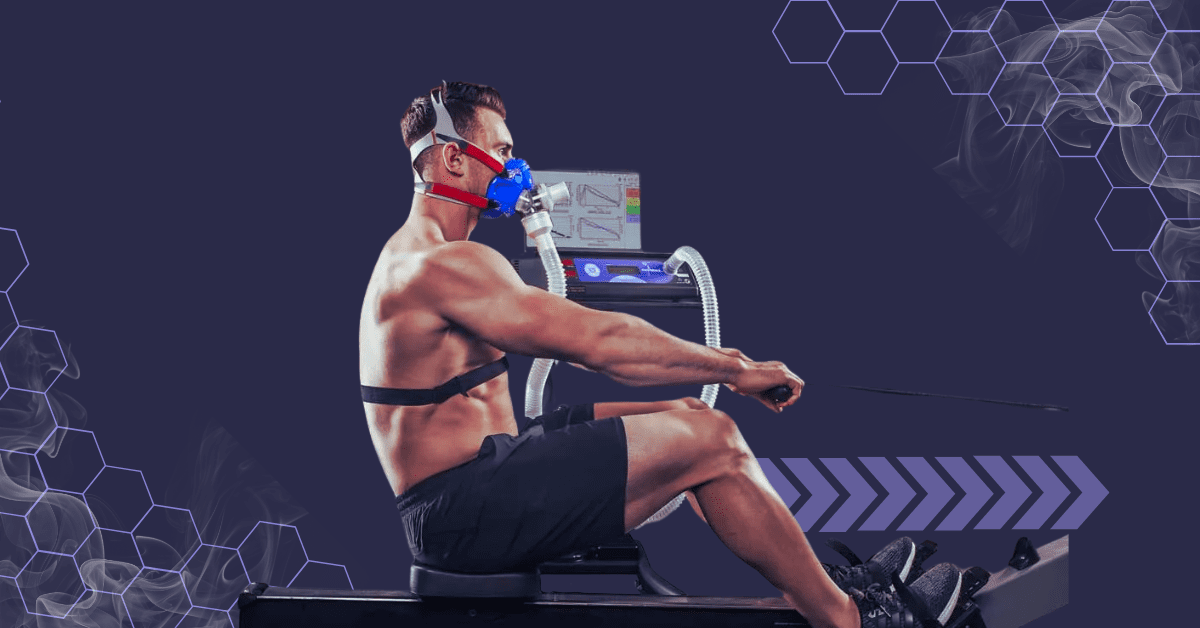
The journey back to peak performance after an injury or setback is filled with uncertainty. Athletes and fitness enthusiasts frequently grapple with questions like: How hard should I push? When is it safe to increase intensity? Am I doing too much, too soon? Without precise data to guide these decisions, the path to recovery can become a frustrating game of guesswork that risks reinjury and suboptimal progress.
This is where the power of data-driven rehabilitation becomes invaluable. Research has shown that objective measurements provide a more reliable foundation for recovery than subjective feelings or traditional time-based protocols alone1,2,3,4,5,6,7.When rehabilitation professionals can base their decisions on accurate, individualized physiological data, they can create more effective and safer recovery programs tailored to each person’s unique needs.
Precision Through VO₂ Max Testing
VO₂ Max testing with mixing chamber technology offers an unparalleled tool for establishing these benchmarks. Unlike basic heart rate monitoring or perceived exertion scales, VO₂ Max testing reveals exact heart rate zones that define the boundary between productive training and overtraining. This allows us to find the sweet spot where rehabilitation can progress efficiently while maintaining a safe intensity level. By measuring actual oxygen consumption during exercise, VO₂ Max testing eliminates the guesswork from program design, allowing athletes to optimize recovery without compromising safety.
Understanding Baseline Fitness
Establishing a True Performance Baseline
A VO₂ Max test provides several measurements that are essential for establishing an accurate rehabilitation baseline. Each of these measurements help reveal your current fitness status and recovery potential:
- Precise heart rate zones based on real-time data not estimates. Unlike traditional methods that rely on age-based calculations, these zones show exactly how your body responds to different exercise intensities, creating accuracy during the rehabilitation period.
- Individual anaerobic threshold, which often differs from standard formulas. This threshold marks the point beyond which exhaustion is imminent. Knowing this threshold is critical for monitoring and managing training load. Relying on standard formulas and population-based estimates rather than individual data can lead to excessive fatigue and overtraining. Research shows they can vary by as much as 20 beats per minute from what standard formulas predict8.
- True Zone 2 training range for prime endurance training intensity. This represents the sweet spot where you can build endurance and promote recovery without overtaxing your system. Only through direct measurement can you identify the precise Zone 2 range.
- Current cardiovascular fitness level as determined by VO2Max. This baseline serves as a starting point and a reference for progress, allowing rehabilitation professionals to set realistic goals and create appropriate progression timelines.
- Metabolic efficiency markers to guide return-to-activity protocols. These markers reveal how the body fuels exercise at different intensities, helping professionals design activities that balance fatigue and recovery.
Having precise, measurable data allows for accurate progress tracking over time, ensuring clinicians can make evidence-based decisions about when to advance training intensity.
When combined, these measurements provide athletes and trainers with a detailed roadmap for recovery. The precision offered guarantees that each of these data points reflects the individual’s physiology, not population averages or estimates.

Moving Beyond Subjective Assessment
Traditional rehabilitation relies heavily on subjective measures like perceived exertion or general guidelines based on population averages. While these tools have their place, they can’t match the precision of direct metabolic measurement. Research has shown that individuals often misjudge their degree of recovery9,10. This is where the objectivity of VO₂ Max testing becomes invaluable – it provides concrete numbers that aren’t influenced by enthusiasm, anxiety, or the natural tendency to either over or underestimate capabilities during rehabilitation.
The Limitations of Traditional Methods
The conventional “guess and check” approach to rehabilitation comes with drawbacks. Without precise heart rate zones, practitioners may err on the side of excessive caution, potentially slowing recovery. Or, they might inadvertently push too hard instead, risking setbacks or reinjury. The traditional approach also fails to account for individual variations in fitness and recovery capacity.
Traditional rehab approaches often rely on time-based milestones for returning to activity. While general physiological healing timelines exist, individual recovery can vary significantly. A healed tissue doesn’t necessarily mean full recovery – strength, power, and cardiovascular endurance deficits may still linger.
By using criteria-based progression, we can honor the healing process while ensuring underlying deficits are fully addressed. VO2Max testing plays a key role in this approach, providing objective insights into cardiovascular health, fitness, and endurance. This allows us to pinpointing areas that need improvement and reinforcing the foundation for long-term health, resilience, and performance.
Precise Heart Rate Zones for Safe Progression
Unlocking the Power of Precise Heart Rate Zones
Understanding true heart rate zones through VO₂ Max testing transforms rehabilitation from guesswork into science. Traditional methods miss the mark, using general formulas that can be off by 20-30 beats per minute or more. This precision becomes especially critical during recovery, where the margin for error is much smaller and the consequences of incorrect training intensities can impact healing and progress.
The Importance of True Zone 2
While Zone 2 training forms the foundation of rehabilitation and endurance building, understanding the complete metabolic profile through VO₂ Max testing reveals each of the precise training zones. This view is vital as you progress through recovery and begin incorporating higher-intensity work.
True Zone 2 training, aerobic development- where you can build endurance without accumulating excessive fatigue. This zone serves as an anchor point for understanding the other training zones. As you progress in rehabilitation, knowing your exact Zone 4 and 5 thresholds becomes crucial for safely reintroducing high-intensity work.
Zone 4, or the “threshold” zone, marks where the transition into high-intensity. This transition point varies between individuals and can only be accurately determined through direct measurement of oxygen consumption. Understanding your precise Zone 4 helps train fatigue resistance and sustainable power output at higher intensities.
Zone 5, the VO₂ Max zone, represents your maximal aerobic capacity. Accuracy in this zone becomes essential in the later stages of rehabilitation when you’re ready to rebuild peak performance. Without precise measurement, it’s easy to either undertrain – never reaching the intensities needed for full recovery of high-end fitness – or overtrain, by spending too much time at these demanding levels.
Preventing Overtraining Through Precision
Accurate heart rate zones serve as guardrails during rehabilitation, preventing the common pitfall of overtraining. When you know your exact zones, you can confidently work at the right intensity for your current fitness level. This precision is valuable because many individuals, especially athletes eager to return to full activity, tend to push too hard too soon when relying on perceived exertion alone.
Think of it like following a precise recipe – guessing ingredient amounts by eye might work for a casual meal, but when precision matters, you need the right tools. The same goes for heart rate zones. To define them accurately, you need gold-standard technology. That’s where mixing chamber technology comes in. Unlike breath-by breath systems, which can be noisy and inconsistent, mixing chamber technology smooths out natural fluctuations in breathing, averaging data over time for cleaner, more reliable measurements of oxygen consumption. This means you get precise, stable data to establish heart rate zones with confidence – because when it comes to performance and health, accuracy isn’t optional.
Monitoring Progress with Measurable Metrics
Moving Beyond “How Do You Feel?”
In rehabilitation, the age-old question “How do you feel?” only tells part of the story. While subjective feedback remains valuable, VO₂ Max testing provides objective, repeatable metrics that paint a more complete picture of recovery progress. Think of it like having a high-definition map of your fitness landscape – you have a much better idea of the safest and most efficient paths to follow.
Understanding Key Performance Indicators
VO₂ Max testing reveals several key metrics that serve as reliable signposts on the road to recovery.
One of the most important markers is oxygen utilization efficiency – how effectively the body uses oxygen at different exercise intensities. This is important because oxygen helps fuel movement – whether you’re rebuilding strength after an injury or regaining endurance after time off, your muscles need a steady, efficient supply. Improvements in this metric often show up before you feel noticeably stronger, giving you early, objective proof that your rehabilitation program is on the right track.
Another metric is anaerobic threshold (AT), which typically improves as you regain fitness. It reflects your body’s ability to go harder for longer before fatigue sets in. The higher your AT, the more work you can sustain while still relying heavily on aerobic energy. During rehabilitation, watching this threshold gradually increase confirms you’re rebuilding an endurance foundation properly.
Metabolic efficiency is another sign of progress.. As you recover, your body uses oxygen more efficiently, meaning you can maintain the same speed or power with less effort..It’s like getting better gas mileage – your body needs less fuel to do the same work, a clear sign your fitness is improving.
Your heart rate recovery (HRR) is also a critical sign of cardiovascular and nervous system function. A faster drop in heart rate after exercise suggests that your body is adapting well to the stress of training. If your HRR is slow, it might indicate lingering fatigue or incomplete recovery. It’s like hitting the brakes on a car – if they’re working well, you slow down quickly and smoothly; if not, it takes longer to come to a stop.
Tracking Progress Through Data, Not Days
Traditional rehabilitation often relies on time-based progressions – “it’s been six weeks, so you should be ready for the next phase.” VO₂ Max testing transforms this approach by providing objective data to guide progression decisions. We can precisely track changes in:
- Oxygen consumption at specific workloads
- Heart rate responses across different intensities
- Time spent in optimal training zones
- Recovery rates between effort periods
- Overall work capacity and endurance
These measurements create a detailed progress map that helps rehabilitation professionals make informed decisions about program adjustments. Rather than guessing when you’re ready to advance, they can see exactly how the body is adapting to the current training load.
Using Data to Fine-Tune Recovery
Perhaps the most powerful aspect of regular VO₂ Max testing during rehabilitation is the ability to adjust protocols based on physiological responses rather than predetermined timelines. If the data shows you’re adapting faster than expected, your program can be progressed accordingly. If metrics indicate you need more time at a certain level, adjustments can be made before overtraining occurs.
This approach allows for truly personalized recovery programs. Instead of following a one-size-fits-all protocol, your team can fine-tune training based on objective data about how the body is responding. This might mean:
- Adjusting workout intensities based on shifting heart rate zones
- Modifying session durations according to improve endurance capacity
- Timing the introduction of higher-intensity work based on metabolic indicators
- Balancing training stress with recovery using concrete measurements
- Setting realistic, data-driven goals for each phase of rehabilitation
The result is a more effective recovery process that minimizes guesswork and maximizes results. By letting the data guide the way, you can be confident your clients are progressing at the best pace for them.
Implementing VO₂ Max Testing in Rehabilitation
Understanding when and how to implement VO₂ Max testing during rehabilitation requires careful consideration of several factors. Let’s explore the research-backed guidelines11,12 that help maximize the value of these assessments while establishing safe recovery.
Timing the Initial Assessment
The decision of when to conduct initial VO₂ Max testing depends largely on the individual’s current status in their recovery journey. The key is validating that the person can safely complete a graded exercise test while getting meaningful data. Based on current research and clinical experience, a good baseline assessment becomes possible when:
- Acute symptoms have resolved
- Basic movement patterns can be performed without pain
- Medical clearance has been obtained when necessary
- The individual can maintain steady-state exercise for at least several minutes
- Any initial inflammation or healing processes have stabilized
Rather than following arbitrary timelines, trainers should assess readiness based on these functional markers. This approach reinforces that the initial test provides valuable data while maintaining safety.
Establishing Peak Retesting Frequency
The frequency of retesting should balance the need for updated data with allowing sufficient time for meaningful changes to occur. Current evidence suggests that improvements in VO₂ Max typically require 4-6 weeks of consistent training13,14 . A general framework for retesting might include:
- Initial baseline test once ready
- Follow-up assessment after 4-6 weeks of rehabilitation
- Subsequent tests every 6-8 weeks as progress continues
- Additional testing when significant changes in symptoms or capacity occur
This schedule should be adjusted based on individual factors like recovery rate, rehabilitation goals, and specific program milestones. The key is leaving enough time between tests to see meaningful changes while catching any important shifts in fitness markers.
Interpreting Results
The true value of VO₂ Max testing lies in how effectively the results are interpreted and applied to rehabilitation programming. Using mixing chamber technology provides highly reliable data, but understanding how to use this information requires careful analysis.
When examining test results, focus on:
- Changes in oxygen consumption at specific workloads compared to baseline
- Shifts in heart rate zones, particularly in Zone 2 parameters
- Improvements in anaerobic threshold
- Overall changes in work capacity and endurance
- Trends in metabolic efficiency across different intensities
These metrics should guide specific program adjustments like:
- Updating target heart rate zones for training
- Modifying workout durations and intensities
- Adjusting recovery periods between sessions
- Planning progressions to more challenging activities
- Setting realistic, achievable goals for the next testing period
Remember that improvements might not occur uniformly across all metrics. Some aspects of fitness may improve faster than others during rehabilitation, and this variation provides insights for program adjustment.
Regular consultation between the athletes and trainer helps the test results translate into effective program modifications. This approach helps optimize recovery while maintaining the balance between progression and safety.
Transforming Rehabilitation Through Precision Testing
The science is clear: precise, data-driven rehabilitation protocols lead to better outcomes for clients. VO₂ Max testing with mixing chamber technology provides the measurements needed to create truly personalized recovery programs. This isn’t just about gathering data – it’s about transforming how we approach recovery.
Why CardioCoach Makes the Difference
CardioCoach’s mixing chamber technology represents the gold standard in metabolic testing. Unlike basic breath-by-breath systems, our technology provides accurate measurements that help you identify your clients’ true training zones with unprecedented precision. This accuracy becomes especially crucial during rehabilitation, where the margin for error is smaller and the consequences of incorrect training intensities can significantly impact recovery.
A Partnership for Success
For trainers looking to elevate their practice, CardioCoach equipment provides a complete solution for evidence-based program design. Our technology makes it simple to:
- Establish precise baseline measurements that eliminates the variability and potential inaccuracies found in breath-by-breath systems. This provides you with reliable data you can trust to guide your rehabilitation protocols.
- Track progress with reliable data that shows exactly how your clients are improving over time. Our system provides detailed metrics about oxygen utilization, heart rate zones, and metabolic efficiency that help you make informed decisions about program progression.
- Adjust protocols based on objective improvements rather than guesswork or subjective feedback. The precise measurements from CardioCoach allow you to fine-tune training intensities and durations based on actual physiological adaptations.
- Provide clients with clear, measurable goals that are based on their individual metabolic profiles. This helps improve motivation by showing concrete progress and achievement benchmarks.
- Demonstrate the value of your services through concrete results that show exactly how your programs are improving client outcomes. This data-driven approach can help strengthen your services and showcase your expertise.
Take the Next Step
Ready to transform your training with precision metabolic testing? Our CardioCoach specialists are trained to help you understand how our equipment can enhance your practice and improve client outcomes. We offer support, including:
- Free training session with our in-house metabolic testing specialists who will walk you through basic operations and advanced features of our equipment, ensuring you can maximize its potential in your practice.
- Ongoing technical support from our knowledgeable team who understand the technology and its practical applications in training settings. We’re here to help you succeed with your CardioCoach equipment.
- Regular updates on the latest research and best practices in metabolic testing and rehabilitation, helping you stay at the forefront of evidence-based practice.
Our specialists can provide detailed information about our different models and help you select the perfect solution for your needs. You can also request a live video demonstration to see how CardioCoach can enhance your training and rehabilitation protocols.
Join the growing community of professionals who are using CardioCoach to deliver more precise, effective, and evidence-based rehabilitation services. Your clients deserve the best – give them the advantage of true metabolic testing with CardioCoach.
References:
- Arundale AJH, Bizzini M, Giordano A, et al. Exercise-Based Knee and Anterior Cruciate Ligament Injury Prevention. J Orthop Sports Phys Ther. 2018;48(9):A1-A42. doi:10.2519/jospt.2018.0303. PMID: 30170521
- Grindem H, Snyder-Mackler L, Moksnes H, Engebretsen L, Risberg MA. Simple decision rules can reduce reinjury risk by 84% after ACL reconstruction: the Delaware-Oslo ACL cohort study. Br J Sports Med. 2016;50(13):804-808. doi:10.1136/bjsports-2016-096031. PMID: 27162233
- Grindem H, Engebretsen L, Axe M, Snyder-Mackler L, Risberg MA. Activity and functional readiness, not age, are the critical factors for second anterior cruciate ligament injury – the Delaware-Oslo ACL cohort study. Br J Sports Med. 2020;54(18):1099-1102. doi:10.1136/bjsports-2019-100623. PMID: 32046955
- Fares MY, Khachfe HH, Salhab HA, Bdeir A, Fares J, Baydoun H. Physical Testing in Sports Rehabilitation: Implications on a Potential Return to Sport. Arthrosc Sports Med Rehabil. 2022;4(1):e189-e198. Published 2022 Jan 28. doi:10.1016/j.asmr.2021.09.034. PMID: 35141551
- Wilk K, Thomas ZM, Arrigo CA, Davies GJ. The Need To Change Return to Play Testing in Athletes Following ACL Injury: A Theoretical Model. Int J Sports Phys Ther. 2023;18(1):272-281. Published 2023 Feb 1. doi:10.26603/001c.67988. PMID: 36793556
- Capin JJ, Snyder-Mackler L, Risberg MA, Grindem H. Keep calm and carry on testing: a substantive reanalysis and critique of ‘what is the evidence for and validity of return-to-sport testing after anterior cruciate ligament reconstruction surgery? A systematic review and meta-analysis’. Br J Sports Med. 2019;53(23):1444-1446. doi:10.1136/bjsports-2019-100906. PMID: 31289039
- Kyritsis P, Bahr R, Landreau P, Miladi R, Witvrouw E. Likelihood of ACL graft rupture: not meeting six clinical discharge criteria before return to sport is associated with a four times greater risk of rupture. Br J Sports Med. 2016;50(15):946-951. doi:10.1136/bjsports-2015-095908. PMID: 27215935
- Nakayama A, Iwata T, Sakuma H, Kashino K, Tomoike H. Predicting Heart Rate at the Anaerobic Threshold Using a Machine Learning Model Based on a Large-Scale Population Dataset. J Clin Med. 2024;14(1):21. Published 2024 Dec 24. doi:10.3390/jcm14010021. PMID: 39797104
- Myer GD, Martin L Jr, Ford KR, et al. No association of time from surgery with functional deficits in athletes after anterior cruciate ligament reconstruction: evidence for objective return-to-sport criteria. Am J Sports Med. 2012;40(10):2256-2263. doi:10.1177/0363546512454656. PMID: 22879403
- Halson SL. Monitoring training load to understand fatigue in athletes. Sports Med. 2014;44 Suppl 2(Suppl 2):S139-S147. doi:10.1007/s40279-014-0253-z. PMID: 2500666
- American College of Sports Medicine. ACSM’s Guidelines for Exercise Testing and Prescription. 11th ed. (Liguori G, ed.). Wolters Kluwer; 2022.
- Wasserman. Principles of Exercise Testing and Interpretation: Including Pathophysiology and Clinical Applications. Lippincott, Williams & Wilkins; 2020.
- Mølmen KS, Almquist NW, Skattebo Ø. Effects of Exercise Training on Mitochondrial and Capillary Growth in Human Skeletal Muscle: A Systematic Review and Meta-Regression. Sports Med. 2025;55(1):115-144. doi:10.1007/s40279-024-02120-2. PMID: 39390310
- Milanović Z, Sporiš G, Weston M. Effectiveness of High-Intensity Interval Training (HIT) and Continuous Endurance Training for VO2max Improvements: A Systematic Review and Meta-Analysis of Controlled Trials. Sports Med. 2015;45(10):1469-1481. doi:10.1007/s40279-015-0365-0. PMID: 26243014