


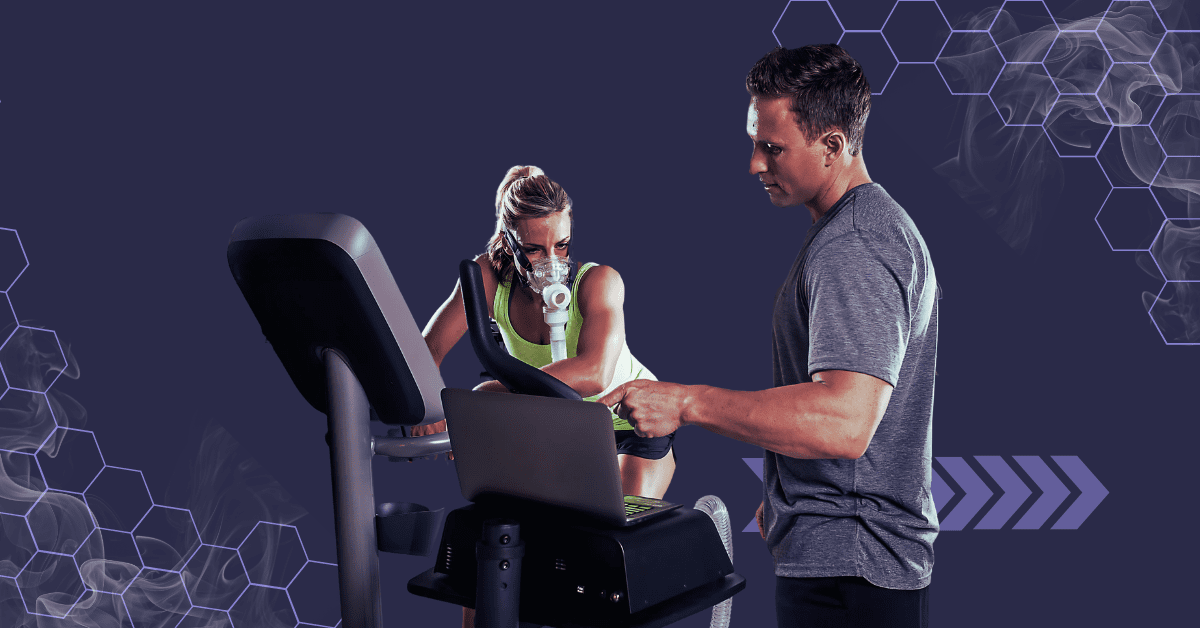
In a modern fitness facility a recreational runner steps onto a treadmill for her first VO₂ Max test. The sleek, portable testing unit beside her bears little resemblance to the cumbersome laboratory equipment of decades past. This scene, playing out in gyms and fitness centers worldwide, is a remarkable transformation in exercise science – one that has turned what was once an exclusive laboratory procedure into a major tool for fitness professionals and their clients.
From its humble beginnings in research laboratories to its current status as the gold standard for measuring cardiovascular fitness, VO₂ Max testing has evolved remarkably. What started as a complex procedure requiring laboratory equipment and specialized expertise has become an accessible fitness assessment. Research has shown that VO₂ Max is one of the strongest predictors of cardiovascular and all-cause mortality, making it an indicator of overall health1-3.
In this exploration of VO₂ Max’s history, we’ll trace its journey from laboratory curiosity to fitness industry essential. You’ll discover how technological advancements revolutionized testing accessibility while maintaining accuracy. We’ll examine how the fitness industry’s understanding of cardiovascular training has evolved, leading to the current emphasis on Zone 2 training and its role in fitness development.
Early Origins of VO₂ Max Testing (1920s-1950s)
The Birth of Oxygen Consumption Measurement
The discovery of the direct relationship between oxygen consumption and caloric burn revolutionized exercise science and created the foundation for all modern metabolic testing. The relationship was so precise and reliable that it made oxygen uptake (VO₂) and caloric burn rate measurements virtually interchangeable, opening new possibilities for understanding human performance and energy expenditure.
Early Testing Methods
Early methods required collecting all expired air during exercise while measuring oxygen concentrations in inspired and expired air. This process demanded precise volume measurements of expired air and careful analysis of oxygen content. Researchers had to account for multiple variables, including humidity, temperature, and barometric pressure – all factors that continue to be important in modern testing but are now automatically calibrated by equipment.
Testing facilities needed laboratory setups with complex air collection systems, analysis equipment, and trained technicians. The testing environment itself had to be carefully controlled, as variations in temperature or humidity could significantly impact results.
Breaking Through Limitations
- Technical Constraints: Early equipment couldn’t measure moment-to-moment changes, making real-time analysis impossible. Testing systems often leaked during vigorous exercise, compromising data accuracy. The available gas analysis technology had limited precision, and standardization between different laboratories was extremely challenging.
- Practical Barriers: Tests could only be performed in laboratory settings with expensive equipment and trained personnel. Each test required significant setup time, careful monitoring throughout, and extensive post-test calculations. The complexity and cost of testing meant that only research institutions and elite training facilities could conduct these assessments.
Pioneer Researchers and Key Discoveries
- Early researchers established principles that remain relevant today like the importance of standardized protocols, the need for precise gas measurement, and the role of maintaining consistent environmental conditions. Their work demonstrated that maximal oxygen consumption wasn’t just a laboratory measurement but an indicator of cardiovascular fitness and athletic potential.
- The development of the first standardized exercise testing protocols made it possible to compare results between different laboratories and establish normative data. Researchers identified the plateau phenomenon in oxygen consumption, showing that there was a physiological upper limit to how much oxygen an individual could utilize during exercise – what we now know as VO₂ Max.
The Scientific Revolution in VO₂ Max Testing (1960s-1980s)
The 1960s-1980s saw a shift in VO₂ Max testing with the development of standardized protocols. This allowed research from lab to lab to be more accurately compared and generalized to a broader population. With an improved tool for looking at real-time metabolic data, it quickly became clear how limited and outdated prior predictive formulas were. Researchers recognized that measuring actual energy expenditure was the only viable approach for accurate assessment.
Testing protocols began incorporating pre-test requirements that remain standard today, including:
- Avoiding meals 4 hours before testing
- No exercise on the day of testing
- Avoiding stimulants like caffeine
- Maintaining consistent positioning during testing
- Ensuring proper seal around testing equipment for accurate analysis
Development of the First Commercial Testing Equipment
The evolution from laboratory-exclusive equipment to commercial testing devices marked a major advancement. Early commercial systems introduced mixing chamber technology, considered the “Gold Standard” for VO₂ Max measurements. This technology, while initially complex and expensive, made precise testing feasible outside of research departments.
Technological improvements included:
- Self-calibrating systems that automatically adjusted for barometric pressure, temperature, and humidity
- More accurate oxygen sensors and flow measurement capabilities
- Integration of computerized data collection and analysis
- Development of portable systems that could be used with standard exercise equipment
- Simplified user interfaces that reduced the expertise needed to conduct tests
Integration into Sports Science and Athletic Training
During this period, research revealed that VO₂ Max was more than just a measure of cardiovascular fitness – it became recognized as a predictor of athletic performance4.
The integration into sports science brought several key applications:
- Determination of precise target heart rates for different training zones
- Calculation of exact caloric expenditure during various exercise intensities
- Assessment of fat versus carbohydrate utilization during exercise
- Evaluation of training program effectiveness
- Development of sport-specific conditioning protocols
During this period, VO₂ Max testing began to be utilized for various purposes, including creating personalized training programs, establishing baseline fitness measurements, and tracking improvements in cardiovascular fitness. It also played a role in optimizing athletic performance and identifying limiting factors in endurance performance.
These developments laid the groundwork for modern VO₂ Max testing systems and their widespread adoption in fitness and sports training. The scientific revolution of this period transformed VO₂ Max testing from a purely research tool into a practical application for athletic development and performance.
The Technology Breakthrough in VO₂ Max Testing (1990s-2000s)
Evolution from Laboratory-Only to Portable Systems
The transition to portable testing systems revolutionized the fitness industry by making VO₂ Max testing accessible to a wider range of facilities. Testing equipment evolved from room-sized laboratory setups to compact, mobile units that could be easily moved between different pieces of cardio equipment. This portability meant that any facility with a quality treadmill or cycle ergometer could now offer professional-grade metabolic testing, democratizing access to this valuable assessment tool.
Advancements in portable systems during this period included space-efficient designs that required minimal setup area, as well as integration with standard gym equipment. These systems featured wireless connectivity for seamless data transfer and user-friendly interfaces that required minimal technical expertise. Rapid calibration systems, immediate data analysis and reporting capabilities, and cost-effective solutions made VO₂ Max testing more commercially viable.
Introduction of Mixing Chamber Technology
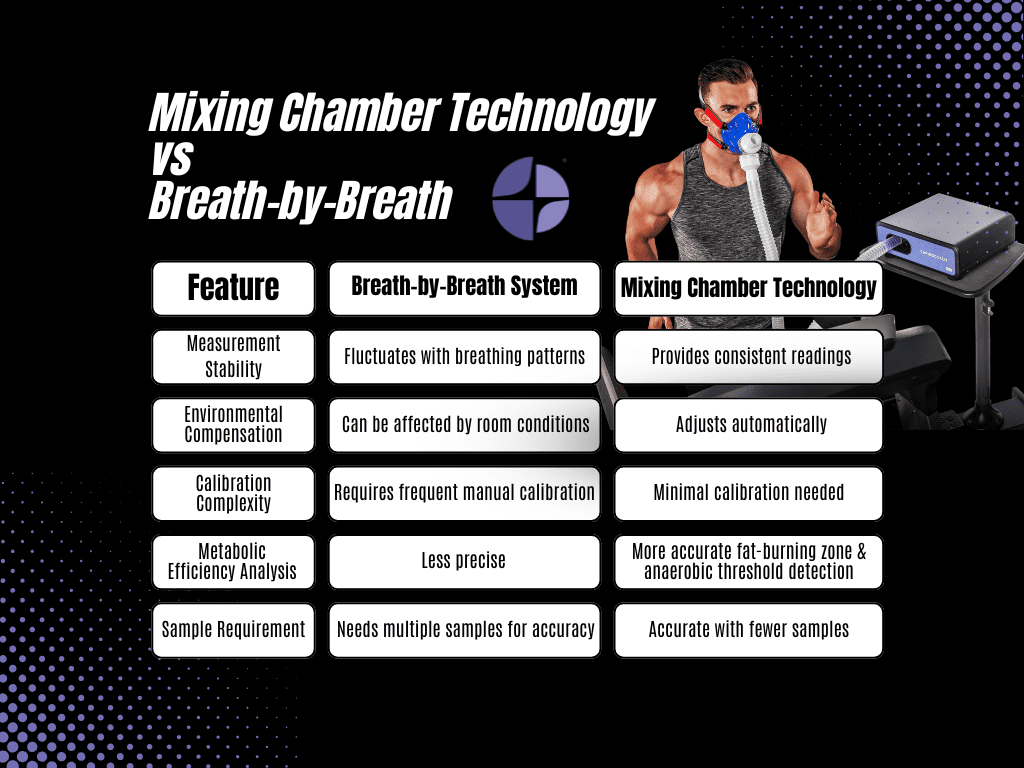
Mixing chamber technology emerged as the gold standard for VO₂ Max measurements, offering superior accuracy compared to breath-by-breath systems. This technology revolutionized testing by providing more stable and reliable measurements, automatically compensating for environmental conditions, and delivering consistent results across different testing environments. It also reduced the need for multiple samples to achieve accurate readings and eliminated the complexity of syringe calibration procedures.
The mixing chamber approach brought several distinct advantages, including more precise oxygen and carbon dioxide measurements, better identification of fat-burning zones during exercise, and clearer determination of the anaerobic threshold. It allowed for a more accurate assessment of metabolic efficiency, reduced maintenance requirements, and enabled faster testing procedures without sacrificing accuracy.
Modern Era: The Zone 2 Training Revolution
The modern era of VO₂ Max testing has witnessed a transformation from measuring maximal oxygen uptake to providing comprehensive training insights. This evolution is a quantum leap in how fitness professionals utilize metabolic testing data.
While early testing focused mainly on determining a single value – the maximum volume of oxygen an individual could consume – today’s testing provides a complete metabolic profile that reveals how the body functions at every level of exertion. Modern VO₂ Max assessments deliver detailed information about:
- Precise heart rate training zones based on physiological markers rather than age-based formulas
- Exact points where the body transitions between different energy systems
- Specific heart rates where fat utilization is maximized
- Clear identification of anaerobic threshold
- Individual respiratory exchange ratios at various exercise intensities
- Metabolic efficiency indicators showing how effectively the body uses oxygen
- Personalized recovery metrics based on heart rate response
This shift has changed how fitness professionals approach training program design. Rather than applying generic formulas or one-size-fits-all approaches, trainers can now develop personalized programs based on an individual’s unique physiological response to exercise.
Why Zone 2 Became the Cornerstone
Zone 2 training has emerged as the cornerstone of effective endurance and metabolic health programming, representing a shift in training philosophy. While the Bruce Protocol and other high-intensity testing methods dominated earlier approaches, the fitness industry has recognized the fundamental importance of Zone 2 training for performance and health outcomes.
Zone 2 represents the aerobic training zone where:
- Fat utilization is maximized, providing sustainable energy without rapidly depleting glycogen stores
- The body operates efficiently below the aerobic threshold (AeT)
- Training adaptations focus on mitochondrial development and capillary density
- The cardiovascular system is challenged without excessive stress
- Recovery demands are manageable, allowing for consistent training
- Long-term adaptations build the foundation for higher-intensity work
- Metabolic health markers show significant improvement
Research highlighted in studies examining the effect of training intensity on VO₂ Max development reveals that Zone 2 training produces comparable improvements in aerobic capacity to high-intensity training, but with reduced injury risk and improved sustainability5,6. Perhaps most significantly, studies on cardiorespiratory fitness, body mass index, and mortality underscore that individuals with higher cardiorespiratory fitness levels – regardless of body composition – show dramatically reduced mortality risk1,3,7. This research emphasizes that Zone 2 training’s effectiveness in improving cardiorespiratory fitness has profound implications beyond athletic performance.
The Role of VO₂ Max Testing in Zone Determination
The ability to accurately determine training zones represents one of the most valuable applications of modern VO₂ Max testing. While generic formulas based on age or perceived effort provide rough estimations, precise metabolic testing reveals the exact physiological transitions that occur during increasing exercise intensity.
Modern VO₂ Max testing with mixing chamber technology plays a role by:
- Identifying the exact heart rate at which Aerobic Threshold (AeT) occurs – the upper limit of Zone 2
- Determining the specific heart rate at which Anaerobic Threshold (AT) is reached – marking the transition to high-intensity zones
- Revealing the heart rate ranges where the body maximizes fat oxidation – essential information for metabolic health programs
- Measuring the precise point where respiratory exchange ratio indicates the shift from primarily fat to primarily carbohydrate metabolism
- Establishing personalized zones based on actual physiological events rather than theoretical percentages
- Providing clear visual data showing the relationships between heart rate, oxygen consumption, and energy system utilization
The impact of this precision cannot be overstated. Research examining the effect of “Biggest Loser” on resting metabolic rate revealed that contestants who lost significant weight experienced a drastic drop in metabolic rate, far below what would be predicted by formulas8. This underscores why actual metabolic testing is essential for accurate program design – formulas and estimations simply don’t always account for individual variations in metabolism.
Without precise VO₂ Max testing, determining true Zone 2 becomes guesswork. A study on resting metabolic rate measurements demonstrated that patients with similar estimated energy expenditures had dramatically different actual metabolic rates when measured9. This same principle applies to training zones – what feels like Zone 2 for one person might actually be Zone 1 or Zone 3 for another, leading to suboptimal training outcomes.
The precision offered by modern VO₂ Max testing makes sure that Zone 2 training is truly Zone 2 training – placing the athlete in exactly the right physiological state to maximize the specific adaptations they’re seeking. As research continues, the value of precise zone determination through advanced VO₂ Max testing has never been more apparent. For fitness professionals committed to evidence-based practice, this technology has become an indispensable tool for program design and client success.
The Future of Technology
The future of VO₂ Max testing promises to be even more innovative and impactful for fitness professionals. Several emerging trends are poised to transform how we approach metabolic assessment and apply its insights:
Miniaturization and Accessibility
The next generation of VO₂ Max testing equipment is trending toward even greater miniaturization while maintaining gold-standard accuracy. These advancements will make testing more accessible to smaller facilities and independent trainers. As technology improves, we can expect:
- Smaller, more affordable units with mixing chamber technology
- Reduced maintenance requirements and operational costs
- Simplified interfaces requiring minimal specialized training
- Faster testing protocols without sacrificing accuracy
- More durable components designed for high-volume commercial use
Personalized Metabolic Profiling
Beyond basic zone determination, future VO₂ Max testing will provide increasingly sophisticated metabolic profiles. These expanded insights will help fitness professionals design even more targeted training programs based on:
- Individual substrate utilization patterns throughout exercise intensity ranges
- Metabolic flexibility indicators showing how efficiently the body switches between energy systems
- Recovery capacity measurements based on physiological markers
- Detailed anaerobic capacity assessments alongside aerobic measurements
- Identification of specific physiological limiters to performance
Longitudinal Data Analysis
The accumulation of testing data over time is creating opportunities for more sophisticated longitudinal analysis. Future systems will likely incorporate advanced analytics to:
- Predict training responses based on similar metabolic profiles
- Identify early warning signs of overtraining or inadequate recovery
- Calculate optimal training loads based on metabolic efficiency changes
- Recommend specific training interventions to address metabolic weaknesses
- Provide more precise periodization models based on metabolic adaptations
Integration with Other Fitness Technologies
The standalone VO₂ Max test is evolving into an integrated component of comprehensive fitness assessment and monitoring systems. This integration is an advance in how metabolic data can be utilized:
Wearable Technology Integration
The connection between laboratory-quality VO₂ Max testing and daily wearable technology is becoming more integrated. Future developments are expected to include seamless data sharing between testing equipment and clients’ wearable devices, allowing for more personalized training insights. Wearables may also be calibrated based on precise metabolic test results, enabling real-time training zone adjustments tailored to an individual’s metabolic profile. Enhanced algorithms could utilize baseline VO₂ Max data to improve wearable accuracy, while mobile applications may interpret training data in the context of metabolic testing results, offering users deeper insights into their performance and fitness progress.
Comprehensive Health Monitoring Systems
VO₂ Max testing is being recognized as an important component of health assessment rather than just a fitness measurement. Future integration will likely involve combining metabolic, body composition, and functional movement assessments to provide a more comprehensive evaluation of an individual’s health. It may also be integrated with blood biomarker analysis for deeper health insights and incorporated into preventative healthcare models to identify potential risks early. VO₂ Max testing could connect with nutritional analysis tools to optimize fueling strategies and be included in corporate wellness programs as a primary health indicator, promoting overall well-being in the workplace.
AI-Enhanced Interpretation and Programming
Artificial intelligence is revolutionizing the interpretation of VO₂ Max data, making assessments more precise. Future systems could incorporate machine learning algorithms to identify subtle patterns in metabolic data, enabling deeper insights into individual performance. Automated program design based on metabolic profiles and training goals will streamline personalized fitness planning, while predictive modeling will help forecast performance outcomes using key metabolic indicators. Real-time program adjustments based on ongoing training data will enhance adaptability, and comparative analysis against large anonymized databases will provide valuable context and benchmarking for users.
As we move forward, the role of precise metabolic testing will only grow in importance, especially as research continues to highlight the relationship between cardiorespiratory fitness and longevity. The fitness professionals who recognize this evolution and adapt accordingly will enhance their professional practice and make a significant impact on their clients’ lives.
The Continuing Evolution of VO₂ Max Testing
What began as a curious physiological measurement has become an essential tool for evidence-based program design, metabolic optimization, and personalized training. The journey from cumbersome, expensive laboratory procedures to accessible, precise assessment tools represents one of the biggest advances in fitness technology.
As the industry embraces the importance of Zone 2 training and individualized metabolic profiling, the role of accurate VO₂ Max testing has never been more vital. Understanding the precise physiological transitions that occur during exercise—from fat-burning efficiency to anaerobic threshold—enables fitness professionals to design truly customized programs that deliver superior results. This precision stands in stark contrast to the generic formulas and estimates that dominated the industry for decades.
For fitness professionals committed to delivering the highest standard of service, embracing this technology is imperative. Take your professional practice to the next level by partnering with KORR, the industry leader in precision metabolic testing equipment. With mixing chamber technology, unparalleled accuracy, and straightforward operation, KORR provides the tools you need to step confidently into the future of fitness. Don’t estimate your clients’ potential—measure it precisely and unlock new possibilities for their success.
References:
- Weeldreyer NR, De Guzman JC, Paterson C, Allen JD, Gaesser GA, Angadi SS. Cardiorespiratory fitness, body mass index and mortality: a systematic review and meta-analysis. Br J Sports Med. 2025;59(5):339-46. Epub 20250220. doi: 10.1136/bjsports-2024-108748. PubMed PMID: 39537313.
- Mandsager K, Harb S, Cremer P, Phelan D, Nissen SE, Jaber W. Association of Cardiorespiratory Fitness With Long-term Mortality Among Adults Undergoing Exercise Treadmill Testing. JAMA Netw Open. 2018;1(6):e183605. Epub 20181005. doi: 10.1001/jamanetworkopen.2018.3605. PubMed PMID: 30646252; PubMed Central PMCID: PMC6324439.
- Blair SN, Kohl HW, 3rd, Paffenbarger RS, Jr., Clark DG, Cooper KH, Gibbons LW. Physical fitness and all-cause mortality. A prospective study of healthy men and women. JAMA. 1989;262(1):2395-401. doi: 0.1001/jama.262.17.2395. PubMed PMID: 2795824.
- Kenney WL, Wilmore JH, Costill DL. Physiology of Sport and Exercise. Ninth ed: Human Kinetics; 2024. 680 p.
- Mølmen KS, Almquist NW, Skattebo O. Effects of Exercise Training on Mitochondrial and Capillary Growth in Human Skeletal Muscle: A Systematic Review and Meta-Regression. Sports Med. 2025;55(1):115-44. Epub 20241010. doi: 10.1007/s40279-024-02120-2. PubMed PMID: 39390310; PubMed Central PMCID: PMC11787188.
- Mujika IE. Endurance Training: Science and Practice. Second ed: Iñigo Mujika S.L.U.; 2023.
- Ortega FB, Lavie CJ, Blair SN. Obesity and Cardiovascular Disease. Circ Res. 2016;118(11):1752-70. doi: 10.1161/CIRCRESAHA.115.306883. PubMed PMID: 27230640.
- Fothergill E, Guo J, Howard L, Kerns JC, Knuth ND, Brychta R, et al. Persistent metabolic adaptation 6 years after “The Biggest Loser” competition. Obesity (Silver Spring). 2016;24(8):1612-9. Epub 20160502. doi: 10.1002/oby.21538. PubMed PMID: 27136388; PubMed Central PMCID: PMC4989512.
- Marra M, Cioffi I, Sammarco R, Montagnese C, Naccarato M, Amato V, et al. Prediction and evaluation of resting energy expenditure in a large group of obese outpatients. International Journal of Obesity. 2017;41(5):697-705. doi: 10.1038/ijo.2017.34.