


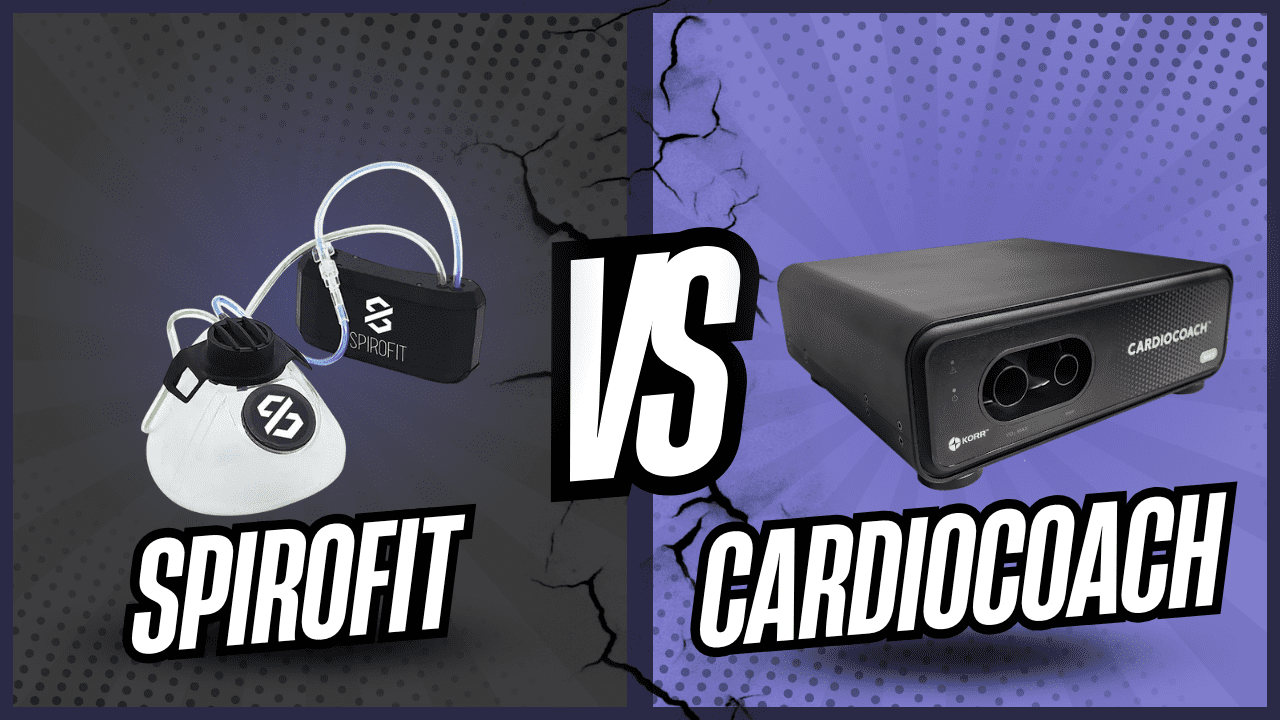
The market for metabolic analyzers has expanded significantly in recent years, with new companies coming in and offering lab-quality accuracy in more portable designs. For practitioners evaluating equipment for Resting Metabolic Rate (RMR) testing or VO2max performance assessments, the options can seem overwhelming. Two systems that represent distinctly different approaches are the KORR CardioCoach PRO and the SpiroFit from SENDSOR GmbH.
The CardioCoach PRO continues KORR’s focus on clinic-optimized metabolic testing, built around mixing chamber technology and designed for efficient patient throughput. SpiroFit takes a different path entirely: a head-mounted wearable system designed primarily for athletes and mobile applications.
Both have legitimate use cases, but the differences in methodology, maintenance requirements, and total cost of ownership matter more than marketing materials typically explain.
We’ll talk about what each system actually delivers, where compromises were made, and which practitioners will benefit most from each approach. The goal is not to declare a universal winner, but to provide the technical details necessary for an informed purchasing decision.
Understanding the Applications
Before comparing specific features, it helps to understand what each type of metabolic test demands from equipment.
Resting Metabolic Rate (RMR) Testing
RMR testing measures baseline caloric expenditure at rest, providing essential data for weight management programs, nutrition planning, and clinical assessment. The testing environment requires patient comfort and minimal anxiety, since stress elevates metabolism and skews results. Patients breathe normally for 10-20 minutes while the system measures oxygen consumption and carbon dioxide production. Irregular breathing patterns, sighs, or movement can all introduce measurement artifacts.
VO2max and Performance Testing
Performance testing pushes subjects to maximum exertion, measuring peak oxygen uptake and identifying training zones. The equipment must handle high ventilation rates, significant moisture from heavy breathing, and often considerable subject movement. Accuracy at the extremes of human performance requires different engineering considerations than resting measurements.
CardioCoach was designed to handle both applications in clinical settings, prioritizing measurement accuracy and efficient patient flow. SpiroFit was designed primarily for athletic use, prioritizing portability and freedom of movement. These different starting points explain many of the technical differences that follow.
Core Technology
The most fundamental difference between these systems lies in how they sample and analyze exhaled gases.
Mixing Chamber Technology (CardioCoach)
The CardioCoach uses a mixing chamber to collect and average exhaled air before analysis. This approach has been the gold standard in laboratory metabolic testing for decades. By averaging gas concentrations across multiple breaths, mixing chamber systems naturally smooth out the variability inherent in human breathing. A nervous patient who sighs, a brief cough, or momentary changes in breathing depth have minimal impact on overall results.
KORR engineered the CardioCoach to bring this laboratory methodology into a portable, clinic-friendly form factor. The system weighs under 10 pounds and operates on battery power, but retains the measurement precision that mixing chamber technology provides.
Breath-by-Breath (SpiroFit)
SpiroFit uses a different approach, sampling gases through tubes connected to a head-mounted processing unit. The system analyzes each breath individually and relies on algorithms to process the data. This allows for a smaller, wearable form factor, but introduces different sources of potential error.
Breath-by-breath systems are inherently more sensitive to breathing irregularities. Each anomalous breath affects the data directly, requiring algorithmic correction. During high-intensity exercise, factors like moisture accumulation in sampling tubes, head movement, and rapid breathing rates can all challenge measurement accuracy. The trade-off for SpiroFit’s portability is increased dependence on software algorithms to compensate for these physical limitations.
What This Means in Practice
For RMR testing, the mixing chamber advantage is particularly relevant. Patients unfamiliar with metabolic testing often breathe irregularly due to nervousness or self-consciousness about the mask. CardioCoach’s averaging methodology handles this gracefully, while breath-by-breath systems require longer stabilization periods and more careful data interpretation.
For performance testing, the question becomes whether the portability benefits of a wearable system outweigh the measurement methodology trade-offs. For field testing where tethered equipment is impractical, SpiroFit’s form factor offers genuine advantages. For controlled testing environments, the CardioCoach’s methodology typically delivers more consistent results.
Dual Flow Sensor Technology: Precision Across Testing Modes
One often-overlooked engineering consideration in metabolic analyzers is how they handle the dramatically different airflow rates between resting and maximal exercise testing. The CardioCoach addresses this with a dual flow sensor system.
CardioCoach: Two Sensors
KORR uses two different flow sensors to ensure both low flow rates (during RMR testing) and high flow rates (during intense VO2max efforts) are measured accurately. The system offers two ports—a smaller port optimized for RMR and a larger port for VO2max testing—but these aren’t simply different opening sizes. Each port connects to a dedicated flow sensor with different tolerances specifically engineered for its intended flow range.
This dual-sensor approach ensures accurate measurement across the full spectrum of human respiratory output, from the quiet breathing of a resting patient to the heavy ventilation of a maximal effort test.
SpiroFit: Accuracy Trade-Off
SpiroFit and most other devices rely on a single flow sensor, which creates inherent accuracy trade-offs. A sensor calibrated for high flow rates may lack precision at the low volumes typical of RMR testing, while a sensor optimized for resting measurements may struggle with the high ventilation rates of performance testing. Some manufacturers attempt to address this with adapters that redirect airflow, but adapters don’t solve the fundamental limitation of using one sensor across vastly different flow conditions.
Calibration and Day-to-Day Operation
Equipment calibration is one of those operational details that rarely gets adequate attention during the purchasing process, yet significantly affects long-term cost and reliability.
CardioCoach: Hands-Free Auto-Calibration
Traditional metabolic carts require daily calibration using precision syringes and calibration gas tanks. This process demands trained technicians, consumable gases, and 15-30 minutes before testing can begin. It also introduces opportunities for user error that can compromise an entire day’s measurements.
The CardioCoach eliminates this burden entirely. The system auto-calibrates without syringes, gas tanks, or manual processes. Staff can begin testing patients immediately, without specialized calibration training or consumable supplies. This isn’t just a convenience feature; it removes a significant source of measurement error while reducing operational costs.
SpiroFit: App Workflow
SpiroFit’s setup process involves device registration via QR code, cloud account creation, and pairing with a mobile app (iOS only, per their documentation). Each measurement session requires connecting via Bluetooth, and data must be uploaded to their cloud service for analysis. The system also lacks an onboard battery level indicator, requiring users to ensure batteries are charged before each session to avoid mid-test failures.
This workflow adds complexity and introduces dependencies on mobile devices, internet connectivity, and third-party cloud services. For individual athletes managing their own testing, this may be acceptable. For clinical operations running multiple patients daily, these additional steps multiply into significant time costs.
Oxygen Sensor Replacement
All galvanic oxygen sensors have limited lifespans, typically requiring replacement every 12-18 months regardless of usage. How this replacement is handled matters for both cost and operational continuity.
The CardioCoach uses a replaceable galvanic fuel sensor cartridge that is fully user-serviceable. Each cartridge comes factory calibrated, with calibration data stored electronically inside the cartridge itself. This means customers can swap sensors themselves without any recalibration process and without compromising device accuracy. No tools are required, and no technician visit is necessary.
SpiroFit’s documentation does not clearly address oxygen sensor lifespan or replacement procedures, making it difficult to assess long-term maintenance requirements and costs.
RMR Analysis Methods: Flexibility for Accurate Results
Not every RMR test follows the same pattern. Some patients settle into steady-state breathing quickly; others take longer to relax. The ability to select which portion of the test to analyze can significantly affect result accuracy.
The CardioCoach allows practitioners to choose their RMR analysis method for each individual test, including:
- Best 5 minutes (selecting the most stable portion of the test)
- Last 5 minutes (assuming the patient reached steady state by the end)
- Douglas Bag method (traditional averaging approach)
This flexibility means practitioners can identify the section of each test that best represents true resting metabolism, rather than being forced to accept whatever the software defaults to, which may include periods of elevated breathing from initial nervousness or movement.
SpiroFit does not offer the option to select analysis methods, limiting the practitioner’s ability to optimize results for individual patient variation.
Training Zone Methodology: Options for Every Approach
For VO2max testing, the value extends beyond the peak number—practitioners use the data to establish personalized training zones. Different training philosophies use different zoning methodologies, and the CardioCoach accommodates this diversity.
KORR offers multiple zoning method options:
- % VO2max
- % HR max
- % HR at anaerobic threshold
- Anaerobic threshold-based zones (with metabolic or ventilatory threshold options)
- Manual zone setting
For percentage-based methods, KORR even allows practitioners to customize the percentage ranges. Zoning methodology can be changed for each individual test, allowing practitioners to select what’s most appropriate for each client’s training goals.
SpiroFit does not allow multiple zoning methods, users are limited to whatever zones are built into the system, and the methodology is not disclosed.
Infection Control and Multi-Patient Use
Patient safety and infection control have received increased attention since 2020, and for good reason. Any equipment involving respiratory contact requires careful consideration of cross-contamination risks.
CardioCoach: Non-rebreathing Valve Design
The CardioCoach incorporates non-rebreathing valve technology that prevents re-breathing of exhaled air and contaminants. This design feature means exhaled gases flow in only one direction, eliminating the possibility of patients inhaling air that has passed through shared system components. For facilities running back-to-back tests, this significantly reduces turnaround time between patients while maintaining appropriate infection control standards.
KORR provides practitioners with multiple mask and valve options to match their workflow and infection control preferences:
- Hans Rudolph 2-way non-rebreathing valve with reusable mask for exercise testing—the mask requires thorough cleaning between clients, but has no small moving parts that can trap particulates
- Hans Rudolph 2-way non-rebreathing valve with single-patient-use mask, eliminates any cross-contamination concern between masks
- Completely disposable neoprene mask and disposable 2-way non-rebreathing valve for exercise testing—at less than $10 per test, this option provides maximum infection control with minimal cleaning time
- Completely disposable mouthpiece and hose for RMR testing—eliminates cross-contamination concerns and allows rapid testing in busy clinics
This range of options lets practitioners choose the right balance of cost, convenience, and infection control for their specific practice.
SpiroFit: Manual Cleaning Protocol
SpiroFit’s Resting Metabolic Mask and Performance Mask (via Hans Rudolph adapter) both require manual cleaning between users. Their documentation specifies washing with soapy water and air drying, explicitly prohibiting alcohol, bleach, or chlorine-based cleaners. The cleaning process requires connecting sampling tubes together to prevent water entry, adding steps to the procedure.
For facilities testing multiple patients daily, this cleaning and drying cycle between each use affects throughput. There’s also the patient perception factor: some individuals are uncomfortable using respiratory equipment that has been used by others, regardless of cleaning protocols. The CardioCoach’s multiple options, including fully disposable components, address both the practical throughput concern and the patient comfort consideration.
Software, Data Management, and Total Cost of Ownership
The initial purchase price of metabolic testing equipment tells only part of the cost story. Software access, ongoing fees, data ownership, and support services all factor into long-term economics.
CardioCoach: No Ongoing Fees
KORR’s pricing model is straightforward: one purchase includes the complete system with all software, reports, and analysis capabilities. There are no subscription fees, no per-report charges, no software tiers with locked features, and no service contracts required. The CardioCoach app is free with all features available to both clinicians and end users.
KORR provides training with each purchase, delivered by credentialed personnel. The system comes with a 2-year warranty. This transparency in pricing allows facilities to accurately budget for metabolic testing services without worrying about escalating software costs or surprise fees.
SpiroFit: Cloud-Dependent Model
SpiroFit’s workflow requires uploading data to the MySpiroFit Cloud for analysis. Their documentation indicates that data processing and result generation happen in the cloud rather than locally. This raises several questions for prospective buyers: What are the long-term access terms? Is there a subscription component? What happens to data if the cloud service changes or discontinues? Who owns the data?
SpiroFit’s training appears to be self-service via documentation (their Quick Start Guide and online resources), without mention of included professional training.
For facilities focused on predictable costs and data independence, these differences in business model matter as much as the technical specifications.
Validation and Track Record
When evaluating metabolic testing equipment, the validation behind the technology and the company’s track record matter.
KORR has been a trusted name in the metabolic measurement space for 33 years. Their devices have been used in clinical and research settings with documented performance across real-world applications. This history provides confidence in both product reliability and ongoing customer support.
SpiroFit has only been selling its current product since 2024. More notably, independent validation studies confirming SpiroFit’s measurement accuracy do not appear to be publicly available. Their sensors are a newly developed technology without the published validation that practitioners typically expect from clinical-grade equipment.
For practitioners whose recommendations depend on accurate metabolic data, the question of whether the underlying technology has been independently validated is worth considering.
Form Factor and Clinical Practicality
The physical design of metabolic testing equipment reflects the priorities of its designers. Neither approach is inherently superior; the question is which priorities align with your use case.
SpiroFit: Wearable Design
SpiroFit’s head-mounted design allows subjects to move freely during testing, running outdoors, cycling on roads, or training in environments where tethered equipment isn’t practical. For field researchers studying athletes in natural training conditions, or for mobile trainers working with clients at various locations, this portability is a genuine differentiator.
The trade-offs include the methodological limitations discussed earlier, the app-dependent workflow, and the cleaning requirements between users. The system also requires a separate Hans Rudolph mask adapter set for performance testing, adding to the total equipment investment.
CardioCoach: Clinic-Optimized Design
The CardioCoach weighs under 10 pounds and operates on battery power, making it portable within a facility or between locations. However, its design philosophy optimizes for clinic workflow rather than wearability. The cart-based setup facilitates efficient patient flow, and the system outputs are designed for patient education and counseling rather than just data collection.
For practitioners building a metabolic testing program, whether in a medical practice, fitness facility, or weight management clinic, the CardioCoach’s design supports running multiple tests daily with minimal setup time, consistent results, and clear patient communication tools.
Feature Comparison Summary
| Feature | Clinical Significance | CardioCoach PRO | SpiroFit |
| Mixing Chamber Technology | Gold Standard for Precise Gas Sampling,decreasing algorithm errors | ✓ | ✗ |
| Hands-Free Calibration | Auto-calibrates without syringe,calibration tanks, or manual processes | ✓ | ✗ |
| Simple O2 Sensor Replacement | No tools or calibration required forroutine oxygen sensor replacement | ✓ | ✗ Not documented |
| Minimal Risk of DiseaseTransmission | Non-rebreathing valve preventsre-breathing of contaminants | ✓ | ✗ |
| No Ongoing Fees | No hidden charges for software,reports, analysis or service contracts | ✓ | ✗ Cloud-dependent (terms unclear) |
| Training Included | ✓ Credentialed personnel | ✗ Self-service documentation | |
| Free App | ✓ All features for clinicians and users | ✗ Required for operation | |
| Validation Studies | ✓ Established technology, 33 years in the market | ✗ No published validation available | |
| Intuitive UX Design | ✓ Designed for minimal staff training | ✗ Cloud-dependent | |
| Leightweight, portable | ✓ Under 10 lbs, battery option | ✓ Head-mounted wearable | |
| Priced Below $18K | ✓ Full setup included | ✗ No | |
| Designed For: | Clinical practice, patient throughput | Athletes, field testing |
Matching the System to Your Needs
SpiroFit May Be Appropriate For:
- Individual athletes tracking personal performance metrics over time
- Mobile trainers working with clients across varied outdoor locations
- Research applications requiring completely untethered subject movement
- Users comfortable with cloud-dependent workflows and app-based interfaces
- Those prioritizing wearability over clinical workflow efficiency
CardioCoach Is Built For:
- Medical practices and clinical weight management programs
- Fitness facilities offering metabolic testing as a service
- Nutrition professionals counseling multiple clients daily
- Any operation running more than a handful of metabolic tests per week
- Practitioners who need measurement accuracy they can confidently stand behind
- Buyers who want predictable costs without subscription surprises
- Facilities requiring flexibility in analysis methods and training zone protocols
- Practitioners who value independently validated measurement technology
Operational Conclusions
The metabolic testing equipment market is evolving in two distinct directions. Wearable systems chase the athlete market with promises of untethered freedom. Clinical systems continue refining accuracy, efficiency, and operational simplicity for professional practice.
SpiroFit represents a legitimate approach for users who genuinely need wearable, field-deployable metabolic testing. Its design makes compromises that serve that specific use case. The question for prospective buyers is whether those compromises align with how you’ll actually use the equipment.
The CardioCoach takes a different position: bring laboratory-grade mixing chamber technology to practical clinical settings without the complexity, ongoing costs, or operational burden of traditional metabolic carts. With 33 years of market presence, dual flow sensor technology, multiple analysis method options, and flexible mask configurations, it offers proven methodology, transparent pricing, and a design focused on getting accurate results efficiently.
The choice ultimately depends on matching the tool to the job. For clinical practice, the CardioCoach delivers measurement technology designed for the demands of professional patient care.
To see the CardioCoach in action and discuss how it fits your specific practice, contact KORR at 1-801-483-2080 or visit korr.com to schedule a demo.